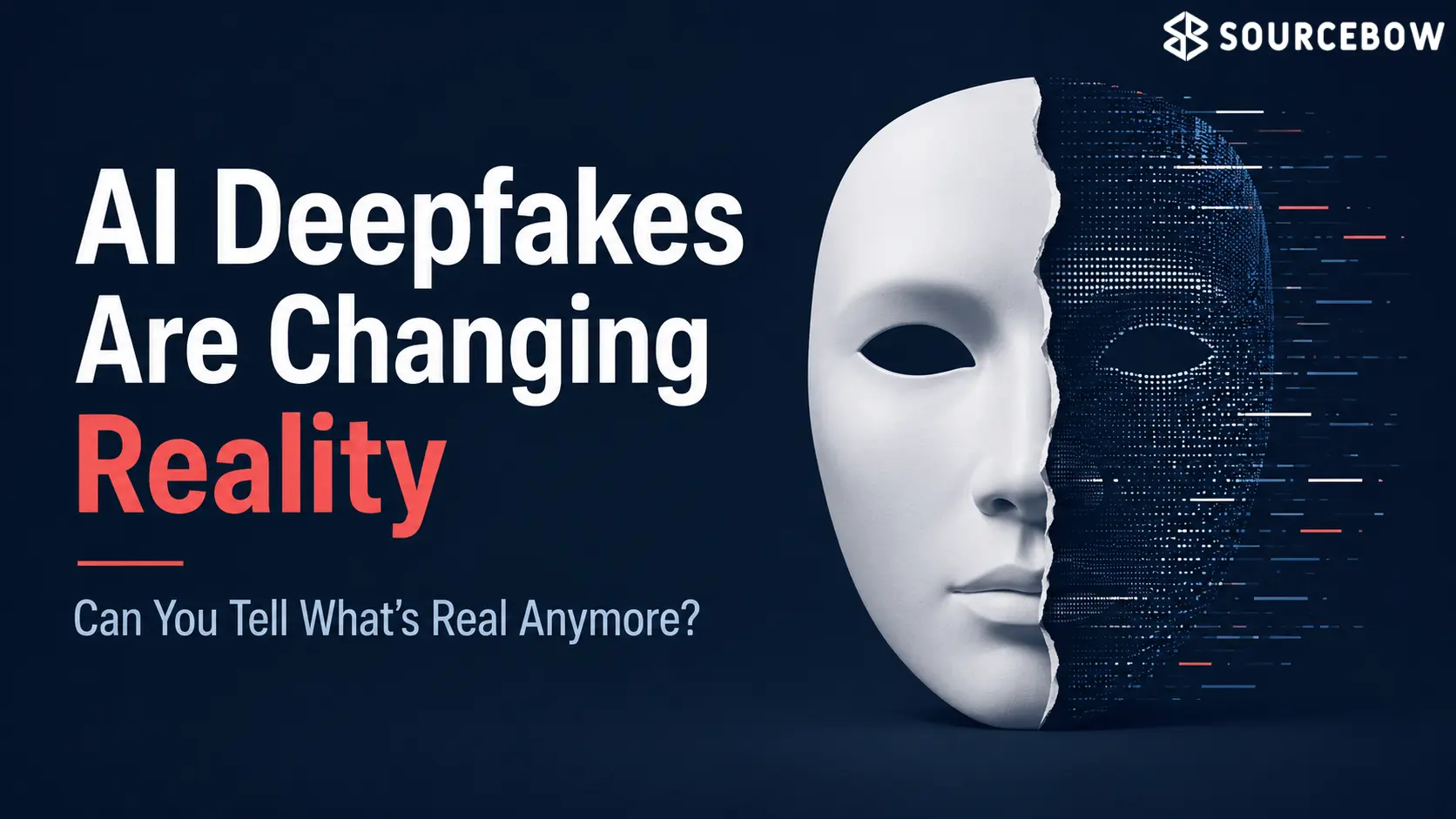
Deepfake detection tools matter because the scams are already good enough to pass as a real call, a real face, or a real executive message. That’s the unsettling part. We’re not just dealing with weird internet tricks anymore; we’re dealing with synthetic media that can slip into everyday trust and make it feel normal.
And once that happens, the problem stops being about “can AI fake this?” and starts becoming “who notices in time?”
Quick Highlights
- Deepfakes work by borrowing human patterns.
- Most clues are small, not dramatic.
- Source checking still beats guesswork.
- Urgency is often the scam’s biggest weapon.
Introduction
Deepfake detection tools have become relevant for the ugly reason that a fake voice can now move $35 million out of a bank account before anyone blinks. That’s the kind of detail that changes the mood fast. It pulls the topic out of the “interesting tech” box and drops it straight into the real world, where mistakes cost money, credibility, and sometimes a lot more than that.
The piece starts in the space between novelty and damage: entertaining synthetic media on one side, CEO fraud deepfakes and political manipulation on the other. That gap is where most people get caught. Something looks believable for just long enough, and by the time it gets a second look, the harm is already done.
Why a fake can still feel real
Deepfakes work because they borrow enough human pattern to defeat casual judgment, not because they are perfect. Face swapping, voice cloning, and cheapfakes in videos each exploit a different weakness in how people trust motion, sound, and familiarity. Your brain wants to recognize a face quickly. It wants to trust a familiar voice even faster. Deepfakes lean hard on that shortcut.
The telling detail is scale: 85 thousand harmful deepfakes were released by December 2020, and the volume was doubling every six months since 2018. That makes the problem less about a few viral clips and more about a steadily normalizing kind of fraud. The more often people see synthetic content, the less shocking it feels — and that’s exactly when it gets dangerous.
The machine learns the person, then impersonates the signal
Hundreds or thousands of samples train the system until it can mimic facial expressions, diction, and even movement patterns. The more material it gets, the less obviously synthetic the result becomes. In other words, the machine is not just copying a face. It’s learning the habits behind the face: timing, tone, pauses, and those tiny patterns humans barely notice unless they’re paying close attention.
- face swapping
- voice swapping
- voice cloning
- cheapfakes in videos
That list matters because each method attacks trust from a slightly different angle. Some rely on visual realism. Others go after audio. And some don’t even need full AI generation — they just edit in a way that makes a misleading video feel true enough for a quick share.
Access is the real accelerant
This no longer belongs only to specialists with powerful graphics systems and cleanup workflows. Apps make synthetic media easy enough that ordinary users can produce something persuasive without understanding the machinery behind it. That’s where the spread gets messy. When a tool becomes simple enough for almost anyone to try, the volume goes up and the average user starts running into content they can’t easily classify.
So the issue isn’t just technical sophistication. It’s convenience. If creating a fake takes a few taps, the barrier to misuse gets very low, very fast.
Where the line starts to matter: satire, fraud, evidence, law
The legal and ethical question is not whether deepfakes can exist — they already do — but when they cross from expressive use into harm. Satire, art, and entertainment sit awkwardly beside disinformation, adult content, and political sabotage. That’s part of why this topic keeps getting stuck in arguments. One person sees parody. Another sees manipulation.
The tension is that creation itself is not always illegal, yet the same content can trigger personal-rights violations, criminal misuse, or courtroom problems if the video is treated as evidence. In practice, that means intent matters, context matters, and distribution matters even more. A synthetic clip made for comedy can still become a weapon if it gets detached from its original setting.
A patchwork response, not a clean rulebook
EU policy sits across GDPR, AI regulation, copyright, and disinformation rules, but none of that feels fully settled. The absence of universal regulation leaves each country improvising at its own pace. And that patchwork approach creates its own confusion. People want a simple yes-or-no answer, but the law rarely gives one.
| Jurisdiction / rule | What it tries to address | Loose edge |
|---|---|---|
| EU GDPR | Personal rights and data use | Not built only for synthetic media |
| AI regulatory framework | Emerging AI governance | Still evolving |
| Copyright regime | Reuse and ownership | Doesn’t settle deception alone |
| Disinformation action plans | Manipulated public narratives | Hard to enforce consistently |
That table is the uncomfortable truth: each rule touches part of the problem, but none of them cleanly solves it. So people are left with grey areas, and grey areas are exactly where bad actors like to work.
How to spot a deepfake before you share it
The article treats detection less like a technical miracle and more like disciplined suspicion. Start with provenance, then work outward: where the clip came from, who posted it, and whether the same image appears elsewhere. That sounds simple because, honestly, it is. The hard part is slowing down enough to do it.
The useful contrast is that the obvious signs are often not dramatic glitches but tiny mismatches — blinking, lighting, alignment, audio timing, the wrong kind of stillness. You might notice that the face looks okay at first glance, but the whole thing feels oddly flat. Or the voice sounds right, yet the rhythm is slightly off. Those little mismatches are usually what give the game away.
What usually gives the game away
These are the recurring cues that show up when synthetic media slips: not one perfect tell, but a cluster of small wrongness. And that cluster is the key. Deepfakes don’t always fail loudly. More often, they leak strangeness in subtle ways.
- Unnatural body movements
- Odd coloration
- Strange eye movements
- Awkward facial expressions or emotions
- Unnatural teeth or hair
- Inconsistent audio
- Blurry visual alignment
The simplest check is still a reverse image check
Freeze the frame, run a reverse image check, and compare it against credible sources. If the same image has traveled oddly or appears in multiple versions, the story around it may be the thing that’s fake. That’s a useful habit because it doesn’t require special tools or advanced knowledge. It just requires a pause, and that pause can save you from forwarding something you shouldn’t.
What deepfakes do to companies when the target has a payroll
For businesses, the risk stops being theoretical the moment a fake executive message looks urgent enough to override process. The damage is financial, reputational, and often irreversible by the time the deception is discovered. Once money leaves, the cleanup becomes expensive fast. Once trust breaks internally, the repair is slower still.
The 2020 Dubai bank case makes the point brutally: a fake phone call, realistic audio, and a 35-million-dollar transfer approved in good faith. That is why deepfake phishing attacks are now treated as a serious corporate threat, not just a media problem. The story is almost painfully simple. Someone sounds authoritative. Someone else acts quickly. The gap between those two moments is where the fraud lives.
The pattern is always the same: trust, urgency, money
Cybercriminals choose recognizable figures — CEOs, politicians, celebrities — because authority shortens the distance between doubt and action. The moment a voice sounds familiar, the scam gets easier to sell. That’s why these attacks work so well. They don’t need to convince someone of everything. They just need to create enough urgency to get one payment approved or one protocol skipped.
- fake CEO instructions
- voice cloning scams
- fraudulent payment requests
- reputational sabotage
For a company, those four risks can show up in different ways, but they tend to land with the same ugly feeling: we trusted the wrong thing, and we trusted it too quickly.
FAQ
These are the smaller doubts that sit underneath the bigger warning signs — the ones people ask after they’ve already started wondering whether something is off.
Q: Can a deepfake be legal?
Yes, sometimes. Creation alone is not automatically illegal, but the moment it violates someone’s rights or is used for fraud, defamation, or another malicious purpose, the risk changes fast. So the content itself isn’t always the problem — it’s what the content does, and how it’s used.
Q: What is the fastest way to check if a video is fake?
Pause the clip, trace the source, and do a reverse image check. That combination catches more than most people expect, especially when the clip has been reposted out of context. If the source is vague, the repost trail looks odd, or the same frame appears elsewhere with different claims, that’s a strong reason to slow down.
Q: Are cheapfakes in videos the same as deepfakes?
Not exactly. Cheapfakes usually rely on simpler manipulation — cropped edits, altered audio, misleading timing — while deepfakes are more dependent on AI-generated or AI-manipulated realism. They can look similar to an everyday viewer, but the method behind them is different.
Q: Why are CEO fraud deepfakes such a big deal for companies?
Because they compress trust into a single call or clip. If the impersonation sounds credible enough, employees may authorize payments or actions before they have time to verify anything. And when the request sounds urgent, people tend to act first and verify later, which is exactly what scammers count on.
Conclusion
Deepfake detection tools are useful, but the real intent behind the topic is simpler: slow the reaction down before the fake gets rewarded. The safest posture is still a mix of skepticism, source checking, and human verification. That doesn’t mean becoming paranoid. It just means not letting speed do the scammer’s work for them.
If the clip, call, or image feels urgent in exactly the wrong way, treat that as a signal — not a nuisance — and verify before anything moves. In a world where AI deepfakes can sound smoother than a real person under pressure, that small pause is doing a lot more work than it seems.