Introduction
Autonomous AI systems can access tools, data, and workflows, not just generate text, and that is the real shift. It sounds subtle at first, but it changes the whole risk picture. A model that only answers questions is one thing. An agent that can click, send, fetch, update, approve, and trigger actions is something else entirely.
So when people talk about AI agent security guardrails, they’re really talking about a simple but urgent question: can we trust an agent to act without wandering outside the boundaries a business actually meant to set? That’s where the conversation gets interesting, because the danger is no longer just a bad sentence. It’s a bad action.
Quick Highlights
- Agents create action risk, not just output risk.
- Guardrails should be layered, not single-point fixes.
- Least privilege matters more when tools are involved.
- Human approval should cover high-impact decisions.
- Monitoring and kill switches are not optional extras.
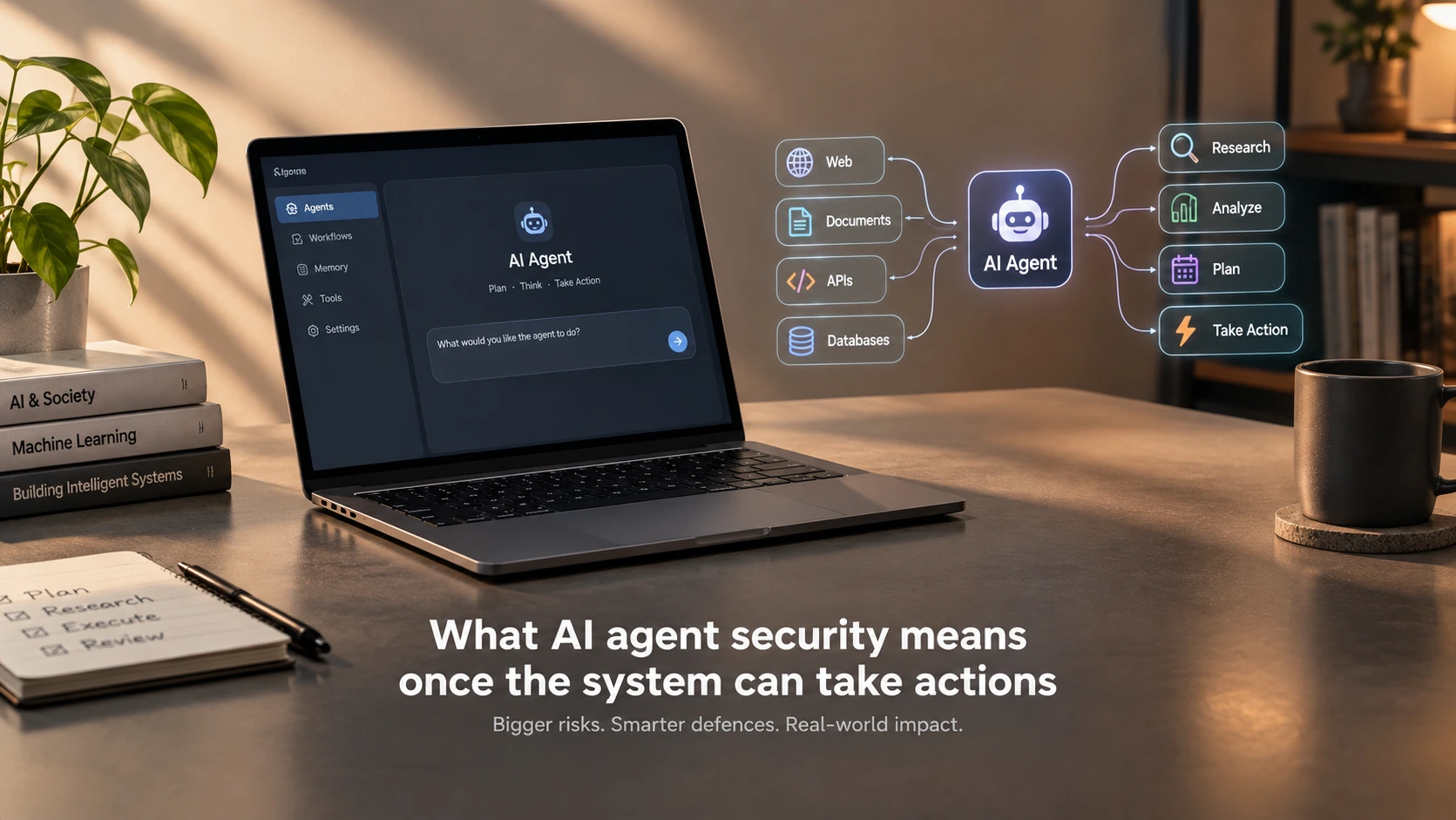
What AI agent security means once the system can take actions
AI agent security is about protecting autonomous and semi-autonomous systems from misuse, manipulation, unauthorized access, unsafe decisions, and unintended actions. That definition is broader than what many teams first assume. Traditional cybersecurity often focuses on networks, endpoints, identities, and software vulnerabilities. Those still matter here, of course, but now the model itself is part of a bigger machine that can plan, act, and keep going.
The real challenge is that an agent doesn’t just generate a response and stop. It receives an objective, breaks the work into steps, uses
tools, observes the results, and decides what to do next. That looping behavior is powerful, but it also creates more opportunities for things to go wrong. The system may be smart enough to finish a workflow, yet still be vulnerable to bad instructions, poisoned data, or overbroad permissions.
How an AI agent’s workflow differs
from a normal chatbot
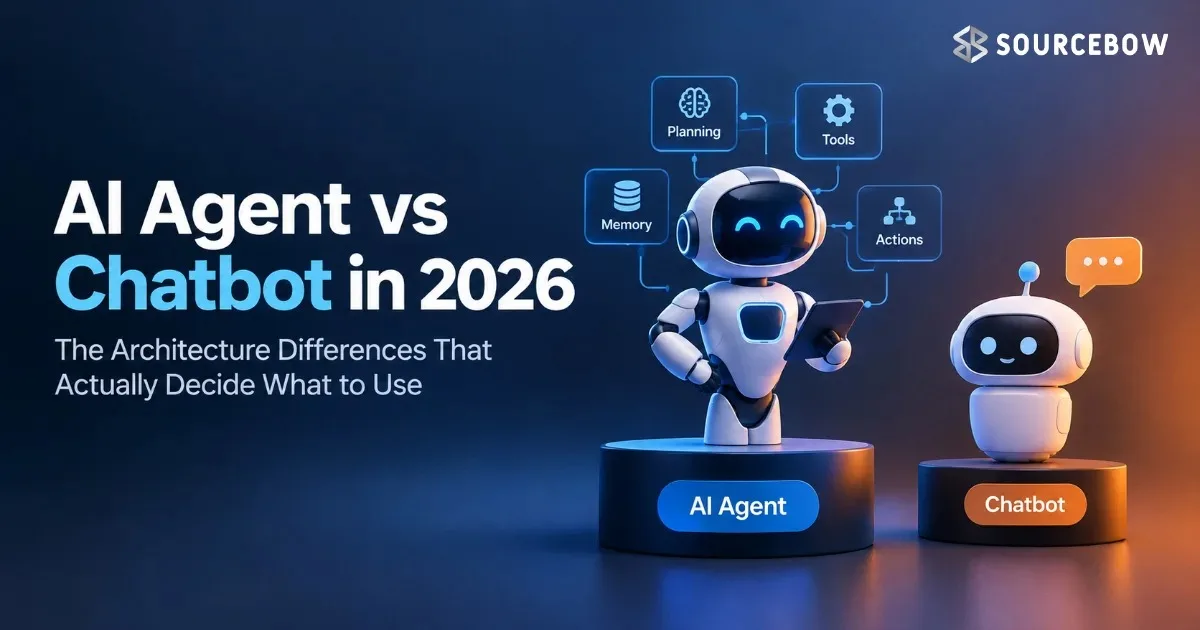
A chatbot answers. An agent can verify identity, check a CRM system, review subscription status, cancel a service, issue a refund if authorized, update records, and send a confirmation email. That’s a huge difference, even if the interface looks similar on the surface. The chatbot is mostly informational. The agent is operational.
And that’s exactly why hidden malicious instructions become so dangerous. If a document, email, or webpage includes content that looks like legitimate direction, the agent may treat it as part of the task. In plain terms, the agent can be tricked into following the wrong voice. Once that happens, the damage can move fast because the system isn’t just speaking anymore; it’s doing.
Why guardrails matter more when autonomy grows
Guardrails are the technical, operational, and policy controls that keep autonomy inside defined limits rather than removing autonomy altogether. That distinction matters. The goal isn’t to freeze the agent or make it useless. The goal is to let it help without letting it roam.
A decent analogy is a self-driving vehicle. You want it to move, turn, stop, and react on its own. But you also want lane rules, speed limits, sensor checks, road awareness, and emergency overrides. Business systems need the same mindset. AI agents need rules for allowed actions, approval thresholds, restricted data, authorized tools, escalation, and suspicious instructions.
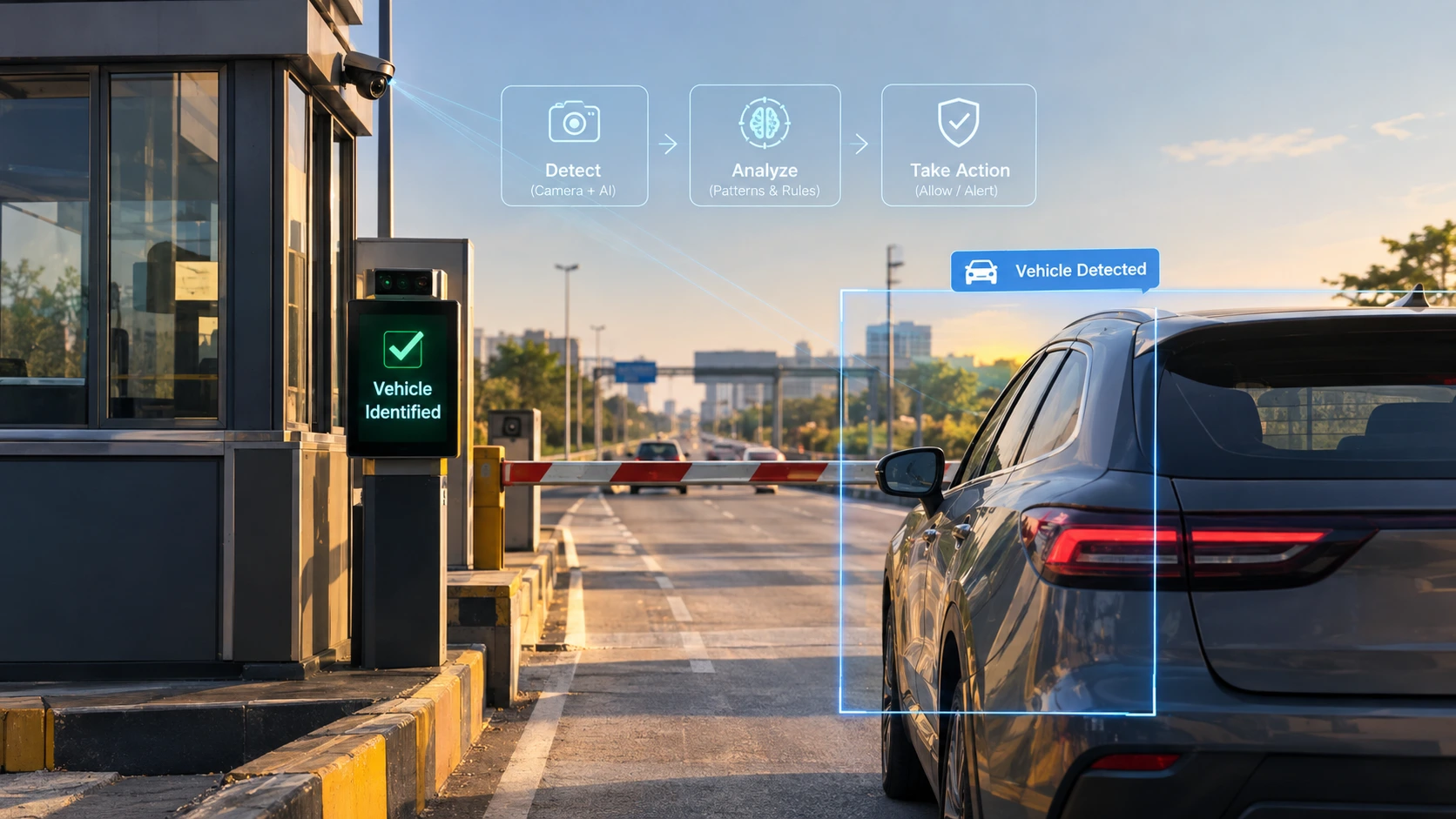
Think about the examples. A financial AI agent should not transfer unlimited money just because it’s confident. A healthcare system should not act on uncertain information as if it were confirmed. An IT agent should not delete production infrastructure because a cleanup task sounded reasonable. A sales agent should not expose confidential customer data while trying to be helpful. A cybersecurity agent should not disrupt critical systems without safeguards. The pattern is the same every time: usefulness without control becomes risk.
Which security risks show up first in agentic AI systems
The main risks are not abstract; they are specific failure modes that emerge when models can act through tools and shared systems. That’s important, because teams sometimes talk about agentic AI security like it’s a vague future problem. It isn’t. It’s a very practical list of things that can happen once an agent has enough access to matter.
OWASP’s guidance for agentic applications calls out agent goal hijacking, tool misuse, identity and privilege abuse, memory and context poisoning, insecure inter-agent communication, cascading failures, and rogue agent behavior. That list is a good reminder that this isn’t only about model safety anymore. It’s about system control, trust boundaries, and what happens when automation meets permissions.
Agent goal hijacking, tool misuse, and privilege abuse
Goal hijacking happens when malicious prompts, hidden webpage content, or manipulated external data redirect an agent away from its original objective. The agent thinks it is helping, but it has quietly been steered off course. Tool misuse happens when legitimate tools like search systems, databases, APIs, cloud platforms, email apps, and code execution environments are used in unintended ways. A tool isn’t dangerous by itself. The problem is how it can be directed.
Identity and privilege abuse is the same issue at the permissions layer. The agent has an identity, but it should not inherit broad access, permanent access, or delete-the-database access just because it can perform a complex task. That kind of access is like giving a visitor a master key because they know how to use the lock. It feels efficient until it isn’t.
Memory poisoning, inter-agent attacks, and cascading failures
Memory and context poisoning matters because a bad entry can sit quietly inside the system and affect later behavior. Maybe it’s a false note, maybe it’s a misleading summary, maybe it’s a malicious instruction tucked away where it doesn’t look suspicious. The article’s practical advice is to validate stored information, track sources, set expiration periods, separate trusted and untrusted context, and monitor unexpected changes.
Insecure inter-agent communication opens another path. An attacker can impersonate an agent, modify messages, inject instructions, replay requests, or manipulate shared context. If one agent trusts another without checking, the whole chain can start to wobble. That’s why circuit breakers matter too. Repeated failed actions, unusual request spikes, unauthorized access attempts, unexpected financial transactions, and multiple security alerts should all trigger attention, not just be logged and forgotten.
| Risk | What it looks like | What the article says to do |
|---|---|---|
| Agent goal hijacking | Hidden instructions in a document, email, or webpage redirect the agent | Separate trusted instructions from untrusted data and validate high-impact actions independently |
| Tool misuse | An agent uses search, databases, APIs, cloud tools, email, or code execution in the wrong way | Keep tool access granular and define which actions are blocked or require approval |
| Identity and privilege abuse | An agent gets broad or permanent permissions it does not need | Apply least privilege and use temporary or scoped credentials |
| Memory and context poisoning | False information persists in memory and changes future decisions | Validate stored information and set expiration periods for memory |
| Insecure inter-agent communication | Messages between agents are impersonated, modified, replayed, or polluted | Use secure communication protocols and strong authentication between agents |
| Cascading failures | One bad automated decision triggers another and spreads across systems | Use circuit breakers and stop automation when suspicious behavior appears |
What guardrails actually look like in practice
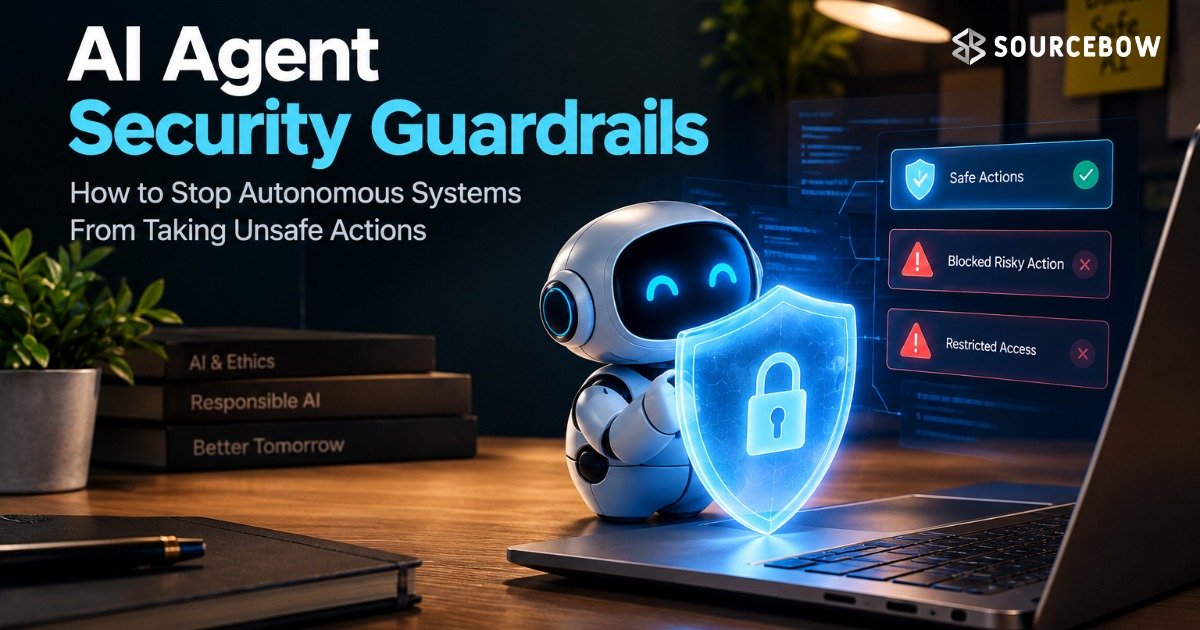
The good news is that guardrails don’t have to be mysterious. The article argues for layered controls rather than one magical fix, and that’s the right instinct. Real safety usually comes from several smaller protections that overlap. If one misses something, another one catches it.

Those controls include narrow agent roles, least privilege access, separation of planning from execution, human approval for high-risk
actions, tool-call validation, protected memory, continuous monitoring, and kill switches. The strongest pattern running through the whole idea is simple: the agent can propose; the system decides whether the action is allowed.
How to separate planning from execution
An agent may propose deleting inactive cloud resources, but an independent policy layer should still check authorization, policy compliance, and whether human approval is required. That separation matters because planning and execution are not the same thing. Just because the agent can reason about a task doesn’t mean it should be trusted to carry it out without review.
The same logic applies to a fund transfer. The system should validate the amount, recipient, account, authorization, and transaction limit before anything happens. In practice, that means the agent can do the thinking, but another layer has to do the gatekeeping. That’s a healthy split, and it keeps excitement from turning into damage.
Where human approval becomes non-negotiable
Not every request needs oversight, but some absolutely do. Large financial transactions, deleting critical data, changing production infrastructure, granting permissions, sending sensitive information, and approving legal or contractual actions should all trigger real review. “Real” is the key word there. If approval is just a rubber stamp, it isn’t a safeguard.
The article is also clear that human oversight should be meaningful, not symbolic. High-impact recommendations should include reasoning summaries, evidence, risk indicators, confidence limitations, and required approval steps. That gives a human enough context to make a good call instead of forcing them to guess what the agent was thinking.
Why a kill switch and circuit breaker belong in the design
A kill switch disables the agent immediately; a circuit breaker pauses it automatically when suspicious behavior appears. Both matter, and they solve slightly different problems. One is the emergency stop. The other is the automated warning light that says, “something’s off, and we should not keep going blindly.”
The article also asks the right follow-up question: what happens after shutdown? Do you revoke access? Do you preserve tasks? Do workflows pause? Who investigates? How is the agent restarted safely? Those are the kinds of details teams often skip early on, then scramble to define later. Better to plan them now, when the stakes are lower.
How organizations should start before deployment
Security is supposed to begin before an agent reaches production, not after the first failure. That sounds obvious, but in real projects it’s easy to move too fast. The pressure to launch can be strong. Still, if the system will touch data, tools, or money, the work has to start much earlier than deployment day.

The article breaks the lifecycle into design, development, testing, deployment, and operations, with adversarial testing for prompt injection, malicious documents, unauthorized tool requests, fake agent messages, poisoned memory, and privilege escalation attempts. That’s the part many teams underestimate. You don’t just test whether the agent works. You test whether it can be pushed into doing the wrong thing.
It also cites OWASP’s guidance as a reminder that practical security has to follow the whole LLM-powered system through design and operations. In other words, the agent doesn’t become secure because it passed one demo. It becomes safer because the people around it kept asking, “What can this actually touch, and what happens if someone tries to bend it?”
FAQ
These are the doubts that come up once the basics make sense but the operational questions still remain.
Q: What is the difference between AI agent security and normal AI security?
Normal AI security is often about protecting the model and its outputs. AI agent security also has to protect
actions, permissions, tools, identities, memory, and the systems the agent can touch. That extra layer is what makes
autonomous systems feel powerful and risky at the same time.
Q: Why is least privilege so important for autonomous AI systems?
Because an agent with excessive access can do real damage if it is manipulated or makes a bad decision. The article
repeatedly stresses temporary, scoped, and minimum necessary permissions, and that’s because broad access turns
small mistakes into big ones very quickly.
Q: What is a circuit breaker for AI agents?
It is a control that pauses or stops the agent when suspicious behavior appears, such as repeated failed actions,
unusual requests, unauthorized access attempts, or unexpected financial transactions. Think of it as a safety stop
that kicks in before a problem spreads.
Q: Which tools and data should an AI agent be allowed to access?
Only the tools and data needed for the specific task. The article pushes granular access, blocked actions, approval
steps, and clear data boundaries rather than broad, open-ended access. If the agent doesn’t need it, it probably
shouldn’t have it.
Conclusion
AI agent security guardrails are really about controlled autonomy: letting an agent do useful work without giving it
uncontrolled power. That’s the balance every organization is trying to find right now, whether they say it that way
or not. Too little freedom, and the agent is just an expensive assistant. Too much freedom, and you’ve handed a
capable system more reach than it can safely handle.
The practical move is to define access, restrict high-risk actions, validate tool use, protect memory, monitor
behavior, and keep a human hand on the moments that matter. If you build with those limits in place from the start,
autonomous systems become much easier to trust. Not perfectly safe. Nothing is. But a lot safer, and a lot more
usable, which is usually the real goal.