Introduction
Explore the best AI agent builders in 2026, including LangGraph AI agent builder, plus no-code, RAG, and multi-agent options. The big question isn’t just what’s popular right now. It’s which platform actually fits the way you work, the systems you already use, and how much control you want once things get more serious.
That part matters more than people think. A tool can look impressive in a demo and still feel clumsy the moment you try to connect it to real tasks, real data, or real teams. So before you spend a week testing the wrong stack, it helps to slow down and sort the best AI agent builders in 2026 by what each builder is truly good at.
Quick Highlights
- Pick by workflow, not hype.
- No-code tools move fastest.
- RAG tools shine on data.
- Multi-agent frameworks need more control.
- Stability matters more than buzz.
What an AI agent builder actually does, and why the category matters in 2026
An AI agent builder is not just another chatbot tool; it’s a place to combine models, tools, memory, and workflows into something that can act with some independence. That’s the real shift here. Instead of only answering questions, the system can help complete tasks, move between steps, and make small decisions along the way. The raw definition matters because these systems are meant to handle customer
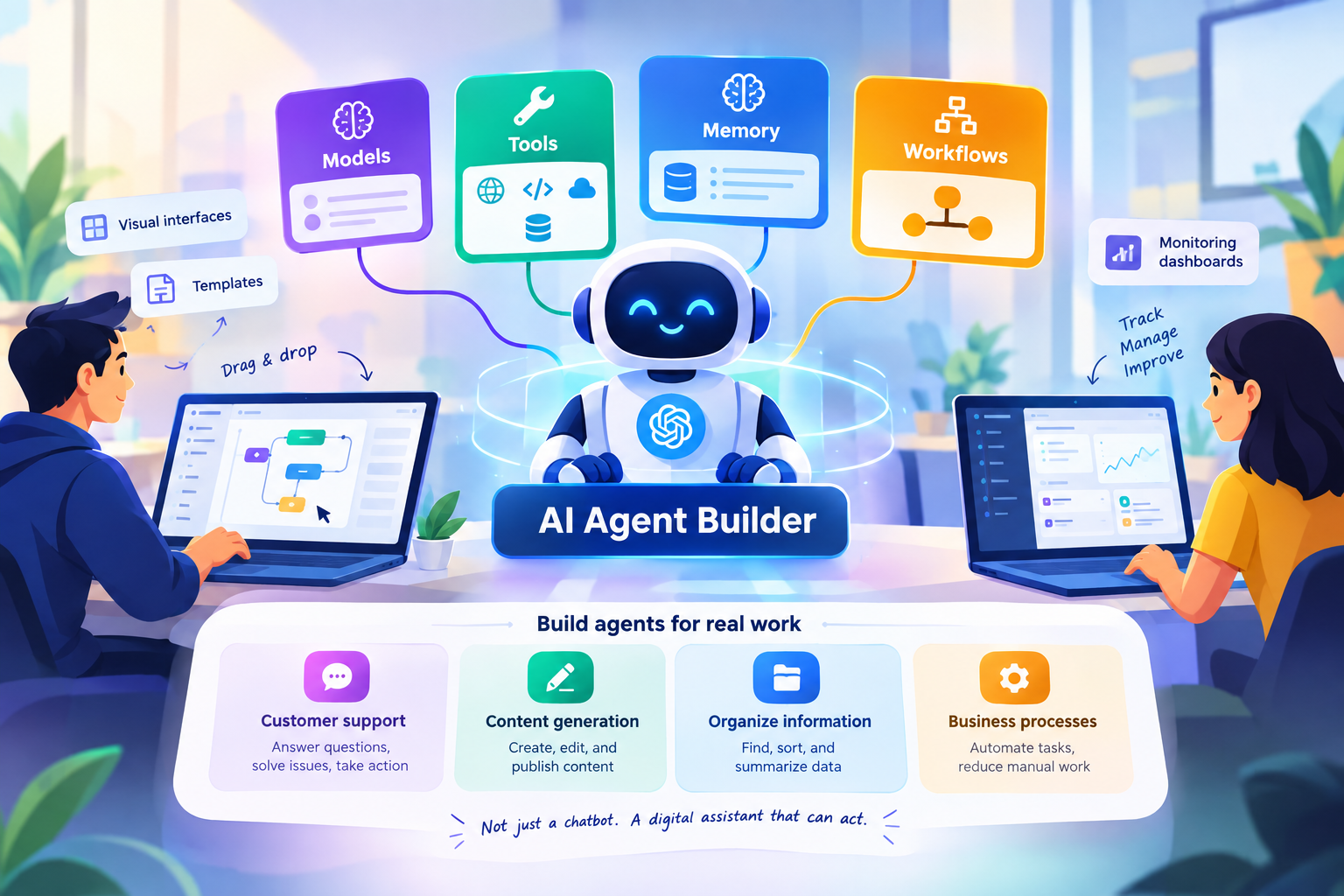
questions, content generation, organizing information, and business processes without constant supervision. In other words, they’re closer to digital assistants that can take action, not just reply with text. That’s why the category has gotten so much attention in 2026.
Most platforms also lean on visual interfaces, drag-and-drop tools, templates, and monitoring dashboards. That’s a big reason technical teams and non-coders are both showing up in the same conversation. The tools are different, but the goal is often the same: build something useful without turning every little task into a manual one.
Here’s the thing. Once you start comparing them honestly, the differences get clearer fast. Some tools are built for research. Some are built for automation. Some are all about stateful orchestration. And some are just designed so you can get a working prototype in an afternoon and learn from it before you commit.
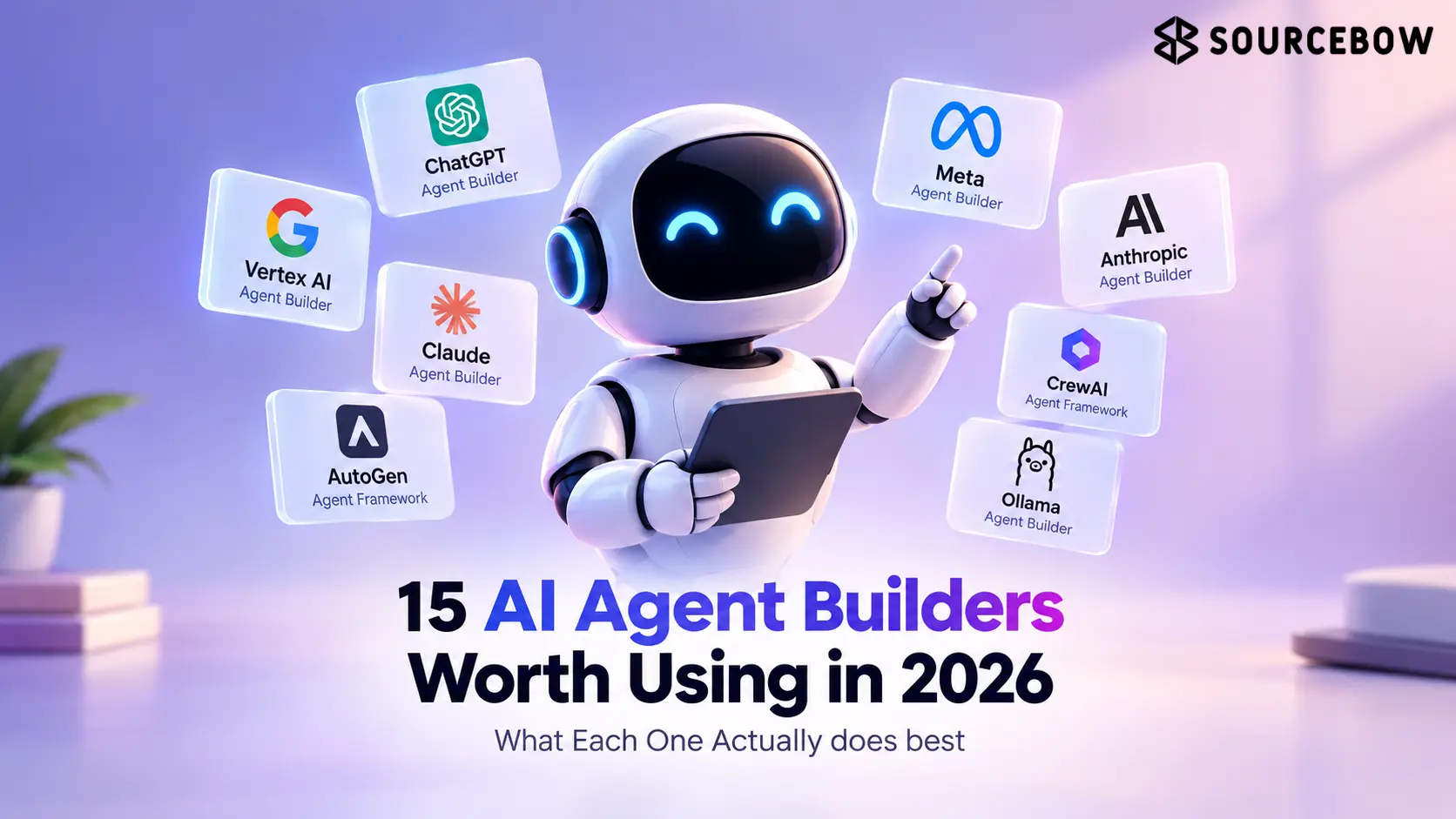
The 15 platforms worth looking at, and what each one is built for
This is where the category stops being abstract and starts turning into real choices: research, automation, multi-agent coordination, dashboards, or no-code setup. If you’ve ever felt stuck choosing between tools that all claim to “build agents,” you’re not alone. The details matter a lot more than the label.
The list below keeps the product names intact and focuses on the practical strength each one is known for. That’s usually the fastest way to avoid overbuying features you won’t use.
| Platform | Main strength | Best fit |
|---|---|---|
| OpenAgents | Connects LLMs with tools, memory, and browsing | Research agents |
| LangGraph | Graph-based framework for long-running, stateful, multi-agent workflows | Complex orchestration |
| Zapier AI Agents | Automation across 6,000+ apps using trigger-action logic | Workflow automation |
| LangChain | Modular framework for context-aware, multi-turn conversational agents | Conversational systems |
| AgentGPT | Browser-based autonomous GPT deployment with no coding required | Quick experimentation |
| LlamaIndex | Indexing and querying large datasets for RAG agents | RAG agents for datasets |
| SuperAgent | Open-source prototyping with memory, task handling, and API routing | Fast builds |
| Botpress | No-code, multi-channel conversational builder with chatbot UX | Non-coders |
| FlowiseAI | Drag-and-drop builder for LangChain agents with UI components and memory | Visual setup |
| CrewAI | Collaborative multi-agent workflows | Team-based automation |
| Make.com | Visual automation builder for non-coders | Simple workflow design |
| Phidata | Data-centric agents and dashboards for analytics and monitoring | Analytics-heavy use cases |
| n8n | Low-code automation with integrations for task-driven agents | Teams that want flexibility |
| AG2 | Agent-first apps and integrations | Product builders |
| AutoGPT | Experimental autonomous agents with minimal human input | Testing the edge of autonomy |
The no-code options people usually ask about first
Botpress, Make.com, and FlowiseAI are the names that keep coming up for people who want to build without living inside code. And honestly, that makes sense. Not every project needs a full engineering-style setup just to prove the idea works.
Botpress leans on no-code conversational UX, Make.com on visual automation, and FlowiseAI on a drag-and-drop layer around LangChain. If you want something you can understand by looking at it, these are usually the first tools people try. They’re also a lot easier to explain to a teammate who just wants the agent to work.
Where the RAG and dataset-heavy tools separate from the rest
LlamaIndex is the clearest fit for retrieval-augmented generation, because its whole role is to index and query large datasets. If your agent needs to answer from documents, internal knowledge, or structured records, that’s the kind of thing RAG is made for. It’s less about “being clever” and more about being useful with the right information at the right moment.
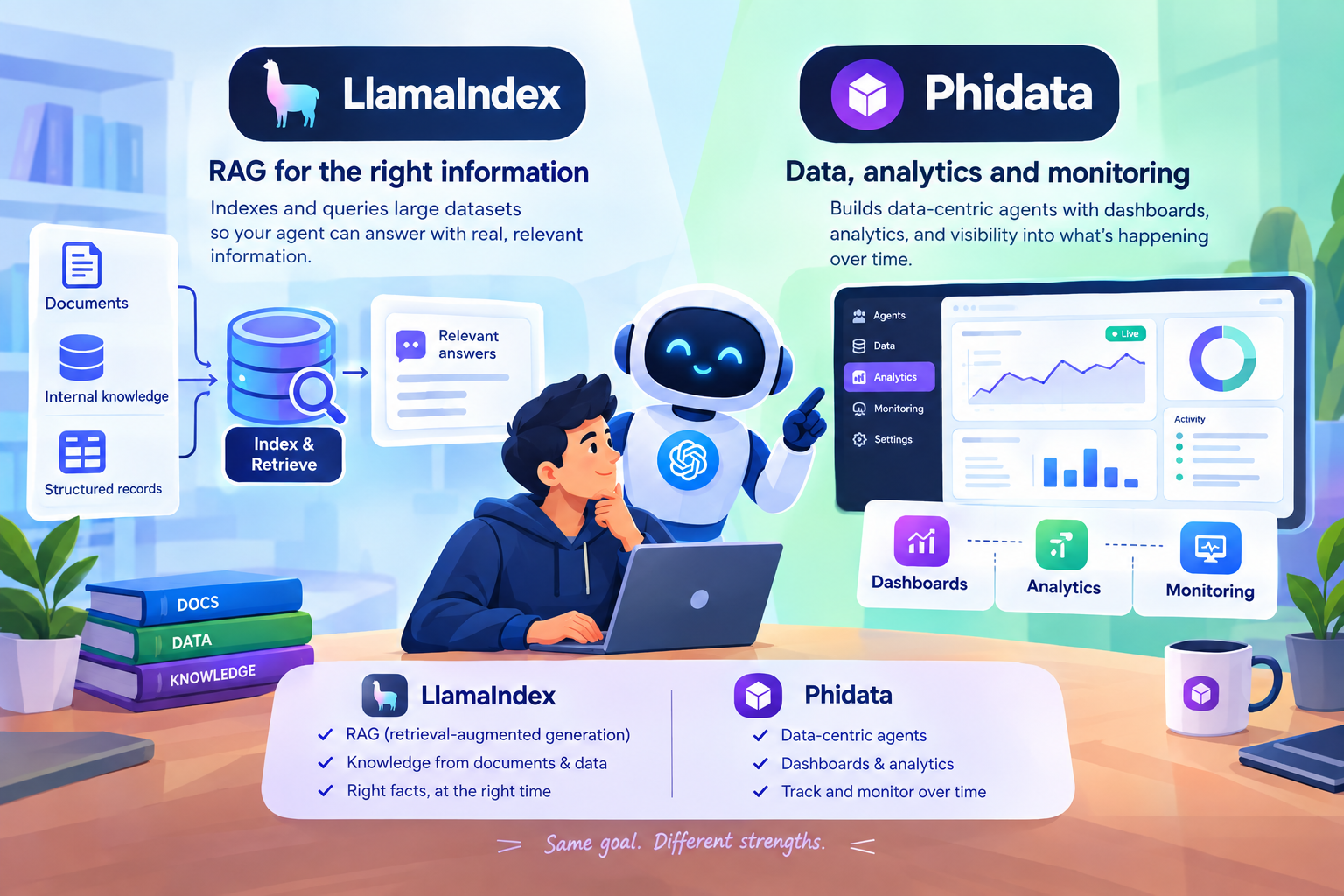
Phidata pushes in a slightly different direction with data-centric agents, dashboards, analytics, and monitoring. That makes it feel a little more operational, especially if you care about what the agent is doing over time. So if one tool is about pulling the right facts, the other is more about keeping an eye on the whole data workflow.
The tools that are really about multi-agent coordination
LangGraph, CrewAI, and SuperAgent are the names tied most directly to collaborative or stateful agent systems. That’s where the conversation gets a bit more advanced, but also more interesting.
LangGraph emphasizes long-running workflows, CrewAI is explicitly built for team-based automation, and SuperAgent adds memory, task handling, and API routing to rapid prototyping. In plain English, these tools are useful when one agent doing one thing is not enough. Maybe a planner needs to hand off to a researcher, who then passes output to another agent that formats the result. That kind of chain is where these platforms start to shine.
How to choose between no-code, low-code, and full frameworks
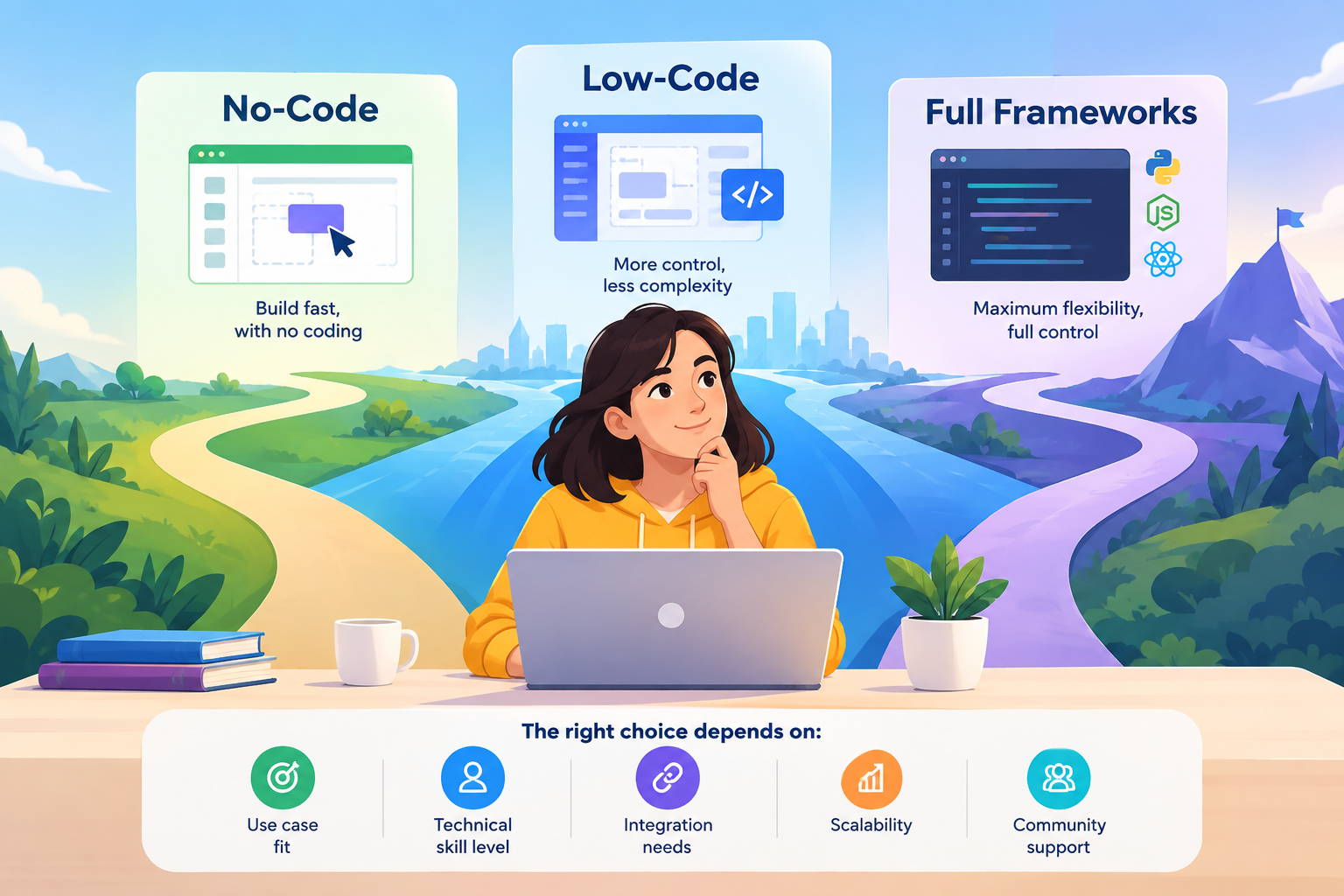
The decision usually comes down to how much control you want versus how quickly you want something working. A lot of people start by asking, “Which tool is best?” But the better question is, “How much setup can I handle right now, and how much flexibility will I need later?”
The practical checks are pretty simple: use case fit, technical skill level, integration needs, scalability, and community support. That’s where the real sorting happens, not in the brand names alone. A flashy tool with weak integration can become a headache fast, while a quieter one can quietly save you hours every week.
And look, this part is where people sometimes overthink it. You don’t need the most advanced framework just because it sounds impressive. You need the thing that won’t slow you down when the workflow starts getting real.
When a no-code builder makes more sense
Botpress, Make.com, and FlowiseAI are the cleanest fit when speed and usability matter more than deep customization. If the work is mostly automation or simple agent behavior, a visual builder usually gets you farther, faster. It’s a bit like using a prebuilt kitchen instead of designing a restaurant from scratch.
That doesn’t mean no-code tools are only for beginners. It just means they’re often the smart choice when the team wants quick results, fewer moving parts, and a clearer path to something usable. A lot of projects never need more than that, at least not at the start.
When a framework is worth the extra effort
LangGraph, LangChain, and n8n make more sense when the workflow has to stay flexible, stateful, or deeply integrated with other systems. That tradeoff becomes obvious once you care about multi-turn behavior, multiple agents, or more serious orchestration. This is where frameworks earn their keep.
Yes, they ask for more setup. But they also give you room to build something that can grow instead of something you’ll outgrow in two months. If your project depends on logic, branching, handoffs, or reusable parts, the extra effort starts to feel pretty reasonable.
Which platforms people are actually asking about in 2026
Some questions keep repeating because they map to real decisions: what’s stable, what’s beginner-friendly, and what’s truly different from a chatbot. Those are the things people want answered before they commit time or money. And fair enough, because a platform choice can shape the whole project.
The most common doubts are about non-coders, multi-agent systems, AutoGPT’s relevance, and the line between agents and chatbots. If you’ve had those same questions, you’re basically asking the right things.
Is AutoGPT still relevant in 2026?
AutoGPT is still relevant as an experimental framework for autonomous agents, but it is not the safest choice if stability and features matter most. It remains interesting precisely because it still sits closer to the minimal human input end of the spectrum. So yes, it still has a place, but it’s more of a testing ground than a default production pick.
That’s actually useful to know. Not every tool needs to be the final answer. Sometimes a tool’s value is in showing you what’s possible before you choose something more stable.
Can you build multi-agent systems with these tools?
Yes — LangGraph, CrewAI, and SuperAgent are the clearest answers for collaborative, multi-agent workflows. Those are the names that matter when one agent is not enough. If your project needs a planner, executor, reviewer, or some other role split, those systems are built for exactly that kind of coordination.
This is also where the phrase AI agent builder starts to mean something more specific. It’s not just about making a bot. It’s about designing behavior between multiple parts that can share work without falling apart.
How are AI agents different from chatbots?
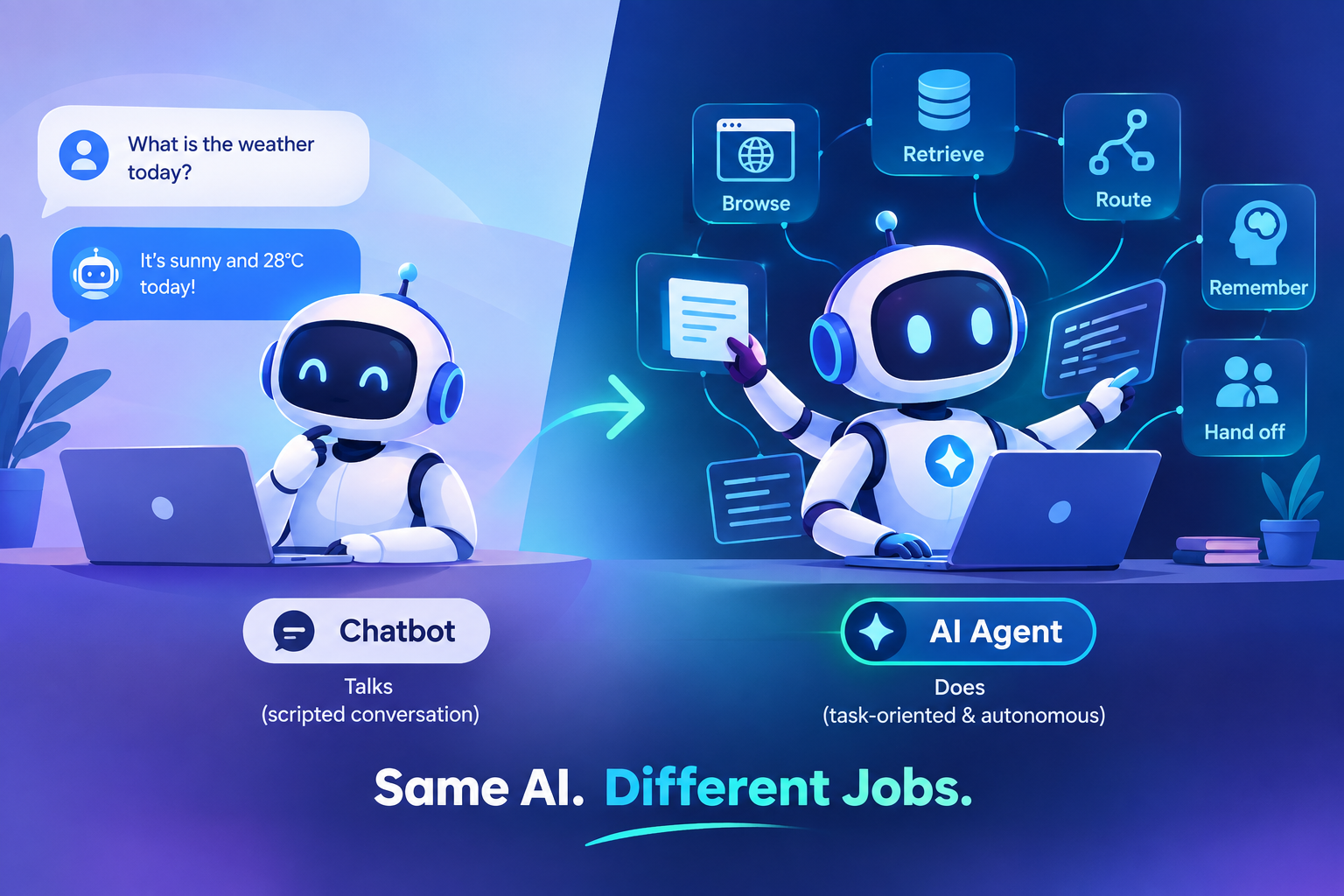
AI agents are more autonomous and task-oriented, while chatbots usually stay inside scripted conversation. That difference is the whole reason tools like LangGraph, LlamaIndex, and CrewAI exist in the same conversation at all. A chatbot can talk. An agent can often do something with what it learned.
That distinction sounds small at first, but it changes everything. Once a system is expected to browse, retrieve,
route, remember, or hand off work, you’ve moved beyond basic chatbot territory.
Conclusion
The best AI agent builder in 2026 is the one that matches the job: no-code for speed, RAG tools for data, and multi-agent frameworks when coordination is the point. There isn’t one winner for everyone, and that’s actually a good thing. It means you can choose based on the work instead of chasing a generic “best” label.
If you’re choosing now, start from the workflow you actually need to run — not the platform with the loudest name. That simple shift will probably save you more time than any feature comparison ever could.
FAQ
These questions come up again and again once people understand the category and want a straight answer. So here’s the quick version, without the extra fluff.
Q: Which AI agent builder is best for non-coders?
Botpress, Make.com, and FlowiseAI are the clearest no-code picks from the list. They’re the easiest places to start if you want a working build without spending all your time in code.
Q: What are the best AI agent builders for RAG agents for datasets?
LlamaIndex is the most direct match, because it is built around indexing and querying large datasets. If your agent needs to answer from internal documents or structured knowledge, that’s the one to look at first.
Q: Which platform is best for autonomous AI agents with minimal human input?
AutoGPT is the clearest example in the source, though it is still described as experimental. It’s the more extreme autonomy choice, which makes it interesting, but not always the safest everyday option.