Introduction
When an AI strategy has to satisfy GDPR, HIPAA, and still avoid vendor lock-in, “Sovereign AI explained” stops sounding abstract very quickly.
The real question is not whether AI can be powerful, but whether countries and firms can use it without handing control of data, infrastructure, and decisions to outside providers.
Quick Highlights
- Keep sensitive data under local control.
- Use infrastructure you can actually govern.
- Compliance gets easier when data stays close.
- Innovation doesn’t have to mean outside dependency.
What sovereign AI actually means when the goal is local control
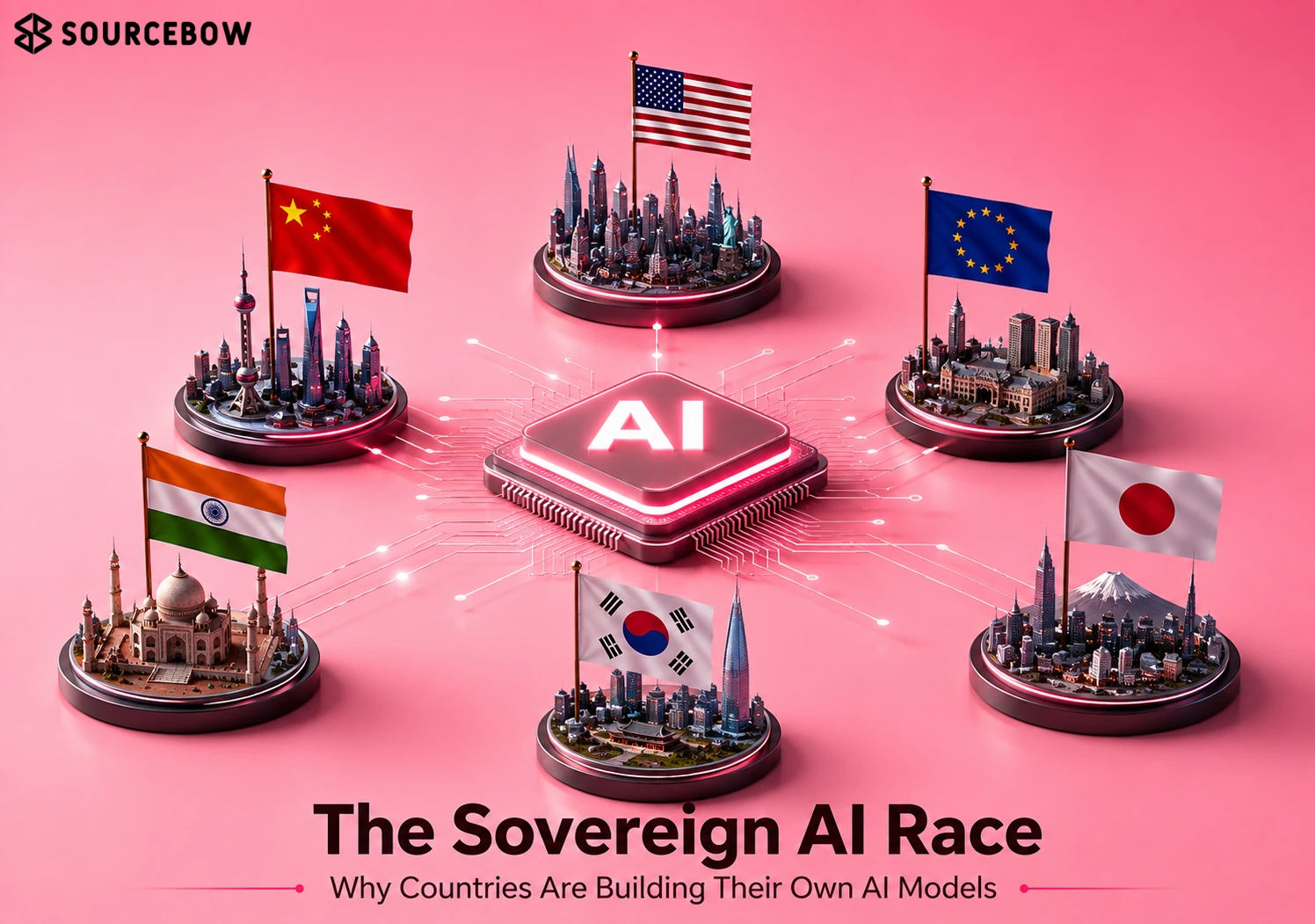
Sovereign AI is really about keeping AI systems, data, and infrastructure under domestic or organizational oversight instead of depending on external providers.
The article grounds that idea in three practical aims: protecting sensitive data, running AI on local infrastructure, and building skills locally so control does not drift outward.
That framing also ties to digital sovereignty and AI rather than treating sovereignty as a slogan.
The five building blocks behind a sovereign setup
Local data management, governed AI infrastructure, custom AI models, policy and compliance frameworks, and skill and talent development are the parts that make the idea real.
It is not one control layer; it is a stack, from where data sits to who can touch the system and who knows how to run it.
- Local data management: training and operating data stays inside controlled environments.
- Governed AI infrastructure: servers, storage, and compute live locally or in trusted domestic facilities.
- Custom AI models: systems are built around regional needs instead of generic external assumptions.
- Policy and compliance frameworks: rules define access, use, and decision-making.
- Skill and talent development: expertise stays in-house or in-country.
Why countries and regulated industries are treating AI sovereignty as a strategic problem
The article argues that sovereign AI matters because data security, privacy, compliance, operational independence, and strategic decision-making now sit in the same bucket.
That matters most where local rules are non-negotiable: regulated sectors, national programs, and critical services that cannot afford outside dependency.
regulated industry AI compliance lands naturally here, because the pressure is practical, not theoretical.
| Why it matters | What sovereign AI changes | Named standards or examples |
|---|---|---|
| Data security and privacy | Keeps sensitive information local | Better protection against breaches and misuse |
| Regulatory compliance | Lets organizations meet local laws without external systems | GDPR, HIPAA, other regional privacy requirements |
| Operational independence | Reduces reliance on outside providers | Internal AI development, infrastructure, and talent |
| Strategic decision-making | Aligns AI with local priorities and values | Long-term goals, governance, and public priorities |
How sovereign AI is being used in governments, businesses, and AI factories
The article moves from definition to deployment, showing that sovereign AI is already being used across national programs, finance, healthcare, energy, climate, and language technology.
It also calls out advanced data centers sometimes referred to as “AI factories,” which are built to train and run models entirely within local networks.
That section is really about the shape of adoption, not just the label.
Where the real-world uses cluster
The examples are concrete and easy to scan because they break into named sectors and use cases rather than abstract benefits.
Industry applications include diagnosis and treatment support using local patient data, fraud detection and risk management in finance, efficiency and sustainability tools for energy and climate, and models that reflect local languages and cultural context.
- National programs: local AI systems, local talent training, and models tailored to languages, culture, and needs.
- Businesses and organizations: finance, healthcare, and other regulated industries protecting sensitive data and reducing dependence on global providers.
- AI infrastructure: advanced data centers or “AI factories” operating fully within local networks.
- Healthcare: diagnosis and treatment support using local patient data.
- Finance: fraud detection and risk management with local data.
- Energy & Climate: efficiency and sustainability tools.
- Language & Culture: models that reflect local languages and cultural context.
What blocks sovereign AI from working cleanly in the real world
The obstacles are not ideological; they are logistical, legal, and expensive.
Different regions have different data rules, local infrastructure is costly, technical integration is hard, and talent in AI, cybersecurity, and compliance is still scarce.
federated learning for AI and homomorphic encryption AI show up later as part of the answer, but the bottleneck is still the same: implementation is harder than the idea.
- Legal and regulatory complexity: data storage and use rules vary by region.
- Cost and resources: local infrastructure, skilled hiring, and custom models take time and money.
- Technical complexity: data centers, secure networks, and specialized systems must fit together without breaking operations.
- Talent and expertise: organizations need AI, cybersecurity, and compliance specialists.
How organizations keep innovation moving while they localize AI
The article’s answer is not “slow down”; it is to separate sensitive data from the rest of the innovation stack.
That is where hybrid deployment, trusted partners, modular infrastructure, and internal training come in, along with privacy-preserving tools like federated learning and homomorphic encryption.
privacy-preserving AI collaboration is the phrase that fits the middle ground best.
The four practical moves the article puts forward
These are the parts that let sovereign AI stay usable instead of becoming a compliance project that nobody enjoys maintaining.
They are also the clearest bridge between security and speed.
- Hybrid AI deployment: combine local systems with privacy-preserving computation tools.
- Collaboration with trusted partners: bring in specialized providers without losing control.
- Scalable local infrastructure: build modular, cloud-adjacent environments that can expand.
- Continuous skills development: train internal teams on privacy, cybersecurity, and compliance.
What business value sovereign AI delivers beyond compliance
This section makes the commercial case: sovereign AI is not only a control mechanism, it can also reduce costs and operational risk while improving performance.
The value points are direct — lower breach exposure, easier compliance with GDPR and HIPAA, faster processing, lower latency, safer experimentation, and less vendor lock-in.
That is the moment the strategy stops sounding defensive.
| Business value | What changes in practice | Why it matters |
|---|---|---|
| Enhanced data security | Sensitive data stays local | Lower exposure to breaches and fines |
| Regulatory compliance savings | Operations stay inside sovereign boundaries | GDPR and HIPAA become easier and less costly to meet |
| Operational efficiency | Local processing cuts latency | Faster workflows tailored to the organization |
| Innovation without liability risk | Real-world data can be used more safely | More room to test models and develop products |
| Strategic independence | Less vendor lock-in | More control over AI strategy and local priorities |
Where sovereign AI is heading next, and why global policy still matters
The future view is broader than simple localization: more domestic data centers, tighter regulation, local-language models, workforce development, and public-private partnerships are all part of the trendline.
At the same time, the article argues that sovereign AI does not require isolation; countries and companies can still share open-source tools, follow international best practices, and collaborate safely.
That balance between local governance and global cooperation is the real endpoint.
- Expanding local AI infrastructure: more domestic data centers and computing resources.
- Stronger regulations and compliance: data privacy and AI rules keep evolving.
- Localized AI models: training on local languages, cultures, and data.
- Workforce development: AI and cybersecurity training for local talent.
- Public-private partnerships: shared infrastructure and joint innovation.
FAQ
These are the smaller doubts that usually come up once someone understands the main tradeoffs but still wants the edges filled in.
Q: Does sovereign AI mean a company cannot collaborate globally?
No. The article is explicit that sovereign AI is not about isolation. It still allows research sharing, open-source tools, and international best practices as long as sensitive data stays protected.
Q: Why do GDPR and HIPAA come up so often in sovereign AI discussions?
Because they are concrete examples of laws that force organizations to think about where data lives and how it is used. Sovereign AI makes that easier by keeping operations inside local boundaries.
Q: What makes sovereign AI hard to implement?
The hardest parts are cost, legal complexity, technical integration, and talent gaps. Building local infrastructure and hiring the right people takes real money and time.
Q: Can sovereign AI still use advanced tools like federated learning and homomorphic encryption?
Yes. The article treats those as part of the modern workaround: privacy-preserving methods that let organizations use AI without moving sensitive data externally.
Conclusion
Sovereign AI is ultimately a control strategy: keep data local, keep infrastructure governed, and use AI without surrendering compliance, security, or independence.
If the goal is to stay competitive without handing the keys to outside providers, the next step is not choosing between innovation and sovereignty — it is building both into the same system.