AI-generated photos are having a weirdly interesting moment. We’ve moved past the polished selfie era, and honestly, that shift makes sense. People want images that feel cinematic, scrapbook-like, slightly offbeat, and a little emotional — not just clean.
That’s why viral AI photo trends are spreading so fast. They turn a normal portrait into something that feels like it already has a story. And with AI tools like ChatGPT, Gemini, and OpenArt in the mix, people are experimenting with looks that sit somewhere between memory, fashion, and fantasy.
Quick Highlights
Introduction
The appeal of viral AI photo trends is pretty easy to understand once you’ve seen a few of them. They feel less edited and more imagined. One minute the photo looks cinematic, the next it feels like something you’d find in an old scrapbook, and that strange in-between is exactly why people keep sharing them.
What’s interesting is that these images aren’t trying to look perfect anymore. People are using ChatGPT, Gemini, and other AI photo tools to make portraits look like artifacts instead of posts. That sounds small, but it changes the whole feeling of the image. Suddenly it’s not about “Did I look good?” It’s more like “What kind of scene does this belong to?”
That shift says a lot about what users want now: mood, texture, a little absurdity, and something that looks like it already has a backstory. In other words, the image has to feel lived in. Not polished to death. Not too obvious. Just interesting enough that you stop scrolling.
Why these AI edits started replacing the usual selfie polish
The old logic of filters and cleanup has started to feel flat. You’ve probably noticed this if you’ve seen the same glossy face treatment over and over again. It’s neat, sure, but it can also feel kind of empty. These new AI photo trends lean into personality, texture, and a kind of intentional weirdness instead.
That’s a big part of the draw behind the Aishwarya Rai Cannes recreation wave, the vintage portrait nostalgia, and the young-old photo frame hangover still floating around social feeds. They all do the same basic thing: they push the image away from “improved” and toward “reimagined.”
And that’s a meaningful difference. When an AI edit works, it doesn’t just flatter the subject. It remakes the subject into a scene, a collectible, or a memory. The result is less “look better” and more “look like a different version of yourself.” That’s the real hook. Not perfection. Personality.
There’s also something about the way these edits carry a little mystery. A normal filter tells you what it did. These AI images feel like they came from somewhere else. Maybe a movie still, maybe a diary, maybe a thrifted print you found in a box. That sense of implied history is a huge reason they spread so fast.
The trends that are spreading fastest on social platforms
The biggest viral formats keep landing because they each hit a different fantasy. One gives you movie-poster drama. Another feels like diary-page intimacy. Another makes you look like a toy. Another tries to pass as a live sports photo. And then there’s the soft decay of nostalgia, which somehow always finds an audience.
They’re visually distinct, but they share the same basic impulse: turn an ordinary face into something with a stronger mood. That’s why these images travel so easily across Instagram, Pinterest-inspired edits, and AI prompt threads. People don’t just want a photo. They want a feeling that can be reposted.
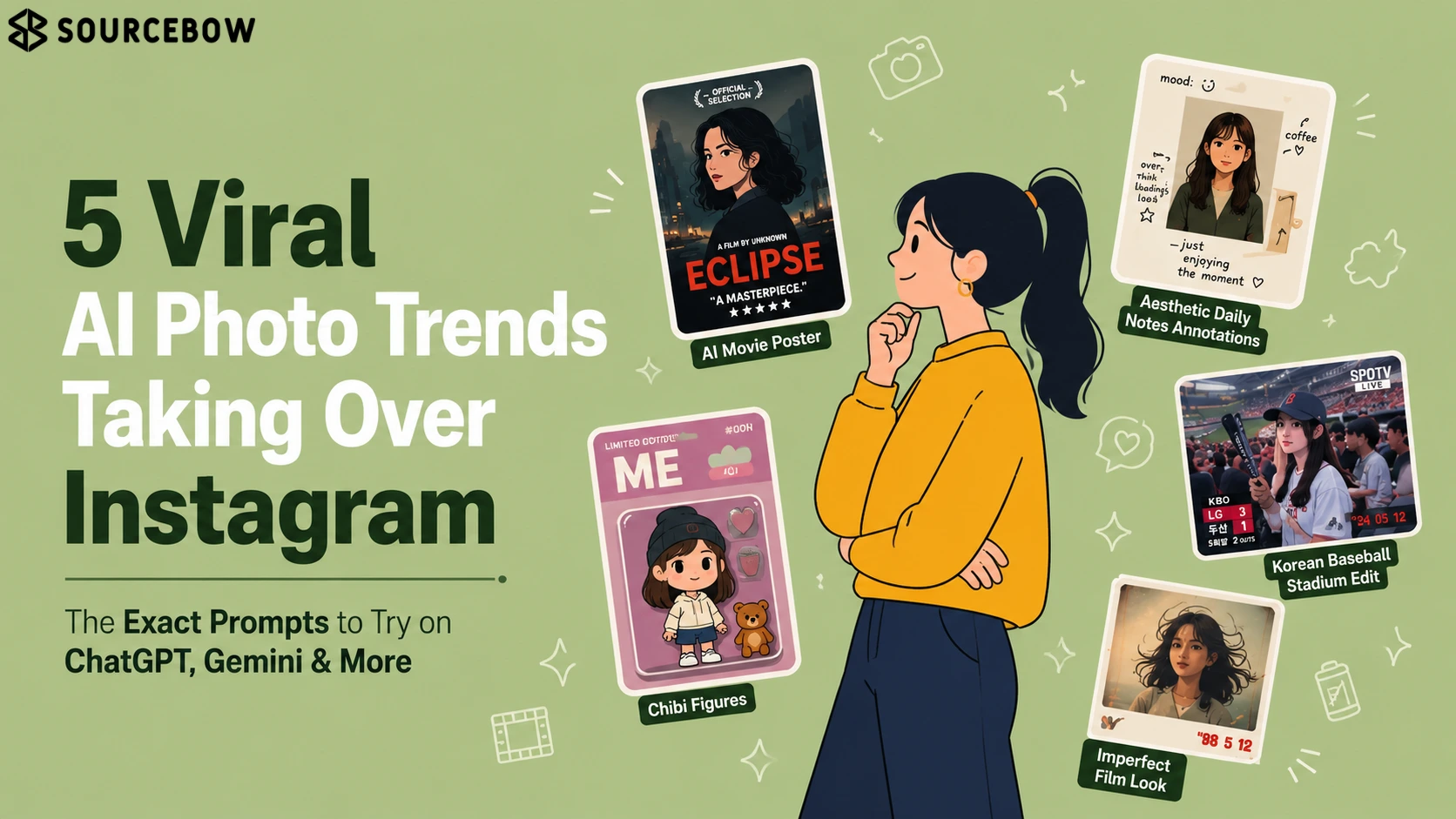
AI Movie Poster
This one works because it turns a simple portrait into a Netflix thumbnail with attitude. There’s a reason people keep reaching for this style. It instantly adds stakes. Even if the photo started as a casual selfie, the final result looks like the opening frame of a story you’d actually want to watch.
The best versions lean into cinematic shadows, subtle film grain, critic-style quotes, and an A24-adjacent mood rather than obvious gimmickry. That last part matters. If it gets too loud, it starts looking like a joke. If it stays restrained, it feels real enough to be intriguing. You can almost imagine the trailer voice in your head.
This trend also works because it’s so easy to understand at a glance. You don’t need context. You don’t even need the caption. The image already tells you: this person is the lead. That’s a powerful little illusion, and AI tools are very good at selling it.
Aesthetic Daily Notes Annotations
This trend feels more personal than flashy, and that’s probably why it keeps showing up in Pinterest-inspired corners of the internet. It uses handwritten doodles, arrows, labels, and little notes layered over the image, so the photo starts to feel like a page from a notebook instead of a polished post.
What makes it interesting is the mix of styles. It borrows from a scrapbook and a technical sketch at once. That combination sounds odd on paper, but in practice it creates something that feels oddly intimate. Like you weren’t just shown a photo — you were let in on someone’s thoughts.
And that intimacy matters. In a feed full of sharp, glossy, hyperedited images, little hand-drawn marks feel human. Even when AI generated, the annotation style gives the picture a messy, personal layer that makes people linger a little longer.
If you’ve ever saved a page from a notebook just because it felt emotionally nice to look at, you already understand the appeal. This trend is basically that instinct, but dressed up for social media.
Chibi Figures
People are making themselves into collectible toys, and the appeal is half vanity, half joke. There’s something funny about turning your own face into a tiny premium object, but there’s also a weirdly sincere side to it. The result says, “I want to be adorable,” while also saying, “I know exactly how ridiculous this is.”
The glossy plastic textures, exaggerated eyes, and premium retail packaging make the whole thing feel like a limited-edition object instead of a portrait. That packaging detail is doing a lot of work. It signals rarity, value, and a kind of playful consumer fantasy. Suddenly your image isn’t just an image. It’s merchandise.
That’s a big part of why chibi-style AI edits spread so easily. They’re lighthearted, easy to share, and immediately readable. You don’t need to know the technical side to enjoy the joke. You just see yourself or a friend turned into a tiny toy and think, yes, that’s bizarre enough to post.
There’s also a comfort element here. Chibi styles soften features and make everything feel a little friendlier. So even when the edit is obviously artificial, it doesn’t feel cold. It feels playful, like a digital keepsake with a wink.
The trend that feels closest to an accidental real photo
The Korean baseball stadium edit stands out because it tries so hard not to look edited. That’s what makes it fascinating. A lot of AI images want you to notice the style. This one wants you to miss it. The goal is a candid SPOTV/KBO broadcast screenshot vibe — slight blur, compression noise, awkward seating, and the sense that the camera caught you before you were ready.
That realism is part of the point, especially next to all the more stylized trends. It’s still artificial, of course, but it borrows the language of live broadcast and ordinary crowd noise to make the fiction feel believable. That’s a clever trick. The photo doesn’t scream for attention. It quietly insists, “This happened.”
What makes this trend so sticky is the emotional effect. It feels like an accidental memory, the kind of picture you’d almost delete because it’s imperfect, except that the imperfection is exactly what makes it interesting. There’s life in that mess. Little blur. Slight confusion. A real sense of place.
And if that sounds a bit strange, it is. But that’s also why it works. We’re so used to AI creating flawless faces that a fake image built around almost-believable imperfection feels fresh. It’s not trying to win a beauty contest. It’s trying to look like an unplanned moment that somehow survived.
Imperfect Film Look
This is the opposite of a clean makeover. Grain, scratches, uneven lighting, motion blur, and that warm late-90s disposable-camera feel all push the image toward memory instead of display. It’s a style that feels less like content and more like a thing you found tucked inside a drawer.
That emotional texture is why it keeps coming back. The imperfect film look doesn’t pretend to be timeless. It feels specific. A little faded. A little blurry around the edges. And for a lot of people, that reads as more honest than a hyperclean image ever could.
There’s also a nostalgia loop built into it. Even if someone didn’t grow up with actual film cameras, the look has been copied and re-copied so much that it now carries its own memory. It suggests a past, whether you lived it or not. That’s powerful. AI doesn’t just imitate the old medium here. It imitates the feeling of remembering.
So the imperfect film look lands because it’s not trying to impress you with precision. It’s trying to feel like a half-remembered afternoon. That’s a much softer sell, but somehow it’s stronger.
FAQ
People usually want to know what makes these edits work, whether they can get them right in ChatGPT or Gemini, and why the messier versions feel more believable than polished ones. Those are fair questions, because once you start seeing these trends everywhere, you realize they’re not random at all. They’re built on a few very repeatable ideas.
Q: Which AI photo tools work best for these trends?
ChatGPT, Gemini, and OpenArt all show up naturally here because each handles a slightly different kind of transformation. Some are better at cinematic styling, others at detailed annotation overlays or collectible-toy realism. If you want a movie-poster feel, one tool may give you cleaner dramatic lighting. If you want the handwritten note look, another may handle the text layering better. The tool matters, but the prompt matters just as much.
Q: Why do viral AI photo trends feel more personal than normal filters?
Because they don’t just smooth the image — they reinterpret it. That shift gives the photo a mood, a setting, and sometimes even a fake backstory. A normal filter says, “Here’s your face, just nicer.” These trends say, “Here’s your face inside a whole little world.” That difference is why they feel more intimate.
Q: How do you make an image look less like an AI-generated beauty model?
By asking for imperfections on purpose: sweat, baby hairs, compression noise, motion blur, uneven light. The Korean baseball stadium prompt is basically built around that idea. The point isn’t to make the image worse. It’s to make it believable. Real photos usually have some awkwardness in them, and AI photos start to feel more human once they borrow that awkwardness.
Q: Why is the imperfect film look so popular with Gen Z?
It feels more honest, even when it isn’t. The grainy, retro, slightly accidental finish reads as emotional instead of curated, which is the point. A lot of younger users are tired of everything looking too managed. The imperfect film look gives them something looser, softer, and a little more alive.
Conclusion
The bigger pattern is that AI photo trends are drifting away from perfection and toward atmosphere, irony, and memory. That shift feels pretty telling. The images that win right now are the ones that feel a little off, a little specific, and slightly more human than they should.
If anything, that’s the real prompt behind all of them: make it look like it happened, not like it was designed. And that’s probably why these styles keep spreading. They don’t just show a face. They suggest a moment, a mood, and a story people want to believe in.