Introduction
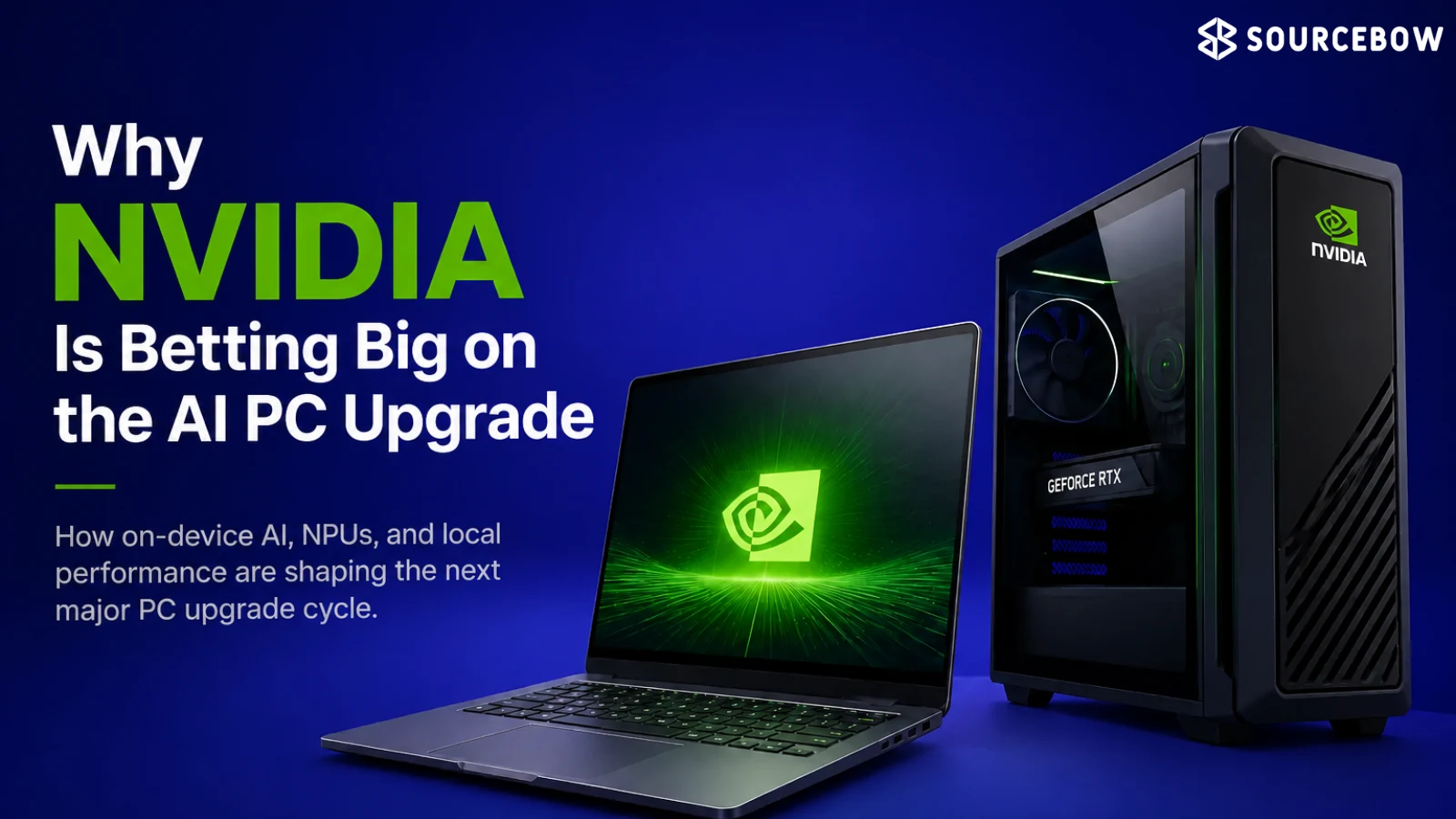
There’s a reason the phrase what are ai pcs? keeps popping up more often lately. It’s not just because tech companies love a new category name. It’s because the idea behind it actually feels useful in a way that normal computer upgrades haven’t in a while. NVIDIA is pushing new laptop and desktop AI features, and the pitch is simple enough to feel disruptive: the AI PCs with NPU laptops moves intelligence onto the device instead of parking it in the cloud.
That may sound like a small shift, but it’s the kind of shift that can change what people buy next. Jensen Huang seems to think so, and honestly, that’s why this topic is bigger than a single chip launch. It’s not just about faster hardware. It’s about whether AI becomes a real reason to replace a perfectly decent laptop or desktop.
Quick Highlights
- AI now runs more often on the device itself.
- NPU support is the big difference-maker.
- Local AI can feel faster and more private.
- NVIDIA is betting this creates a new upgrade cycle.
And here’s the part that makes it feel a little more real: this isn’t just abstract future talk. PC makers are already trying to turn AI into a practical sales point, which means the category is moving from conference-stage hype into actual products you might see at retail. That’s usually when a buzzword starts becoming a buying decision.
What actually makes an AI PC different
An AI PC is not just a faster computer with a fresh label. That’s the easy mistake to make. The real difference is that it’s built to run AI tasks locally, with an NPU sitting beside the CPU and GPU. That changes where the work happens, and once you change that, you change speed, privacy, and what the machine can do without asking a server for help.
So, instead of shipping every task off to a cloud service, the machine can handle more of the heavy lifting itself. That’s a big deal for people who want quicker responses, fewer delays, and less dependence on a stable internet connection. It’s also why the term has taken hold so fast. The hardware stack finally looks specific enough to justify a new category, which is something the PC world doesn’t do lightly.
If you’ve ever noticed how a laptop feels snappier when it can finish a task without waiting on the internet, that’s the general idea here. Only now the promise goes further. It’s not just about opening apps or loading files faster. It’s about running AI features in a way that feels built in, not bolted on.
The hardware stack that keeps coming up
The distinction keeps narrowing down to a familiar trio, but one piece is new enough to matter.
- CPU for general processing
- GPU for graphics and parallel compute
- NPU for AI tasks on-device
That extra NPU is what gives AI PCs their pitch, especially when the work is supposed to stay local instead of drifting into the cloud. You can think of it as a specialist chip for a very specific job. The CPU handles the broad day-to-day stuff. The GPU takes on visually heavy or highly parallel work. The NPU steps in when AI inference needs to happen efficiently on the machine itself.
That’s where the conversation gets more interesting than just “more power.” In a normal laptop, the hardware is mostly judged by how fast it can open things, render things, or keep the battery alive. In an AI PC, the machine is also being judged by whether it can summarize, generate, translate, assist, or predict without leaning on remote infrastructure every single time. That’s a different kind of expectation.
And yes, there’s a practical side to this too. For many users, the NPU isn’t some flashy spec they’ll brag about at a coffee shop. It’s just the thing that quietly makes the feature feel instant. That’s often how real upgrade cycles start, by the way. Not with something loud. With something that simply works better than the old way.
What people actually do with it
The practical uses are the part that makes the category feel less abstract. AI image generation on device. Local AI assistants on PCs. Coding assistance on laptops. Real time language translation. Those are the kinds of examples that help people understand why anyone would care. They’re not imaginary future use cases. They’re features that already make sense in day-to-day work.
Some higher-end machines can even train AI models locally, which is a much heavier claim than most consumer features usually make. That doesn’t mean everyone is about to become an AI researcher on a weekend, of course. But it does show how wide the range can be, from small convenience features to much more serious workloads.
The gap between everyday convenience and serious compute is where the category gets interesting. A student might use local summarization for notes. A designer might use on-device image generation to test ideas quickly. A developer might want coding assistance that doesn’t always need a remote call. These are ordinary needs, but together they make the machine feel more capable in a very modern way.
That’s also why people keep asking whether an AI PC is actually different or just dressed up in new marketing. The honest answer is that it can be both, depending on the model and the software. But the hardware direction is real enough to matter. There’s substance here, even if the label sometimes gets overused.
Why Jensen Huang thinks this turns into a real upgrade cycle
Jensen Huang is not treating AI PCs like a niche feature. He’s treating them like the next reason people replace hardware. His logic is blunt: more AI software creates demand for more powerful computers, and that kind of pull can reshape the PC market faster than a minor spec bump ever would.
That’s also why NVIDIA AI PC chip launch news lands with more weight than a normal chip announcement. If the industry starts believing that local AI is becoming a standard expectation rather than a bonus feature, then a lot of the old buying habits start to look outdated. People don’t upgrade just for a slightly better keyboard or a marginally thinner case forever. Eventually, they upgrade because the machine is no longer keeping up with how they actually use software.
That’s the real bet here. Not that everyone suddenly wants to train models at home. More simply, the bet is that AI features will become common enough that older laptops start feeling left behind. Once that happens, the replacement cycle gets easier to trigger. And PC makers love a clear reason to refresh inventory, because it gives shoppers something concrete to notice.
| What changes | Cloud-first PC | AI PC |
|---|---|---|
| Where AI runs | Remote servers | On the device |
| Core hardware | CPU + GPU | CPU + GPU + NPU |
| Typical appeal | General computing | Local AI features and faster response |
There’s a subtle but important point hiding in that comparison. A cloud-first PC can still be useful, obviously. But if the best experience depends on a network connection and a remote system, it always carries a little friction. An AI PC reduces that friction. It makes the machine feel more self-sufficient. And in consumer tech, self-sufficient often reads as premium.
Why manufacturers are leaning in too
The bet is not NVIDIA’s alone. PC makers are clearly hoping AI features make products easier to sell, and HP has already pointed to AI-optimized computers helping lift quarterly results. That’s the kind of early signal companies notice quickly, especially when the broader market is still looking for the next obvious upgrade story.
It suggests the category is being pushed from both sides: silicon on one end, product teams on the other. That combination matters. A hardware shift without software support tends to stall out. Software hype without better hardware tends to disappoint. But when both sides line up, even a skeptical buyer starts to pay attention.
That doesn’t mean every AI PC will be a slam dunk. Some will be genuinely useful. Some will mostly be marketing in a nicer jacket. But the direction is clear enough that manufacturers don’t want to miss the wave. If they can attach tangible AI benefits to a new laptop or desktop, they’ve got a better story to tell than “same machine, slightly new year.”
What readers usually want to know next
The next question is usually less “what is it” and more “is this real, or just branding?” That doubt matters, because a lot of the promise here depends on whether people notice the difference in daily use rather than in spec sheets. If the machine feels the same, the category won’t hold up for long. If it feels meaningfully better, then the label starts to stick.
There’s also the quieter question underneath it all: if AI becomes local, what exactly does that change about the way PCs are valued? Right now, a lot of people still buy based on familiar things like battery life, screen quality, port selection, and price. Those things still matter. But if AI features start shaping the experience every day, then the value conversation shifts. It becomes less about raw portability and more about capability.
That’s where the market could get a little messy, in a normal way. People won’t all care equally. Some will use the new features constantly. Others might never open them. And that creates a strange split: a product can be technically important without being equally important to every buyer. Still, even when that happens, the existence of a useful new category can move the whole market forward.
Here’s the thing: most big PC upgrades aren’t exciting because they’re technically complicated. They’re exciting because they solve a real pain point. If AI PCs can make everyday work feel smoother, quicker, and more private, that’s a pain point worth solving. If they can’t, the market will eventually shrug and move on. That tension is exactly why people keep watching this space.
FAQ
These are the smaller doubts that sit just under the main question and usually show up in PAA boxes.
Q: Do AI PCs really need an NPU?
Yes, if the point is to run AI tasks efficiently on the device. The NPU is what makes the category feel different from a standard laptop or desktop with AI software bolted on. Without it, you can still use AI features, but you lose a big part of the local-processing advantage that defines the category.
Q: Can AI PCs run without the cloud?
For many tasks, yes. Local AI assistants on PCs, image generation on device, and some coding assistance can happen without sending everything to remote servers. That said, some tools will still lean on cloud services for heavier jobs or broader model access, so it’s not always a complete disconnect from online systems.
Q: Are AI PCs worth it right now?
That depends on whether the buyer actually uses AI features. For people who do, the appeal is obvious; for everyone else, the category still risks sounding more futuristic than necessary. If you’re not planning to use local assistants, creative tools, or translation features, then the upgrade may feel less urgent.
Q: Will AI PCs replace regular laptops?
Not overnight. But if more software leans into local AI, the line between a regular laptop and an AI PC gets harder to defend. In practice, a lot of future laptops may simply include these capabilities by default, which makes the category feel less like a separate product family and more like the new normal.
Q: What are ai pcs? in simple terms?
In simple terms, they’re computers designed to handle AI tasks directly on the device instead of relying entirely on remote cloud servers. That usually means they include an NPU alongside the CPU and GPU, which helps the machine respond faster and do more without constant internet help.
Conclusion
The core idea behind what are ai pcs? is simple: bring AI onto the device, make it faster, and make it useful enough that people feel the upgrade. That is why Jensen Huang is bullish — not because of the label, but because the label may finally match a real buying motive.
If AI features keep becoming everyday features, the next PC cycle could be less about thinness or battery life and more about what the machine can think through on its own. And that’s a pretty big shift, even if it doesn’t feel dramatic at first glance. Sometimes the biggest changes in tech are the ones that just quietly make the old way seem a little less worth paying for.
So if you’re watching NVIDIA’s moves closely, that’s the real story to keep in mind. Not just a faster chip. Not just a new buzzword. It’s the possibility that the next time people shop for a laptop or desktop, they won’t just ask how fast it is. They’ll ask what it can do locally, right now, without waiting on the cloud.