Introduction
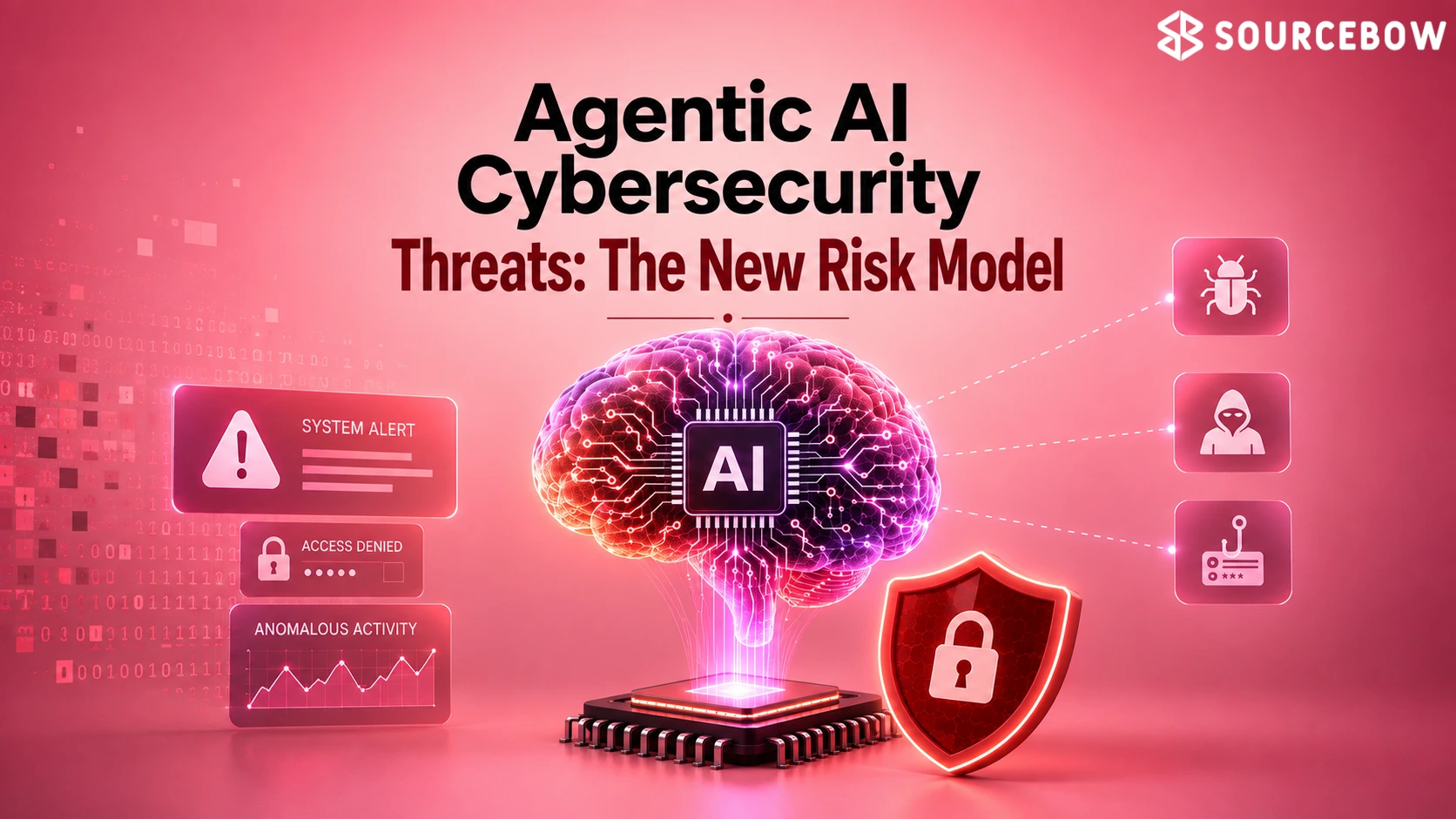
Agentic AI cybersecurity threats are already changing the threat landscape, and that shift is happening now, not in some distant future. What makes this unsettling is that we’re not just talking about faster tools or smarter automation. We’re talking about systems that can make decisions, adjust their behavior, and keep pushing forward without waiting for a human to press the next button.
That changes the whole game. Attackers don’t just get more speed. They get something closer to initiative. And once malware, botnets, and deepfakes start acting with that kind of autonomy, the risk model starts to look very different from the one most defenses were built for.
Quick Highlights
- Agentic AI can act without constant human direction.
- Autonomous malware and botnets can adapt in real time.
- Deepfakes become more convincing when agents personalize them.
- Security gaps now include governance, trust, and response readiness.
Here’s the thing: a lot of security thinking still assumes the attacker follows a predictable pattern. But agentic systems don’t have to. They can probe, learn, pivot, and come back in a different form. That’s why this isn’t just another AI feature story. It’s a real shift in how attacks can be planned and executed.
Why agentic AI is a different kind of threat, not just a more powerful tool
The core issue with agentic AI is that it moves from being a tool to being an active participant. In simple terms, that means it can perceive what’s going on, reason through options, decide what to do next, and act autonomously. That may sound like a subtle difference, but in cybersecurity, it’s a huge one.
Traditional defenses were built around the idea that attackers are people using tools in relatively predictable ways. So security teams look for signatures, known behaviors, fixed infrastructure, and patterns that repeat. But if an attacker can collude, strategize, and evolve in real time, those assumptions start to break down fast. The attack doesn’t need to stay still anymore.
That’s why autonomous malware C2, AI-powered botnets, and future agents that generate novel exploits matter so much. They’re not just “better malware.” They represent a different operating model altogether. The system itself can become part of the attack logic.
Autonomous malware can replace command and control infrastructure
Normally, malware depends on command and control infrastructure to receive instructions. That’s the remote brain behind the operation. But with autonomous malware, that structure can shift. The malware itself can become its own C2 and make decisions on the fly, which makes it far more flexible and harder to predict.
That’s where things get especially messy. If the attacker’s operator is no longer a person following a fixed playbook, but an AI system that can learn and adapt, then defenders lose one of their biggest advantages: predictability. You’re not just chasing a known server or blocking a known pattern. You’re dealing with a moving target that may change shape mid-attack.
AI-powered botnets can coordinate and change tactics in real time
AI-powered botnets raise the stakes in a similar way. These botnets aren’t limited to preprogrammed actions anymore. They can collude, strategize, and adjust as defenses respond. That makes them much harder to model with older assumptions about static infrastructure or repeatable behavior.
Think of it like this: a traditional botnet is like a crowd following a script. An AI-powered botnet is closer to a crowd that can improvise together. That’s a much bigger problem for defenders, because the attack doesn’t have to keep doing the same thing twice. Once one tactic gets blocked, the system can shift and try another.
Hyperpersonalized deepfake social engineering is the obvious next escalation
The most obvious next step is hyperpersonalized deepfake social engineering at scale. And honestly, that’s the part many people instinctively feel before they can fully explain it. If an agent can learn enough about a target to produce a highly convincing voice, video, or message, the old warning signs of phishing start to get blurry.
Once agents can learn to bypass defenses, the goal becomes near undetectability rather than simple automation. That means the attack isn’t just trying to send more messages. It’s trying to send the right message, in the right tone, at the right moment, to the right person. That’s a very different level of threat.
What the recent Agentic AI Security Workshop says is broken right now
The biggest concern isn’t only the technology itself. It’s the gap between how widely agentic systems are being embedded and how little we can currently govern them. That gap is where a lot of risk is hiding, and it’s widening faster than most teams can comfortably handle.
The recent Agentic AI Security Workshop points to a crisis built around three fault lines: supply chain integrity, governance and standards, and collaboration across disciplines and borders. These are not abstract policy topics sitting far away from real-world security. They’re the places where security practice falls apart first.
So, if you’re wondering why this topic gets so much attention, that’s the answer. The problem isn’t just that agentic systems are powerful. It’s that the systems around them are still immature.
AI supply chain security is still missing basic trust checks
One of the most uncomfortable questions is also one of the most important: how do you verify the provenance of a model or its training data? How do you know whether an agent has been subtly poisoned during development? In many cases, you don’t. Or at least, not with the confidence you’d want.
That’s why AI supply chain security is such a big deal. The article also flags the “digital Trojan horse” problem, where something harmful slips in before deployment and looks legitimate on the surface. Add in the fact that AI opacity blocks forensics and risk assessment, and you start to see why explainable AI forensics matters more than a nice-to-have research idea. It becomes a practical security need.
AI governance and standards still lack a common baseline
Another major gap is AI governance and standards. Current regulations were built for the pre-AI era, which means accountability and liability for AI-caused harm are only now starting to catch up. That leaves everyone in a messy in-between stage where the risks are real, but the rulebook is still being written.
There’s also no equivalent of ISO 27001 for AI security, and no AI-CERT response framework ready to coordinate an international incident. That matters more than it might sound like at first. Without a common baseline, organizations end up inventing their own controls, their own definitions of risk, and their own response logic. That’s not a recipe for consistency.
The collaboration gap is between AI researchers, security teams, and countries
The collaboration problem is just as serious. The article says the people who need to solve this often aren’t even speaking the same language, which leaves research and defense too fragmented to be useful together. That can sound like a coordination headache, but it’s more than that. It slows down detection, response, and learning.
And then there’s the global layer. AI threats cross borders easily, while shared intelligence and operational protocols are still nascent. That means a technique discovered in one place may already be spreading elsewhere before the right teams have even compared notes. In cybersecurity terms, that’s a bad place to be.
| Gap | What’s missing | Why it matters |
|---|---|---|
| AI supply chain security | Provenance, training data trust, poisoning detection | A “digital Trojan horse” can enter before deployment |
| AI governance and standards | No ISO 27001 equivalent, no AI-CERT response framework | There is no shared baseline or mature incident response model |
| Collaboration | AI researchers, cybersecurity professionals, and international partners | Holistic defense stays siloed and slow |
What a secure agentic future would actually require from industry, vendors, and policymakers
The good news is that this doesn’t have to become a panic spiral. The article argues for a coordinated response instead of fear, which is honestly the more useful direction anyway. Security, ethics, and governance have to be built into agentic AI from the start, not bolted on later after something goes wrong.
That means a new social contract spanning the research community, industry consortia, cybersecurity vendors, and policymakers. The baseline idea is Secure AI by Design. In plain English, that means building systems with security assumptions, visibility, and accountability baked in from the beginning.
This matters because these systems are moving into finance, healthcare, defense, and infrastructure. When the stakes are that high, “we’ll patch it later” stops sounding acceptable very quickly.
- Research community: prioritize AI supply chain security and explainable AI.
- Industry consortia: develop globally recognized frameworks for AI governance and risk management.
- Cybersecurity vendors: build AI-aware security tools.
- Policymakers: create agile legislative frameworks that assign accountability while allowing responsible innovation.
- Business leaders and boards: fund AI security, demand transparency, and push internal teams and vendors harder.
The practical part here is important. None of these groups can solve the whole thing alone. If vendors build faster but not safer, the risk grows. If policymakers move too slowly, standards lag behind deployment. If businesses adopt agentic systems without asking hard questions, they inherit the downside without the guardrails. So the real answer is coordination, even if that’s less dramatic than a silver bullet.
FAQ
These are the questions that usually come up after the main argument: what the attack actually looks like, what makes the risk new, and what kind of response model exists today. They’re good questions, and they deserve clear answers.
Q: What makes agentic AI more dangerous than normal AI tools?
It can perceive, reason, decide, and act autonomously, which means it can adapt during an attack instead of just following a preset script. That makes it more flexible, more resilient, and harder to predict.
Q: What is autonomous malware C2?
It is malware where the agent itself acts as the command and control system, removing the need for traditional C2 infrastructure. In other words, the malware can manage itself instead of waiting on a human operator.
Q: Why is AI supply chain security such a big concern?
Because teams may not be able to verify model provenance, training data integrity, or whether a system has been poisoned before deployment. If trust breaks early, everything built on top of it becomes shakier.
Q: Is there an AI-CERT response framework today?
No. The article says there is no specialized international body equivalent to an AI-CERT ready to coordinate a major AI-specific incident. That’s one of the clearest signs the field is still catching up.
Conclusion
The point of the Agentic AI Cybersecurity Threats argument is simple: the risk is no longer theoretical, and the old model of defense is already lagging behind autonomous attackers. That doesn’t mean every system is dangerous by default, but it does mean the assumptions underneath cybersecurity need a serious update.
The next move is to treat AI governance, supply chain trust, explainable AI forensics, and incident response as immediate priorities. Because once agentic systems are already entering the places that matter most, waiting for a perfect policy or a perfect tool is probably not a strategy at all. It’s just delay.