Introduction
LLM context window optimization sounds technical, but the real problem is pretty human: you want the model to stay useful without turning every answer into a slow, expensive gamble. One oversized prompt can burn through tokens fast, and when that happens in a contract review, a warehouse query, or an AI agent workflow, the cost isn’t just money. It’s trust. It’s time. It’s the weird feeling that the model sounded confident while quietly being wrong.
The hidden tax is the one you don’t notice until the model is already wrong: a vendor contract, a last year comparison, and a long email thread can still produce a confident bad answer. That’s why the uncomfortable question matters more than the flashy one. Not how much context a model can hold, but how to keep it accurate enough to trust.
Quick Highlights
What a context window actually holds, and why tokens are the real unit underneath it
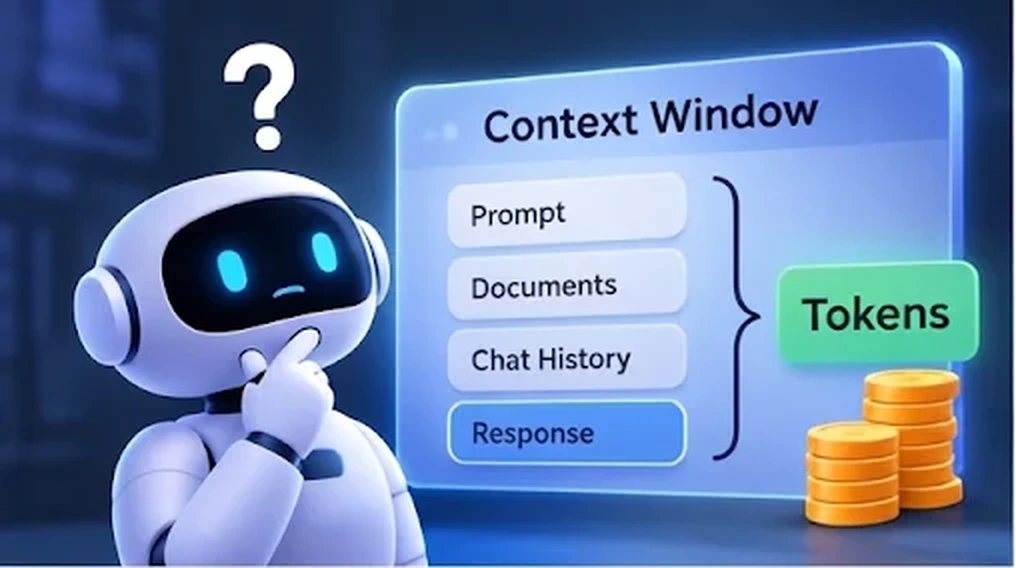
A context window is the model’s working memory, and everything in it counts: the prompt, uploaded documents, conversation history, and the response itself. Once that space starts filling up, the model has less room to keep track of what matters. That’s why people talk about context windows so much, but the smaller unit underneath them is what really shapes the experience.
Tokens are the billing and processing unit behind that memory, with separate input and output rates; Databricks’ Genie is a useful example because natural language input, schema context, and generated SQL all consume tokens in one workflow. So even a simple request can become a multi-token event once the system starts pulling in surrounding details. If you’ve ever wondered why one “small” query feels expensive, this is usually why.
Once a conversation grows past the limit, older details fall away and the model starts losing track of what it was supposed to know. That’s not just a technical edge case. It’s the basic failure mode hiding under the hood.
Why token usage gets expensive fast in enterprise workflows
Even when each step feels small, the total adds up across analytics chains. In a system serving hundreds of concurrent users, per-minute token limits are often there simply to stop costs from spiraling. That’s not because teams love restrictions. It’s because the math gets ugly fast when dozens or hundreds of long-running requests stack up at the same time.
That matters because every long call raises both the bill and the latency, so the “more context” instinct becomes a recurring tax instead of a safety net. A bigger prompt may feel safer in the moment, but if it slows down every workflow and still doesn’t improve reliability, you’re paying more for the same uncertainty.
Why bigger context windows still don’t fix the problem

The obvious answer sounds like scale, but the article pushes back hard: even million-token windows don’t solve truncation, context rot, or the tendency to miss what matters in the middle. Bigger is useful up to a point, sure. But after that, the model can end up carrying around a giant pile of noise.
A standard enterprise warehouse can have more than 1,000 tables, plus schemas, comments, glossaries, and lineage data — and that is already too much to safely jam into one prompt. That’s the part people underestimate. The problem isn’t only whether the model can fit it all. It’s whether it can still reason clearly once everything gets dense, noisy, and long.
The failure is not just size. It is also what the model does once the input gets crowded. More context can still create more confusion.
What goes wrong when the model sees too much at once
- Truncation: the exact table needed for the answer may be the one cut first.
- Context rot in enterprise AI: Chroma tested 18 models, including Claude, and found reliability drops as input grows; accuracy can fall below 30%.
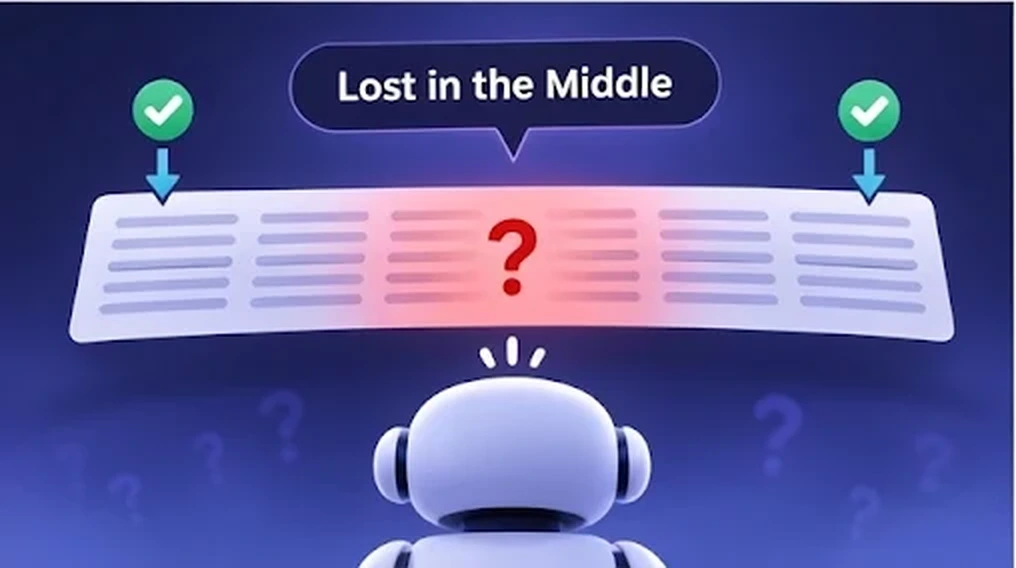
- Lost in the middle phenomenon: models tend to notice the beginning and end more than the middle, so 800 table definitions can still hide the five that matter.
- Cost and latency: long prompts and chained tool calls keep raising both spend and response time.
These failures often show up together, which is what makes them so annoying. You don’t just get one clean error. You get a system that is slower, pricier, and somehow still less reliable.
Why the middle of the prompt is often the worst place to hide the answer
The article uses the “lost in the middle” problem to make a blunt point: fitting 800 table definitions into a prompt does not mean the model will use the five relevant ones. It may technically “see” them, but that’s different from actually weighting them correctly.
On a big enough warehouse, the model can be surrounded by context and still miss the only detail that matters. That’s a strange kind of failure, because it feels like the answer should be there. It is there. The model just doesn’t reliably reach for it.
What breaks when enterprise context goes stale
When context isn’t maintained, the model isn’t just incomplete — it becomes outdated, contradictory, or dependent on logic that only lives in people’s heads. That’s where things really start to wobble. A prompt can look rich and detailed while still being built on old assumptions.
The article breaks that drift into three failures: documentation that rots after schema changes, conflicting definitions across teams, and business logic that never made it into the database in the first place. And once that happens, the wrong answer starts to look right. That’s the dangerous part. The model isn’t obviously broken. It just sounds reasonable.
Three ways stale context turns accurate systems into unreliable ones
- Documentation becomes stale: renames, deprecated dimensions, and changed join keys quietly produce wrong numbers, sometimes for three weeks before anyone notices.
- Definitions conflict across teams: “product” can mean a SKU, a subscription tier, or a feature bundle; “customers” and “revenue” are no safer.
- Logic only lives in people’s minds: a definition of active user may require last_login within 30 days, transaction_count greater than zero, and a paid subscription enabled.
That third one is especially tricky. If the logic never made it into a system of record, the model has to guess. And when a model guesses about business rules, it tends to do it with a lot of confidence.
The four ways teams manage context, and where each one actually fits
The article treats context engineering as a balancing act: too little context and the model invents, too much and it loses the thread or times out. That’s the real design problem. Not “how do we feed everything in,” but “how do we feed in just enough of the right stuff?”
The four methods are in-context learning, RAG over metadata, fine-tuning, and agentic routing — each useful, but each weak in a different place. A quick comparison makes the tradeoffs easier to see, especially when you’re trying to decide what belongs in the prompt and what should live elsewhere.
| Method | What it does | Window size / inference cost | Best suited to |
|---|---|---|---|
| In-context learning | Loads the full schema and examples into the prompt | Hits the cap limits fast | Prototypes and small schemas |
| RAG over metadata | Retrieves only the schema pieces needed for the question | Low and bounded | Large, frequently changing schemas |
| Fine-tuning | Trains the model on company-specific patterns | Near zero at inference | Stable reasoning patterns, custom DSLs, niche SQL dialects |
| Agentic routing | Splits one complex task into several focused LLM calls | Lowest per call | Complex, multi-step reasoning |
Why direct prompting works for demos and fails in real warehouses
In-context learning is the easiest path because it just loads schema definitions and a few example SQL queries directly into the window. If you’re testing a tiny setup, that can feel magical. The model picks up the pattern, returns something useful, and everyone feels like the hard part is already solved.
It works surprisingly well for a 20-table demo, but the article makes clear that ordering bias, instability, and token blowups show up fast once the warehouse gets real. That’s the catch. Demo success can hide production fragility. The bigger the system, the more the prompt starts behaving like a cluttered desk.
Why RAG over metadata is stronger than raw prompt stuffing
RAG keeps context bounded by pulling only what the question needs from documentation or a semantic layer, then feeding that back into the model. That makes it much easier to control what the model sees and when it sees it. It’s the difference between handing someone a whole filing cabinet and giving them the one folder that matters.
The caveat is sharp: embeddings can match semantic similarity without understanding business meaning, so “customer churn” may pull “customer complaints” unless the context is governed properly. That’s a subtle but very real problem. Retrieval is helpful, but it still needs human-shaped rules and clean metadata behind it.
Why fine-tuning and agentic routing solve different problems
Fine-tuning is best for repeated SQL patterns, stable formatting, and custom dialect conventions, but it does not teach the business meaning behind the data. So if the question is about style, structure, or consistent query behavior, fine-tuning can be a strong fit. If the question is about meaning, though, it won’t rescue you from bad context.
Agentic routing cuts a hard problem into smaller calls, like one analyst scoping the question, another mapping tables, and another writing SQL — but if the planner starts from bad context, the error still spreads. That’s the part people forget. Breaking a problem into steps helps, but it doesn’t magically fix the quality of the information feeding those steps.
Why the real fix is accurate context, not just a larger window
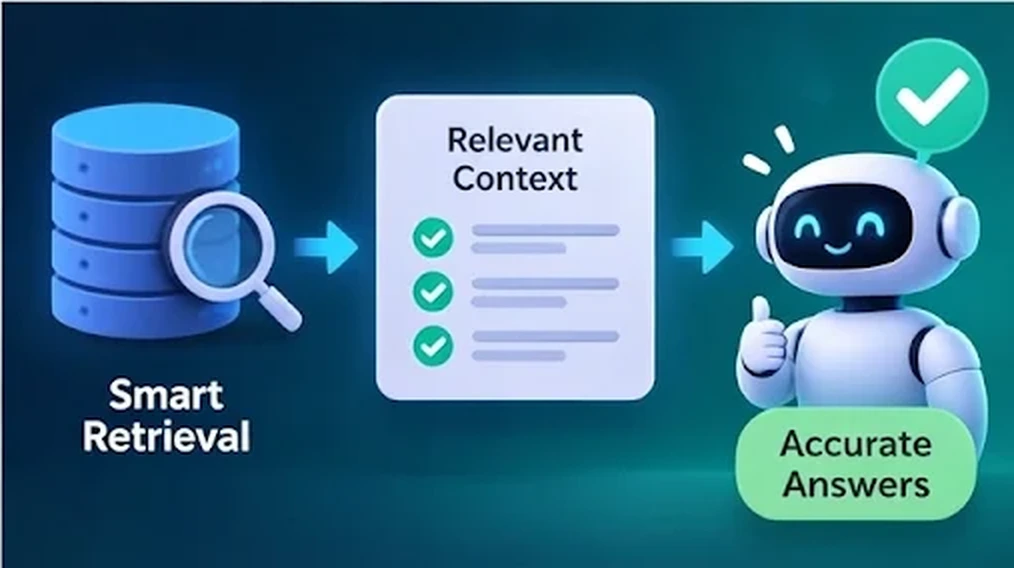
The final argument is simple: every method above still depends on the same thing being true — the underlying enterprise context has to be current, unambiguous, and trustworthy. Without that, all you’ve really done is move the uncertainty around. Sometimes you’ve even hidden it better, which is worse.
WisdomAI’s Adaptive Context Engine is presented as the answer because it manages business, semantic, governance, and operational context together, while keeping drift detection, retrieval, and auditability in the loop. That combination matters because the model doesn’t just need more text. It needs better context, maintained in a way that reflects how the business actually works.
That is what makes the model faster, cheaper, and less likely to guess. And honestly, that’s the whole game here: not maximum context, but trustworthy context.
FAQ
The questions here usually come from the next layer of doubt: what people ask after they understand the basics but still want to know where the failure actually starts.
Q: What is the lost in the middle phenomenon in an LLM?
It is the tendency for models to pay more attention to the beginning and end of a long context than the middle. That is why important tables or definitions can be present and still get ignored.
Q: Why do bigger context windows still fail on enterprise data?
Because size does not solve stale definitions, conflicting business terms, or the accuracy drop that comes with long, noisy prompts. A bigger window can hold more bad context just as easily as more good context.
Q: What is enterprise context drift detection?
It is a way to catch schema or definition changes before they enter the prompt and corrupt downstream answers. The point is to stop stale context before the model uses it.
Q: Is fine tuning natural language SQL enough on its own?
No. It can teach the model repeated query patterns, but it does not solve business meaning, changing schemas, or the logic that only lives in analyst memory.
Conclusion
The point of LLM context window optimization is not to squeeze in more text; it’s to get the right context into the right place so the answer is correct the first time. That’s a much more practical goal, and honestly a more honest one too. Bigger windows can help, but only when the information inside them is accurate, current, and organized enough to trust.
If the context is structured, current, and governed, the model spends fewer tokens, makes fewer bad guesses, and produces something you can actually trust. And if you’re trying to keep cost down without losing accuracy, that’s the kind of outcome that matters most.