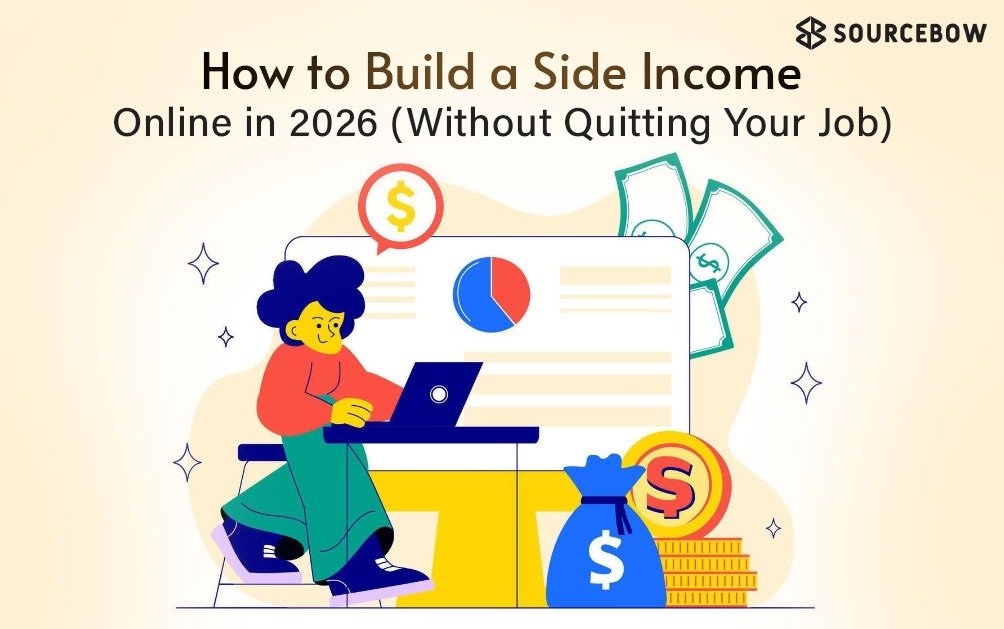
Do you want to start a side Business while working full time? If your 9 to 5 feels stable but a little too small, you’re not alone. A lot of working professionals want extra income, more freedom, or just proof that there’s something bigger they can build on the side. The tricky part is doing it without wrecking your schedule, your savings, or your sanity. Instead of chasing random side business ideas for beginners, you need a repeatable path: find the right fit, test it fast, and protect your cash while you build.
Quick Highlights
- Start with your skills, not hype.
- Validate demand before spending money.
- Choose a model that fits your energy and time.
- Keep a financial runway before quitting.
- Use simple tests, not guesswork.
Here’s the thing: most people don’t fail because they lack ambition. They fail because they jump straight into building before they know if anyone actually wants what they’re offering. And if you’ve got a job, that mistake hurts twice as much. You’re not trying to win a startup race. You’re trying to build something real, slowly, with low-risk entrepreneurship in mind.
I like this topic because it sits right between caution and possibility. You don’t need to quit tomorrow. You don’t need a perfect online business model. You just need a framework that helps you move from idea to income in a way that feels manageable. That might mean freelancing, a small service, or eventually moving into digital products and content. The path can evolve. It doesn’t have to be dramatic from day one.
What Does It Really Mean to Start a Side Business While Working Full Time?
To start a side business while working full time means building a real income stream outside your main job, usually in small blocks of time, without depending on it for immediate survival. It could be a service, a product, a content business, or a simple offer that brings in extra income ideas while you keep your day job.
That matters because the job gives you stability while the side business gives you optionality. You get to test monetizing skills, learn what customers want, and reduce risk before making any big leap. In 2026, that approach is even more relevant as gig work, digital services, and creator economy income streams keep growing. More people are stacking income instead of relying on just one paycheck.
The real advantage is psychological as much as financial. You don’t have to treat entrepreneurship for beginners like an all-or-nothing identity shift. You can treat it like a smart experiment. That lowers pressure, which makes it easier to stay consistent.
Why Do Professionals Feel the “Call for More” Even in Stable Jobs?
A lot of people think side hustles are only about money. They’re not. Sometimes it’s about autonomy. Sometimes it’s about using your skills in a way your current role doesn’t allow. And sometimes it’s just that quiet feeling that your current life is fine, but not fully yours.
If you’ve ever felt that way, you’re not being dramatic. You’re noticing a gap between stability and fulfillment. A 9 to 5 job can cover the bills and still leave you wanting more control over your time, your learning, or your earning potential. That’s often where side business ideas for beginners start to feel less like a hobby and more like a practical path forward.
Hybrid work made this even more noticeable. When people got a taste of flexible schedules, many realized they could carve out 1–3 focused hours a day for something of their own. Not endlessly, not perfectly, just enough to build momentum. That kind of shift can be the difference between feeling stuck and feeling in motion.
What Is the 3-Step Framework to Start a Side Hustle Successfully?
Here’s the short version: pick the right intersection, validate demand, and manage your money like a calm adult. That’s the whole game. Or at least the part most people skip.
The framework works because it answers how to start a side hustle step by step without making you overbuild. First, you identify what you can realistically sell. Second, you test whether people care. Third, you make sure your finances can handle the transition. That last part is where a lot of advice gets vague, but it shouldn’t be vague. If your side hustle can’t support your life yet, you need a runway, not wishful thinking.
This finance-first approach is also why the framework is safer than the usual “just start” advice. Many startups fail because they build something no one asked for, or they run out of money too early. A solid system keeps both problems in check.
How to Find the Right Side Business Idea
Instead of brainstorming endlessly, look for the intersection of three things: what you’re good at, what you enjoy enough to keep doing, and what people will pay for. That sounds simple, but it’s more useful than chasing trendy business ideas that don’t fit your life.
Think of it like this: if you know spreadsheets, writing, design, teaching, coding, marketing, or operations, those are assets. Pair them with a real problem. Now you have something worth exploring. This is where the Golden Circle helps too. Start with why you care, then how you’d solve the problem, then what you’d actually sell. It keeps the idea grounded.
A few practical examples:
- A finance professional might offer bookkeeping support or cash flow cleanup.
- A designer might create brand kits, templates, or website audits.
- A marketer might help small businesses with content or lead generation.
If you want to use AI-powered idea validation tools, they can help you spot demand, compare competitors, or find gaps faster. But don’t let tools do the thinking for you. Use them to sharpen the idea, not invent the whole thing.
How to Validate a Side Business Idea Before Investing Money?
This is the step that saves people from wasting weekends on something nobody wants. Validation doesn’t have to be complicated. In fact, the simpler it is, the better.
Start by offering the thing for free to a small number of people. That sounds counterintuitive, but it’s one of the cleanest business validation methods because it forces a real response. If people won’t take a free sample, they probably won’t pay later. If they do take it, watch what happens next. Do they ask for more? Do they respond quickly? Do they refer others?
That free-first approach is exactly how many real client relationships start. One simple outreach message, one sample, one follow-up. No fancy funnel. Just proof.
Then look for demand signals:
- People replying fast and asking questions
- Repeated problems in the same niche
- Competitors already selling similar offers
- Any willingness to book, prepay, or reserve a spot
Competitor research matters too. If other people are already selling something close to your idea, that’s not a bad sign. Usually, it’s the opposite. It means the market exists. Your job is to find a better angle, a narrower audience, or a clearer outcome.
Which Side Business Model Should You Choose?
This is where freelancing vs digital products becomes a real decision instead of a vague internet debate. The right model depends on your time, patience, and cash needs.
| Model | Speed to Income | Scalability | Effort |
|---|---|---|---|
| Done-for-you | Fast | Low | High time |
| Done-with-you | Medium | Medium | Moderate |
| DIY (products/content) | Slow | High | High upfront |
Here’s the practical way to think about it: done-for-you services are usually the fastest path to cash, which makes them ideal for beginners. That’s because clients pay for outcomes, not perfection. Done-with-you sits in the middle. DIY products and content take longer, but they can scale far better once you have traction.
This is also where the model evolution ladder comes in. Many people start with a service, then turn repeat questions into templates, guides, or micro-products later. That’s a smart move. It means you learn from paying clients before you create a product nobody asked for.
So if you’re trying to balance passive income vs active income, don’t get stuck on the label. Active income can fund the early stage. Passive-ish income often comes later, after you’ve earned the right to automate or package what you’ve learned.
How to Manage Finances While Building a Side Hustle?
Money stress can quietly kill momentum, which is why how to manage side hustle finances matters more than people think. You don’t need a complicated spreadsheet empire. You need clarity.
Start with your fixed expenses. Rent, food, transport, debt, subscriptions. Then decide the minimum monthly income you need to feel safe. That number becomes your target, not some vague hope that things will work out.
A helpful rule is to separate three buckets:
- Essential expenses you can’t ignore
- Business reinvestment for tools, ads, or help
- Discretionary spending so your life doesn’t feel miserable
If you can, build a financial runway before scaling up. That means enough savings to cover a few months of living costs if the side business grows slowly. This is where a budget template can be incredibly useful. One that has been used by more than 100,000 people isn’t magic, but it does show the value of having a clear framework instead of winging it.
The accounting mindset helps here. Track what comes in, what goes out, and what must stay untouched. It sounds boring, but boring is good when you’re protecting your stability.
When Should You Quit Your Job and Go Full-Time?
This is the question people rush toward, but it shouldn’t be emotional. The cleanest answer is: quit when your side business consistently covers your essential expenses, not just one lucky month. That’s the 100% expense coverage rule in plain English.
Even then, look for signs of stability. Are clients recurring? Is demand steady? Can you predict revenue at least somewhat? Do you have enough savings to handle a slow month without panic? If the answer is yes more often than no, you’re getting closer.
There’s also the risk tolerance piece. Some people are comfortable with a leap. Others need a longer bridge. Both are fine. The point isn’t to be fearless. It’s to be prepared.
Startup survival isn’t just about passion. It’s about timing, cash flow, and whether your model can hold up under pressure. That’s why jumping too early is often the biggest mistake.
A real-world way to test the first offer
One of the simplest ways to start is to offer a sample to a small list of prospects. This could be a free audit, a short consult, a trial service, or a mini-version of your offer. In one real case, a creator used a free sample outreach message to land a paying client after the prospect saw the value immediately. No big campaign. No complicated funnel. Just a focused test.
That’s the kind of move that works because it lowers friction. People don’t have to imagine the result. They experience it. And once they do, pricing becomes easier to discuss.
If you’ve been waiting for the “perfect” first step, this is it: make a tiny offer, send it to the right people, and see what happens. That feedback is worth more than weeks of planning.
FAQ
Can you start a side business while working full time? Yes, absolutely. The key is to use focused time, validate early, and choose a model that fits your schedule.
How many hours are needed daily? For most beginners, 1–3 focused hours a day is enough if you’re working on the right tasks, not just staying busy.
What is the best side business for beginners? Service-based freelancing is usually the easiest because it has low upfront cost and faster feedback.
How do you validate a business idea? Offer it for free or at a small test price, track demand, and check whether people actually want to pay.
Is passive income realistic from side hustles? Yes, but usually after some active effort first. Most passive income starts as active work before it becomes more automated.
When should you go full-time? When income consistently covers your essential expenses and the business shows signs of stability, not just a lucky spike.
Final thoughts
If you want to build something on the side without blowing up your life, the path is pretty simple: start small, validate fast, and keep your finances steady. Don’t chase too many extra income ideas at once. Pick one clear offer, test it with real people, then let the data guide your next move.
That approach works because it respects your current life while still creating room for something better. And honestly, that’s what makes the whole thing sustainable.
If you’re ready to go further, a good next step is to grab a checklist, study a few real side business ideas for beginners, or review a practical guide on how to validate a business idea. Small moves matter more than dramatic ones. So, what would your first test look like if you kept it simple?