Introduction
Anthropic’s new fellowship sounds generous on its face, but it also reveals how tightly the company wants to tie growth, influence, and moral posture together. And honestly, that’s what makes this announcement interesting. It’s not just a program about helping nonprofits use AI more effectively. It’s also a pretty clear signal that Anthropic wants to shape how people think about responsible AI, who gets access to it, and which companies get to claim they’re doing something good with all this power.
So, if you’re looking at Claude Corps and wondering whether it’s real support or just polished branding, you’re not alone. The answer is a little of both, which is probably why this is getting attention in the first place.
The Short Version
A $150 million bet on embedding AI inside nonprofits
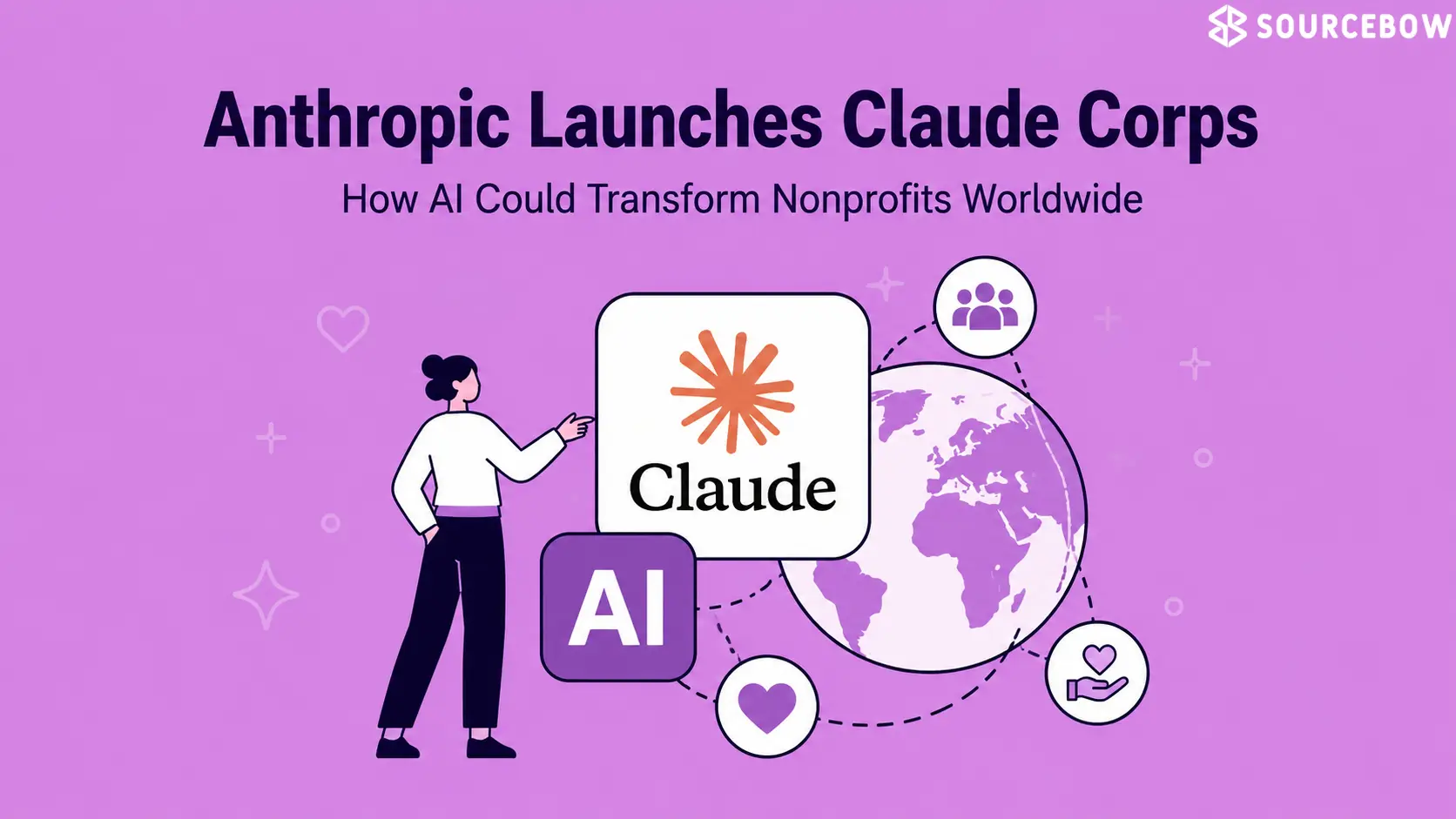
Claude Corps is the headline move: 1,000 fellows, 400 host organizations, grants, credits, and a year-long attempt to make Claude feel useful in places that usually move slower than Silicon Valley wants. That’s a big bet, and not just financially. Anthropic is essentially saying that if AI is going to become ordinary, it needs to show up in institutions people already trust — nonprofits, worker-support groups, and mission-driven organizations that deal with real-world problems every day.
That’s where the strategy gets more interesting than the press-release language. The idea isn’t simply to hand out software and hope someone logs in. Fellows will be trained in Claude and placed directly with organizations, which means the company is trying to solve the adoption problem from the inside. If you’ve ever watched a nonprofit struggle with too many tasks and too few people, you can probably see the appeal immediately. Drafting emails, sorting information, summarizing meetings, building workflows — these are the kinds of jobs AI can do quickly, if someone helps set it up well.
But the details matter. Host groups get funding plus access to the tool, and the whole thing is meant to be tested before it possibly expands. That makes Claude Corps feel less like a one-off charity project and more like a pilot for a much bigger idea: what happens when a major AI company doesn’t just sell software, but inserts a workforce built around its software into the kinds of organizations that shape public life?
Here’s the thing. That can be genuinely useful. It can also be a very effective way to normalize the product. Both can be true at once.
The company keeps talking like it has to justify itself
Anthropic is not hiding the fact that this is also about identity. It wants to be seen as a company that can earn money without pretending profit is the only point. And in today’s AI market, that distinction matters more than companies like to admit. Everyone is moving fast, everyone is selling capability, and everyone is trying to convince the public that they’re the responsible ones.
That’s why Anthropic’s public benefit structure keeps coming up in conversations like this. The founders’ wealth pledge and the constant emphasis on values are part of the backdrop here, even if they’re not the most visible part of the announcement. In plain English, Anthropic wants to be known as the AI company that hasn’t completely surrendered to the usual growth-at-all-costs script. It wants to say, “Yes, we’re a business, but we’re a different kind of business.”
Now, that can sound sincere. It can also sound like self-protection. Companies don’t usually stress their ethics this much unless they know people are watching closely. And with AI, people are watching closely. They’re worried about labor disruption, bias, concentration of power, and the possibility that the tools being sold as helpful are quietly reshaping work in ways nobody voted for. So when Anthropic leans into language about mission and public good, it’s not just moral posture. It’s also a business move.
That doesn’t automatically make it fake. But it does mean you should read the announcement with a little caution, the way you’d read any claim from a company asking to be trusted before the long-term results are visible.
Why the skeptics are not going away
There’s an obvious tension here: the same industry driving disruption is now also offering the fixes, the research, and the language for how to manage that disruption. That’s exactly the part critics don’t trust, and probably won’t soon.
And it’s not hard to see why. When a company helps create a new wave of technological pressure, then turns around and offers the tools for coping with that pressure, it can feel a little like the arsonist arriving with a hose. Maybe the hose helps. Maybe it really does. But the trust issue is still there.
Anthropic is trying to position Claude Corps as a practical response to that tension. Instead of just talking about AI safety in abstract terms, it’s putting people into organizations and asking them to make the technology useful in context. That’s a smart move in some ways, because real-world adoption always depends on human judgment, not just model quality. A nonprofit doesn’t need a flashy demo. It needs something that actually saves time without creating new headaches.
Still, skeptics are going to ask a fair question: if AI is so transformative for nonprofits, worker groups, and civic institutions, who benefits most when the adoption becomes widespread? The organizations? The workers? Or the company that gets its product embedded into daily operations and then gets to point to the program as proof of its social value?
This is where responsible AI stops being a slogan and starts looking like a political question. Not party politics, exactly. More like: who gets to define what counts as responsible, and who gets to decide when a technology has done enough harm control to deserve a praise cycle?
If that sounds uncomfortable, that’s because it is. But it’s also the reality behind a lot of AI announcements right now. The best ones are rarely only about the product.
Claude Corps is really about who gets to adapt first
Partnering with CodePath gives the initiative a more grounded feel, and the pitch is less about elite technical talent than about putting early-career people into institutions that need help now. That matters. A lot of AI conversations still orbit around highly technical users, engineers, researchers, and people already comfortable experimenting with new systems. Claude Corps is aiming somewhere else. It’s trying to make AI support feel available to people who aren’t necessarily experts, but who are close to the problems that need solving.
That changes the story quite a bit. If you’ve ever worked in an under-resourced organization, you know that adoption isn’t just about wanting better tools. It’s about having time to learn them, confidence to use them, and enough structure to make them useful. A fellowship model makes sense here because it puts a human translator in the middle. The fellow isn’t just a user. They’re a bridge.
And that may be the real insight behind Claude Corps. AI doesn’t become normal because a company declares it normal. It becomes normal when someone helps an actual team use it without breaking their workflow. That’s a much slower and more grounded process than the way Silicon Valley usually likes to talk about rollout, but maybe that’s the point.
There’s also a subtle power dynamic in play. By focusing on early-career participants and mission-driven host organizations, Anthropic is shaping who gets to adapt first. That sounds benign, and maybe it mostly is. But in tech, early adaptation often becomes later dependency. Once tools are woven into forms, schedules, summaries, donor reports, and internal communication, they don’t feel optional anymore. They become part of the operating rhythm.
So yes, this could help nonprofits do more with less. It could also help Anthropic establish a familiar presence in institutions where trust matters a lot. Those two outcomes aren’t mutually exclusive.
FAQ
These are the practical questions underneath the announcement — what the program is, who it reaches, and why Anthropic is doing this now.
Q: What is Claude Corps?
A fellowship program that places 1,000 trained AI fellows with nonprofits and similar organizations for a year. The goal is to help those organizations use Claude in practical day-to-day work, not just experiment with it on the side.
Q: Who can apply?
Anthropic says the fellowship is intentionally accessible and not limited by a specific degree requirement. That makes the program feel a little less gatekept than a typical tech fellowship, which is probably part of the appeal.
Q: Why is Anthropic launching it?
To help organizations use AI more effectively while reinforcing its own claim that AI should create social benefit, not just revenue. In other words, it’s both a utility play and a values statement.
Q: Is this only about philanthropy?
Not really; it also helps Anthropic shape how people think about its role in the AI industry. That doesn’t mean the philanthropic side is fake. It just means the company is clearly doing more than one thing at once.
Conclusion
Claude Corps may turn out to be useful, or it may become another polished example of a tech company trying to steer the conversation around its own power. Either way, Anthropic clearly wants to be judged as more than a vendor. It wants to be seen as a partner, a steward, maybe even a model for how AI can move through society without causing as much damage as people fear.
The real test is whether the program helps organizations in a lasting way — or just gives AI another friendly front door. And that’s the part worth watching. Because if Claude Corps really helps nonprofits and worker-support groups do more with less, that matters. But if it mainly makes AI feel softer, more trustworthy, and easier to absorb into everyday life, then the program will have succeeded in a different way too.
Either way, the lesson is the same: in AI, the line between public good and business strategy is getting harder to see.