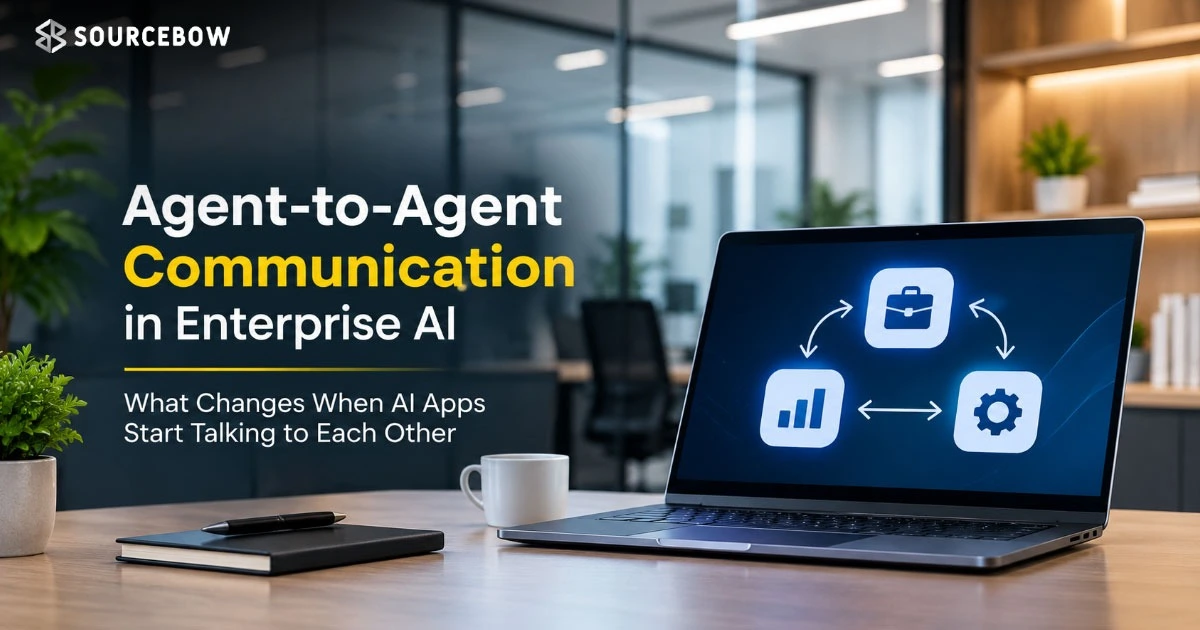
AI agents are starting to collaborate across systems, and that’s more than a neat upgrade. It changes how enterprise AI works when the tools themselves begin coordinating tasks. The bigger question is whether businesses are ready for agents that hand work to each other, make decisions faster, and create new control problems at the same time. Agent-to-agent communication compresses messy hand-offs into something smoother, like a well-run relay race. The promise is huge, but so is the responsibility.
Agent to Agent Communication ,AI agents are starting to collaborate across systems, and that shift is already changing how enterprises handle workflows, scale, and control.
What used to feel like a simple automation upgrade is turning into something bigger. Now, instead of one tool doing one job, multiple systems can pass work to each other, check each other’s output, and keep moving without waiting for a person to click every next step. That sounds efficient, and it is. But it also changes the rules.
Quick Highlights
Introduction
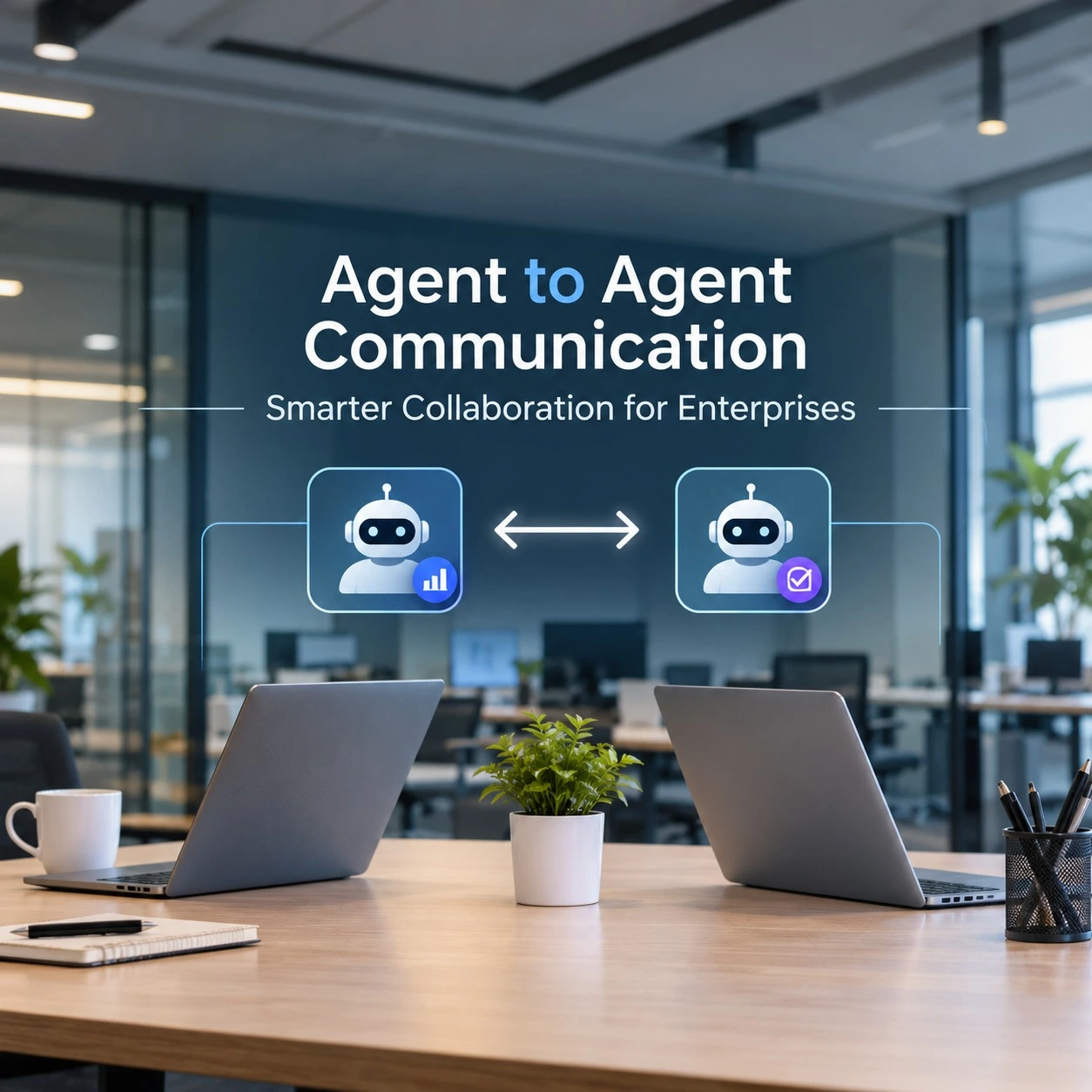
Agent to agent communication is changing how enterprise AI works, because AI agents are starting to collaborate across systems instead of just assisting people. When tools begin coordinating tasks, handing work to each other and making decisions faster, that’s more than a neat upgrade. It also creates new control problems, so the promise is huge, but so is the responsibility. Agent-to-agent communication compresses messy hand-offs into something smoother, like a well-run relay race instead of passing paper folders around.
The bigger question is whether businesses are ready for agents that don’t just assist people, but hand work to each other, make decisions faster, and create new control problems at the same time. That’s where this topic gets interesting, because the promise is huge, but so is the responsibility.
If you’ve spent any time around enterprise software, you already know how messy hand-offs can be. One team updates a record, another team checks it later, a third team fixes something after the fact. Agent-to-agent communication tries to compress that whole chain into something smoother. In theory, the work becomes less like passing paper folders around and more like a well-run relay race.
What agent-to-agent communication actually is, and why it’s the next step beyond business-to-agent work

A2A communication is the ability of autonomous AI agents to exchange information, coordinate actions, and collaborate without direct human involvement.
Jeremiah Owyang calls it “the next evolution of AI,” and the article places it after business-to-agent work, where businesses must now engage not just with human buyers but with their AI representatives.
It’s not just a technical shift; it’s a change in who the system is really built to serve. That’s a subtle point, but an important one. Once apps can talk to each other, the design target stops being only the human user sitting at the keyboard. The system also has to make sense to other systems.
How A2A changes the basic shape of enterprise work
Instead of one model doing one task, multiple agents can split billing, scheduling, data analysis, and other steps across a workflow.
The article frames this as the move from human-managed automation to autonomous systems that can communicate, collaborate, and even transact on their own. So the workflow doesn’t just get faster. It gets distributed. One agent can gather data, another can verify it, and a third can trigger the next action. That’s a very different shape of work from the old “human clicks button, software responds” model.
This also changes expectations inside a company. Teams stop asking, “Can software do this task?” and start asking, “Which agent should own this piece, and what do we let it decide?” That shift sounds small, but it affects everything from operations to compliance.
What do businesses gain when agents start collaborating in real time?

Businesses gain faster workflows, fewer hand-offs, and more room for humans to focus on judgment-heavy work. The strongest case for agent to agent communication is operational: A2A can put operations on autopilot, scale without limits, unlock real-time insights, and level the playing field for smaller businesses. This shows up in both simple service work and complex business decisions. When agents handle routine coordination, people get time back for the exceptions, the negotiations, and the “this customer is different” moments that software struggles with. There’s also a quieter benefit: consistency. Humans get tired, distracted, and overloaded, but agents can keep the gears turning with less friction, which matters a lot as volume goes up.
The strongest case for agent to agent communication is operational: faster workflows, fewer hand-offs, and more room for humans to focus on judgment-heavy work. The article says A2A can put operations on autopilot, scale without limits, unlock real-time insights, and level the playing field for smaller businesses.
That promise shows up in both simple service work and more complex business decisions. Look, this is the part most leaders immediately understand. If agents can handle routine coordination, people get back time for the messy stuff — the exceptions, the negotiations, the “this customer is different” moments that software usually struggles with.
There’s also a quiet but powerful benefit here: consistency. Human teams can be brilliant, but humans get tired, distracted, and overloaded. Agents don’t replace judgment, but they can keep the gears turning with less friction. That matters a lot when the volume goes up.
What the article says A2A can do in practice
- Reroute supply chain issues before they disrupt delivery
- Handle customer issues in e-commerce while human teams focus on strategy
- Support 24/7 scaling as workloads rise
- Spot hidden patterns and make predictions in real time
- Help a midsize online retailer create a personalized customer journey
- Go beyond automation into transactions, hiring, and negotiation
These examples show why so many companies are paying attention. A2A communication isn’t only about chatbots answering questions faster. It can touch the deeper business flow, like how inventory gets redirected, how support cases get resolved, or how a system identifies a problem before a person even notices it.
That’s also why business leaders are watching the market so closely. When a workflow becomes agent-driven, it can keep moving after hours, across departments, and even across platforms. The upside is obvious. The challenge is making sure those agents are acting on reliable information and not just moving quickly in the wrong direction.
The scale and adoption numbers that show why this matters now
| Signal | What it says | Why it matters |
|---|---|---|
| Gartner | Agentic AI could autonomously resolve 80% of common customer service issues | Service work is one of the clearest near-term uses |
| McKinsey & Company | 92% of businesses plan to increase AI investment in 2025 | The spending trend is already broad and accelerating |
| Jeremiah Owyang | AI agents will complete most transactions on the internet, on apps, and in the enterprise | Agents are moving toward the front door of business activity |
Those numbers don’t guarantee success, of course. But they do show momentum. Businesses are no longer asking whether AI is real enough to matter. They’re asking how fast it can move from pilot projects into everyday operations. And once agents start talking to each other, that transition gets even more serious.
Why protocols matter more than the hype around autonomous workflows
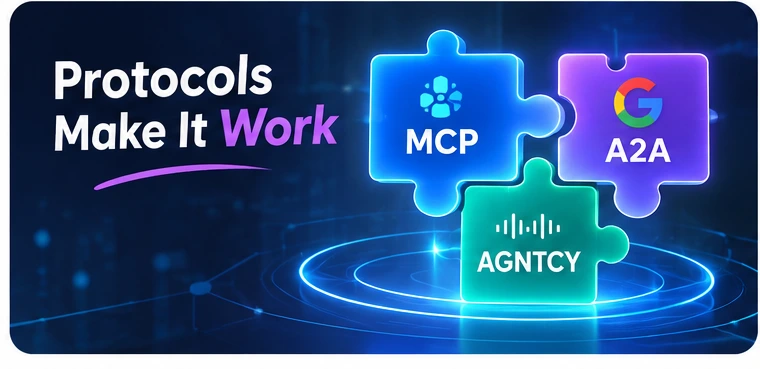
The article makes a strong point that agents can’t collaborate well without a common language.
That’s where standards like the Model Context Protocol and an A2A communication protocol come in: they let different systems connect, pass messages, and complete work without rebuilding everything from scratch.
This is the unglamorous part, but it’s what makes the whole thing usable. A lot of AI conversation gets stuck on the flashy outcome — the faster workflow, the smarter automation, the clean dashboard. But underneath all that, you need plumbing. Without shared protocols, every connection becomes a custom job, and the whole thing starts to resemble a pile of adapters instead of a real system.
In plain English, a protocol is just a rulebook for communication. It helps one agent understand what another agent is saying, what action it can take, and what the response means. That may sound boring, but boring infrastructure is often what makes the exciting stuff possible.
The protocols and projects named in the article
- Anthropic’s Model Context Protocol (MCP) for connecting models to external tools and data sources
- Google’s A2A for letting agents from different vendors work together
- Cisco’s AGNTCY project for machine-readable manifests that explain what each agent does and how to invoke it
These projects matter because they reduce friction. If every vendor builds its own private language, enterprises get stuck with fragmented systems that don’t really cooperate. But when there’s a standard way to describe tools, context, and capabilities, agents can move across environments more cleanly.
That doesn’t mean standards solve everything. It just means the ecosystem has a chance to become practical instead of chaotic. And in enterprise AI, practicality wins a lot more often than hype does.
What can go wrong when AI agents start making decisions for each other?
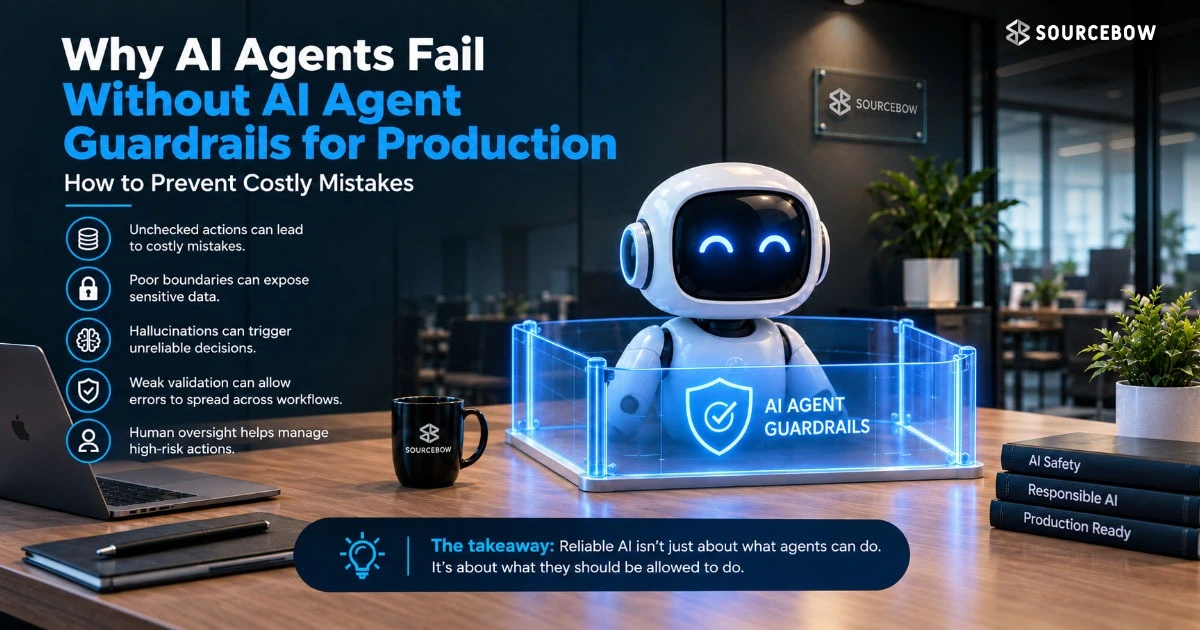
 When AI agents make decisions for each other, the main risks are security breaches, unclear accountability, bias, integration problems, and a lack of human oversight. Agentic AI collaboration is not a clean win. Once agents exchange messages and act on the fly, one compromised agent can feed bad instructions to the others. If no one can say who approved a decision, what data it used, or how to fix it when it’s wrong, the business gets speed without trust. Agent to agent communication needs clear boundaries, verified participants, and human review for important decisions.
The article doesn’t treat agentic AI collaboration as a clean win, and that restraint is the right instinct.
It flags AI agent security risks, unclear accountability, bias, integration problems, and the need for human oversight when systems begin acting with more autonomy.
This is where the optimism gets a little harder-edged. Once agents are exchanging messages and making decisions on the fly, you have to ask basic questions that are easy to ignore at first: Who approved this? What data did it use? What happens if it’s wrong? What if one agent is compromised and starts feeding bad instructions to the others?
Those are not abstract concerns. They’re the kinds of issues that show up when automation gets real responsibility. The more you let systems act independently, the more important it becomes to know where the boundaries are.
There’s also the human side of the problem. If an agent resolves an issue, who explains that decision to a customer, a regulator, or an internal audit team? If the answer is unclear, the business ends up with speed but not trust. And trust is usually the thing that determines whether an enterprise technology actually sticks.
The safeguards the article says businesses need
- Robust cybersecurity measures to protect company and customer data
- Transparency and ethics so biased outputs can be explained and challenged
- Human in the loop AI for testing, monitoring, and key review steps
- Agent verification so only trusted agents participate
- Fail-safe reviews for important decisions
- Energy efficiency so agents don’t consume unnecessary power
- Protocol planning so agent ecosystems don’t become fragmented and inefficient
These safeguards aren’t extra. They’re part of the job. If businesses want autonomous workflows to scale safely, they need to design for control from the beginning. That means limiting permissions, watching logs, verifying participants, and keeping a human available when the stakes are high.
It also means thinking beyond the immediate use case. A single department might roll out one agentic workflow and see great results. But once more teams adopt their own tools, the company can end up with a tangled ecosystem. So planning matters. Governance matters. And yes, even the unexciting parts of architecture matter a lot.
FAQ
These questions come from the reader’s smaller doubts after the big picture makes sense — the practical, “but how does this work safely?” kind of questions.
Q: What is an autonomous workflow?
An autonomous workflow is a chain of tasks that runs from start to finish while humans watch the outcome instead of managing every step.
Q: Why do AI agents need a shared protocol?
Without a shared protocol, agents on different platforms can’t reliably understand each other’s messages, actions, or data formats.
Q: What are the biggest risks of agent-to-agent communication?
The biggest risks are security breaches, unclear accountability, bias, integration failures, and over-reliance on automation without human review.
Q: How should a business start using autonomous workflows safely?
Start small, keep humans in the loop for sensitive decisions, limit permissions, log every action, and use open standards instead of locking into one vendor.
If you’re looking at all this and thinking, “Okay, but where do we actually begin?” that’s the right question. Start with one workflow that’s repetitive, measurable, and not too risky. Then test the agent collaboration carefully before expanding. That approach may not sound dramatic, but it’s usually how durable systems get built.
The truth is, agent-to-agent communication is exciting because it makes software feel more coordinated and less isolated. But the real advantage won’t come from letting agents run wild. It’ll come from making them useful, understandable, and safe enough to trust.
Conclusion
Agent-to-agent communication is changing enterprise AI by allowing agents to exchange information, delegate tasks, verify results, and keep workflows moving with less human intervention. The real value is not simply faster automation, but better coordination across systems.
For businesses, the next step is not to automate everything blindly. It is to build agentic workflows with shared protocols, clear permissions, security, verification, and human oversight. The companies that get this balance right will be better positioned to scale AI safely while keeping control over how their systems make decisions.