Introduction
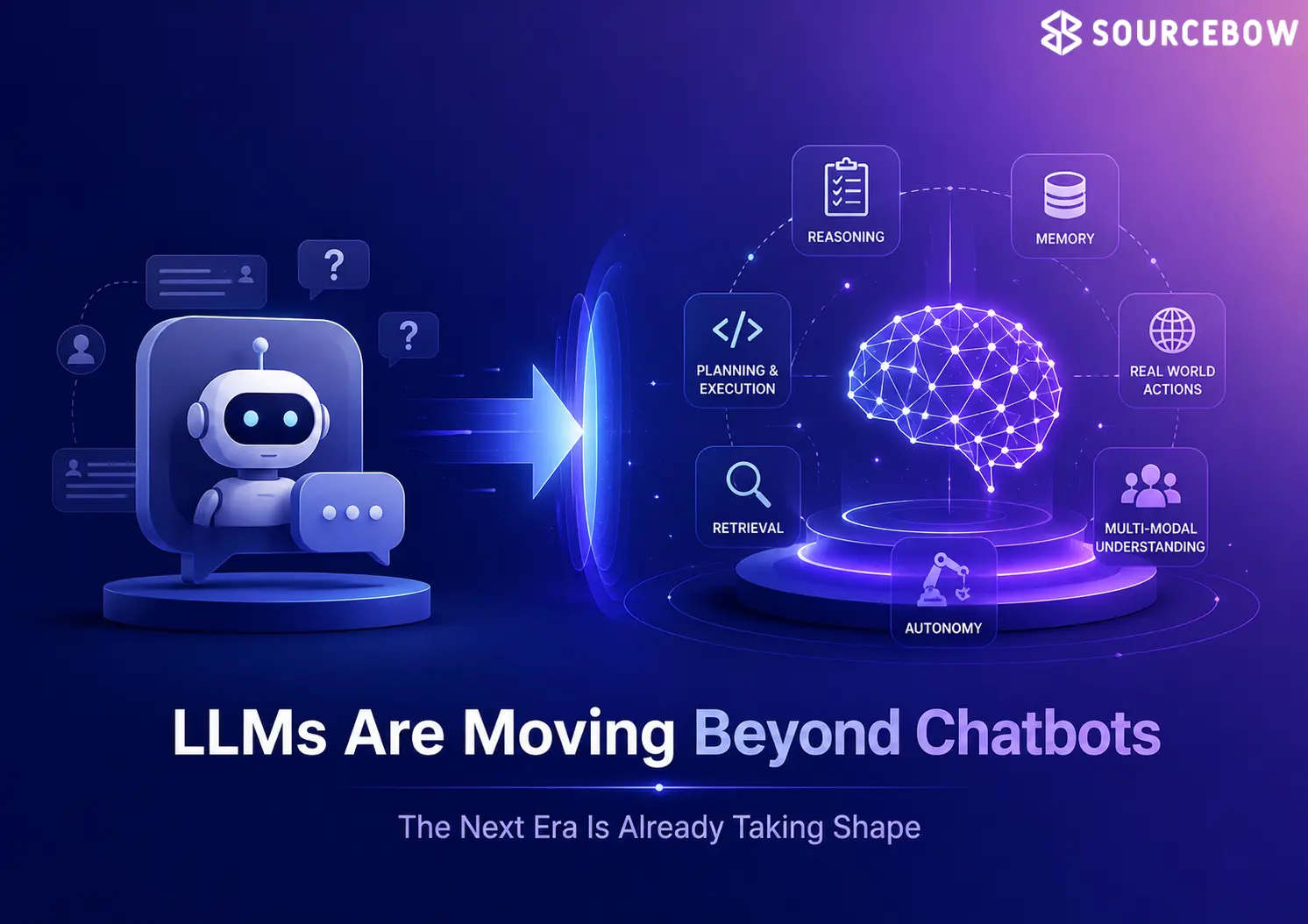
We’re at a weirdly exciting point with AI. For a while, the whole experience was basically: type a question, get a polished paragraph back, and move on. Useful, sure. But a little limited too. The next age of LLMs feels different. It’s less about making chat feel smoother and more about AI moving from chat to action — with reasoning, memory, tools, and multimodal workflows doing the real work.
That shift changes everything. If you’ve already noticed AI agents in browsers popping up in more places, that’s part of the story. The conversation window is no longer the main event. Here’s the thing: the model is slowly becoming the engine behind a whole system, not just a friendly text box.
Quick Highlights
- LLMs are shifting from replies to real task completion.
- Reasoning, memory, and tools matter more than chat polish.
- Multimodal AI is becoming part of everyday workflows.
- Trust and verification are getting more important, not less.
Why the next LLMs will feel less like chatbots and more like systems
The core change isn’t better small talk. It’s AI taking on a process instead of a single reply. That’s a bigger leap than people sometimes realize. A future request like “find the best laptop for my requirements, compare the specifications, check current availability, and prepare a shortlist” is a very different job from “write me a paragraph about laptops.” One is generation. The other is task completion.
That’s where the first-wave chatbot interface stops being the whole story. The next age of LLMs is about systems that can coordinate steps, not just produce sentences. And once that happens, the user experience changes too. You stop thinking, “What can this chatbot say?” and start thinking, “What can this thing do for me?”
What AI has to do when it is asked for a result, not a response
When you ask for a result, the model has to understand the request, search different sources, compare information, identify contradictions, and present something usable. That sounds simple on paper. In practice, it’s a lot of moving pieces. The AI has to keep track of context, choose what matters, and avoid taking the easy way out with a confident but flimsy answer.
This is the first real sign that the job is no longer just writing — it’s performing a workflow. And once a model is doing that, you start judging it like a system, not like a text generator. You care whether it can actually finish the job.
Where the new interface shows up: apps, browsers, search, and business software
LLM-powered systems could sit inside operating systems, browsers, productivity tools, search engines, and business software rather than live only in a chat box. That matters because the interface becomes less obvious. The user may not even think of it as “using an LLM” anymore. They’re just searching, editing, planning, or managing work — with AI quietly helping in the background.
And honestly, that’s probably what makes this shift stick. Tools usually win when they disappear into the flow people already have.
What reasoning models change when the answer is not obvious
Reasoning models matter because many tasks need more than a fluent guess. Programming, mathematics, scientific research, engineering, financial analysis, and complex planning all depend on breaking problems apart, checking assumptions, and correcting mistakes before the final output. That makes reliability a bigger goal than sounding smart. A model can be eloquent and still be wrong. That’s not a small problem when the task actually matters.
So, reasoning isn’t just a performance feature. It’s a trust feature. If the model can slow down, inspect a problem, and think through the steps, it becomes useful in places where plain chat starts to fall apart. That’s a big reason people keep talking about the next age of LLMs as something more serious than an upgraded chatbot.
Why better reasoning still does not mean safe or perfect reasoning
Even an AI that appears to think carefully can still be wrong, and that’s exactly why trust becomes part of the product question. The hard part isn’t getting the model to sound disciplined. The hard part is making sure that discipline holds up under pressure, across edge cases, messy data, and situations where the answer isn’t clean.
The real tension is whether users should trust an answer that looks thoughtful but may still fail when it matters. That tension isn’t going away anytime soon. In fact, as models get better at reasoning, the mistakes may become a little harder to spot.
Why tool-using AI systems raise the stakes
Agentic systems can take a larger goal and decide what actions are needed to reach it. That can include opening tools, searching information, interacting with software, analyzing files, running code, monitoring changes, and asking for clarification when needed. This is where the category gets interesting — and a little nerve-wracking. The difference between a bad answer and a bad action is huge.
Once the model can act outside the chat window, the consequences start to feel more real. A wrong sentence is annoying. A wrong action can create an actual problem in software, files, or connected systems. That’s why the next age of LLMs is tied so closely to safety design, permission boundaries, and human oversight.
What “prepare the report” means once the AI can actually act
Instead of just writing a report, the system may be asked to use documents, verify the latest figures, spot inconsistencies, and deliver a final version. That means the AI isn’t only drafting. It’s gathering, checking, and assembling. In other words, it becomes part researcher, part analyst, part assistant.
That turns the AI into something closer to a digital worker than a writing assistant. And once people see it that way, expectations change fast. You stop asking whether it writes nicely and start asking whether it can handle the job end to end.
Why a wrong action matters more than a wrong sentence
If the AI can reach outside the chat window, one mistake can affect software, files, or other systems. That’s a very different kind of risk. The upside is autonomy. The downside is that the error surface gets much larger. A simple typo in a paragraph is one thing. A mistaken click, deleted file, or badly timed action is another.
That’s why tool-using AI has to be treated like a system with consequences, not just a smarter autocomplete layer. The more it can do, the more carefully it has to be governed.
How LLM memory systems could make AI feel personal and more useful
Long-term continuity is one of the biggest missing pieces in current AI conversations. Right now, a lot of interactions still feel a little reset-heavy. You explain, re-explain, and remind the system of things you already covered. Memory changes that. It could let a system remember preferences, projects, important information, and decisions already made, instead of making the user repeat everything every time.
That’s a huge usefulness jump. If done well, it makes AI feel less like a temporary tool and more like something that understands your working style over time. But the tradeoff is obvious: the more it remembers, the more sensitive that memory becomes.
The privacy, retention, and consent problem that comes with better memory
The more an AI knows about a person, the more useful it can become — and the more valuable that information becomes. That’s the real issue. Memory isn’t just a convenience feature. It becomes a data question, a trust question, and a control question all at once.
That’s why privacy, data ownership, retention, consent, and security become central once the system starts remembering more than the current thread. Users need to know what’s stored, why it’s stored, and how much control they actually have. Otherwise, the feature that makes AI feel more helpful can also make it feel a little too invasive.
Why multimodal AI tools are becoming the default instead of a side feature
Text is no longer the only thing LLMs can work with. Modern systems increasingly combine text, images, audio, video, and other information into one intelligence layer. The point isn’t that each mode is impressive by itself. It’s that they start working together in ways that feel much closer to how humans actually gather information.
That’s why multimodal AI tools are becoming more than a bonus feature. They’re becoming the normal shape of useful AI. Sometimes the best answer isn’t in the text alone. Sometimes it’s in the screenshot, the recording, the diagram, or the messy combination of all three.
Three ways multimodal AI gets used in practice
- A broken device can be shown on camera, described verbally, matched against a manual, and diagnosed.
- A student can upload notes, diagrams, recordings, and textbooks to get a harder concept explained.
- A developer can share screenshots, code, logs, and documentation to find the likely source of a problem.
These examples are simple, but they show the direction clearly. Multimodal systems are useful because real life isn’t one format. It’s a mix.
Why on-device small models still matter in a cloud-first AI world
The future isn’t only about massive models in huge data centers. Smaller and more efficient models can run locally on a phone, laptop, car, or other device for specific tasks. That matters more than it might seem at first. Local processing can mean lower latency, less cloud dependency, and potentially better privacy for certain use cases.
In other words, not everything needs the biggest model available. Sometimes you just need fast, reliable help that happens right on the device in your hand. That’s especially useful for quick tasks, private data, or situations where connectivity isn’t great.
| Where the model runs | What it is good at | Main trade-off |
|---|---|---|
| Cloud | Large, general capability | More dependency on remote servers |
| Phone, laptop, car | Specific local tasks | Smaller model size and narrower scope |
That balance is probably what the near future looks like: cloud for heavy lifting, local models for speed and privacy, and a mix of both depending on the task.
What the AI race looks like once model size stops being the only metric
The competition is moving beyond parameters, benchmarks, and training compute. Those still matter, of course. But they’re no longer the whole game. What matters next is the whole stack: reasoning, tools, memory, coding environment, processing speed, on-device experience, costs, and whether people actually use the product every day.
The best model may not win if the rest of the system is weak. That’s a subtle but important point. People don’t live inside benchmarks. They live inside products. And products win when they feel dependable, useful, and easy enough to keep using.
What a stronger AI product actually combines
The likely winner is the company that pairs a good model with the best interface, tools, data, distribution, and reliability. That’s a product race, not just a model race. And product races tend to be won by the team that makes the whole experience feel smooth, not just the core engine.
That’s also why the next age of LLMs may produce surprising winners. The smartest model won’t automatically be the most useful one.
Why the AI operating layer may matter more than the next standalone app
AI could move from being an app people open to being the layer between the user and the apps they already use. That’s a big shift, even if the visual change is small. Instead of manually jumping between search, documents, image editing, calendars, analytics, and communication, the system could coordinate the workflow across them.
That means the visible change may be subtle, but the behavioral change is enormous. It’s the difference between using tools one by one and having something help connect the dots in the background. If that sounds abstract, imagine how much time disappears when a system stops making you do all the switching yourself.
Why AI hallucination risk gets worse, not better, as systems become more capable
As people trust AI more, mistakes become more dangerous. That’s the uncomfortable truth. A bad paragraph is easy to catch. A bad research step, wrong decision, or failed action inside another system is much harder to unwind. The more the model does, the more the mistake can ripple outward.
That’s why verification, transparency, controllability, and clear boundaries matter more, not less. Capability doesn’t remove the need for caution. It increases it. The smarter the system seems, the more tempting it is to trust it too quickly.
When an AI should stop instead of pushing ahead
The real challenge isn’t simply making AI do more. It’s making it know when it should stop. That boundary may matter more than raw intelligence once systems start acting on behalf of users. A good assistant doesn’t barrel forward no matter what. It notices uncertainty, asks for help, and pauses when the situation gets risky.
That kind of restraint may become one of the most valuable features in advanced AI systems. Not because it sounds exciting, but because it’s what keeps the whole thing usable.
How the human role changes when AI handles more of the routine work
Human work shifts when AI takes over repetitive research, drafting, coding, organization, and analysis. That doesn’t make people less important. It changes where their value sits. People spend more time deciding what should be built, judging quality, defining goals, and taking responsibility for important decisions.
In a way, that’s the real transition underneath the technology. Knowing what to delegate becomes more important than writing the perfect prompt. The people who do well in this next phase probably won’t just be the ones who use AI the most. They’ll be the ones who know how to direct it without handing over judgment.
FAQ
These are the smaller doubts people usually have after they understand the bigger shift from chat to action.
Q: What is the next age of LLMs really about?
It is about AI moving from answering to acting. The important change is not just smarter text, but reasoning, memory, tool use, multimodal understanding, and personalization working together.
Q: Why are AI agents in browsers such a big deal?
Because they can sit inside the place where work already happens and take actions across tools, pages, and tasks. That makes the browser less like a window and more like a control layer.
Q: Are reasoning models enough to make AI reliable?
No. Better reasoning helps with difficult tasks, but it does not remove hallucinations or guarantee correctness. Verification still matters.
Q: Will on-device small models replace large cloud models?
Not entirely. Smaller models will likely handle local tasks on phones, laptops, and cars, while larger cloud models stay useful for broader or harder work.
Conclusion
The next age of LLMs is not just about a smarter chatbot; it’s about systems that can reason, remember, use tools, and act with real autonomy. That’s the real shift hiding underneath all the flashy demos and product launches.
The bigger question now isn’t how intelligent an LLM can seem. It’s what it can safely do with that intelligence — and how much humans still need to stay in control. That balance is where the next few years are going to get very interesting.