Introduction
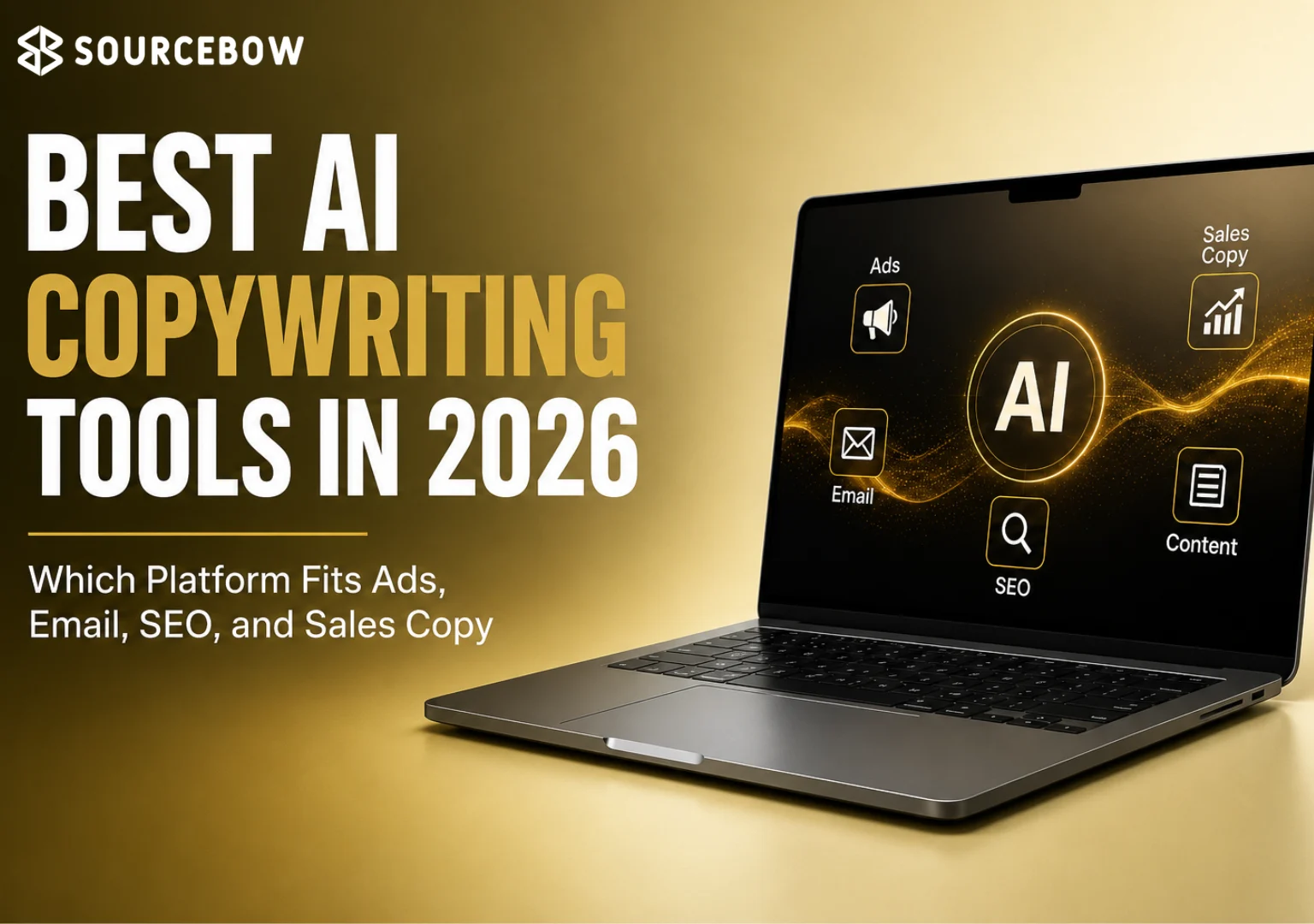
Compare the best AI copywriting tools in 2026 for ads, email, SEO, and sales copy. That sounds simple enough on paper, but if you’ve actually tried a few of these platforms, you know the real challenge is a little messier. Some tools are great at cranking out quick drafts, some are better for teams, and a few are basically just better editors wearing an AI badge.
The real question is not whether these tools can write. They can. The question is which one helps you move faster without making the work feel generic, off-brand, or weirdly flat. And honestly, that’s where people usually get stuck. You don’t just want content. You want usable content.
Quick Highlights
- ChatGPT is the most flexible all-around option.
- Jasper AI is strongest for team marketing workflows.
- Writesonic is the clearest fit for SEO content.
- Copy.ai leans hard into sales and outbound use.
- Grammarly is best when you already have copy and just need cleanup.
What an AI Copywriting Tool Actually Does Now
An AI copywriting tool is no longer just a paragraph generator. It can turn a prompt into blog introductions, Google Ads, Facebook Ads, LinkedIn posts, product descriptions, email campaigns, landing page copy, sales copy, website content, video scripts, and marketing headlines. That’s a lot more than a sentence spinner, and it changes how people use these tools day to day.
Most platforms also handle rewriting, grammar improvement, tone adjustment, and SEO assistance, which is why the category now overlaps with editing as much as drafting. In other words, these tools are not just helping you start faster. They’re also helping you clean up faster, which is sometimes the bigger win.
That matters because the better tools are not just faster — they also reduce the number of versions you have to manually clean up. If you’ve ever spent an hour tweaking an ad headline because the AI output sounded just a little too robotic, you already know why that matters. Speed is nice. Less rework is nicer.
Which Tool Fits Which Kind of Work
The decision usually comes down to use case first: brainstorming, marketing campaigns, sales outreach, SEO content, budget drafting, conversion optimization, or editing. That’s the practical way to think about it. Not, “Which tool is best?” but, “What am I actually trying to do most days?”
Here the differences are practical, not abstract. ChatGPT is positioned as a general-purpose writing and brainstorming tool; Jasper AI is built for marketing teams; Copy.ai leans into sales and outbound content; Writesonic points at SEO content; Rytr is the budget option; Anyword centers on conversion-focused marketing; Grammarly is for editing existing copy. If you’ve ever felt like every review sounded the same, this is the part that usually gets skipped. But it’s the part that really decides whether a tool feels useful or annoying.
ChatGPT, Jasper AI, Copy.ai, Writesonic, Rytr, Anyword, and Grammarly each solve a different problem
ChatGPT offers excellent content quality, flexible prompts, long-form writing, strong editing capabilities, and marketing strategy support, but it requires good prompting and has no dedicated marketing templates. So it works beautifully if you know how to ask for what you want, and a little less beautifully if you expect it to read your mind.
Jasper AI brings brand voice management, campaign workflows, multiple marketing templates, and team collaboration, while Copy.ai focuses on fast copy generation, email templates, sales workflows, marketing automation, and CRM integrations. Those two sound similar at a glance, but they’re really aimed at different rhythms of work. Jasper feels more like a team environment. Copy.ai feels more like a speed tool for outbound and sales-heavy tasks.
Writesonic adds SEO optimization, AI article generation, landing pages, marketing copy, and multiple AI models; Rytr keeps things affordable and simple with multiple templates and fast content generation; Anyword adds predictive performance scoring, ad optimization, conversion-focused templates, and brand messaging; Grammarly stays narrow on grammar correction, tone suggestions, clarity improvements, and rewrite assistance. So, one platform may help you write the thing, while another helps you make the thing better. That distinction is easy to miss, and it matters a lot.
- ChatGPT — general-purpose writing and brainstorming; excellent content quality; flexible prompts; long-form writing; strong editing; marketing strategy; requires good prompting; no dedicated marketing templates; good for bloggers, freelancers, agencies, and small businesses.
- Jasper AI — marketing teams; brand voice management; campaign workflows; multiple marketing templates; team collaboration; premium pricing; learning curve for beginners; suited to marketing agencies, enterprise teams, and content marketers.
- Copy.ai — sales and outbound content; fast copy generation; email templates; sales workflows; marketing automation; CRM integrations; limited long-form writing; best features require paid plans; suited to sales teams, startups, and B2B marketing.
- Writesonic — SEO content; SEO optimization; AI article generation; landing pages; marketing copy; multiple AI models; output sometimes needs editing; suited to SEO writers, content creators, and affiliate marketers.
- Rytr — budget users; affordable pricing; easy to use; multiple templates; fast content generation; less advanced than premium tools; limited customization; suited to students, freelancers, and small businesses.
- Anyword — conversion-focused marketing; predictive performance scoring; ad optimization; conversion-focused templates; brand messaging; more expensive than beginner tools; suited to paid advertising, performance marketing, and ecommerce brands.
- Grammarly — editing existing copy; grammar correction; tone suggestions; clarity improvements; rewrite assistance; not designed for complete campaigns; suited to professionals, students, and business communication.
What to Check Before You Pick One
The shortlist gets a lot cleaner when you compare the attributes that actually change day to day: content quality, brand voice, templates, SEO support, team collaboration, integrations, and pricing. Those are the things you’ll feel every week, not just in a demo.
Free plans can work for occasional use, while premium features matter more once the work becomes repetitive, collaborative, or tied to business output. That’s usually the moment when a tool stops being a fun experiment and starts needing to actually earn its keep. Some features save time; others save rework. The difference shows up fast if you publish often.
| Feature | Why it matters | What the raw content says |
|---|---|---|
| Content quality | Less editing, better performance | Natural writing usually needs less editing and performs better |
| Brand voice | Consistency across campaigns | Some tools remember your preferred tone and writing style |
| Templates | Speed for recurring campaigns | Marketing templates can save significant time |
| SEO support | Useful for blogs plus marketing copy | Helpful if you publish blogs alongside marketing copy |
| Team collaboration | Important for agencies and larger teams | Especially relevant for agencies and larger marketing teams |
| Integrations | Fits into existing workflow | Look for Google Docs, WordPress, CRMs, and marketing platforms |
| Pricing | Matches frequency of use | Free plans work for occasional use; businesses often benefit from premium features |
If you’re choosing between a few similar platforms, this is usually where the answer becomes obvious. One tool might be slightly better at output. Another might be better at workflow. And sometimes the better tool is just the one you’ll actually keep using after week two.
Can AI Replace Human Copywriters?
Not completely, and that is the point most buyers eventually run into. AI can generate a ton of decent material, but decent is not always enough, especially when the message has to persuade someone to click, buy, sign up, or trust you.
AI can generate ideas and first drafts quickly, but it does not replace brand storytelling, emotional messaging, strategic positioning, customer psychology, or creative campaign concepts. Those things still need a human eye. A machine can mimic the shape of a good ad. It can’t fully feel why the ad works, or why a specific line lands with one audience and misses with another.
The strongest results usually come from using AI to speed up the rough work while a human handles judgment and nuance. Think of it like having a very fast assistant who can draft, suggest, and revise, but still needs a real editor to decide what stays.
FAQ
These are the questions people ask once they already understand the category but still want to avoid making the wrong choice. Fair enough. When the tools start sounding similar, the little differences matter a lot.
Q: Are AI copywriting tools worth paying for?
Yes, if you regularly create marketing content. Paid plans can save hours each week through advanced features, templates, and collaboration tools. If you only need a few quick drafts now and then, a free plan might be enough. But once content becomes part of your weekly workflow, the paid version usually starts to make more sense.
Q: Which AI copywriting tool is best for beginners?
Rytr and ChatGPT are the easiest places to start because they have simple interfaces and need minimal setup. Rytr is especially approachable if you want structure without too much complexity, while ChatGPT gives you more flexibility if you’re comfortable experimenting a bit.
Q: Which AI tool is best for SEO copywriting?
Writesonic is the clearest fit for SEO-focused content creation, and ChatGPT also works well when you give it detailed prompts and keyword instructions. If your main goal is blog traffic and search visibility, Writesonic has the more obvious SEO angle. If you want broader writing help alongside SEO tasks, ChatGPT can still be very strong.
Q: Do AI copywriting tools create plagiarism-free content?
Most generate original text, but it is still smart to review the output and run a plagiarism checker before publishing. That extra step is just part of responsible use. It’s quick, and it protects you from awkward surprises later.
Conclusion
The best AI copywriting tool depends on the kind of work you do most: Jasper AI for marketing workflows, Copy.ai for sales outreach, Writesonic for SEO content, Rytr for budget copywriting, Anyword for conversion scoring, Grammarly for rewrite assistance, and ChatGPT when you want the broadest range of uses. That’s the simple version, and honestly, it’s the version most people need.
AI is best treated as a speed layer, not a replacement for judgment — useful for drafting, editing, and research, while the human side still does the positioning and final call. If you keep that in mind, the tools get a lot more helpful and a lot less frustrating. Pick the one that fits your workflow, not the one that sounds smartest in a product page.