The AI world feels like it is running a marathon at sprint speed. Every few months, a new model drops, old records fall, and companies scramble to keep their place in line. Recently, things heated up again. OpenAI, long seen as the front runner, reportedly hit a code red inside the company. The reason is simple. Competition is no longer creeping up. It is pressing hard from every side.
The strange timing of OpenAI’s code red
OpenAI’s internal teams were already working on a mix of projects when this code red landed. According to reports, Sam Altman pushed employees to pause almost everything else. Even advertising plans were put on hold. The focus was moved toward making ChatGPT faster, more responsive and a lot more personal. That push makes sense for a company trying to keep its spot at the top. The timing though raised eyebrows.
It almost felt like the moment when Google first declared its own code red years ago after ChatGPT surprised everyone. Now the roles seem reversed, and history has its strange habit of repeating itself.
Garlic and its bold claims
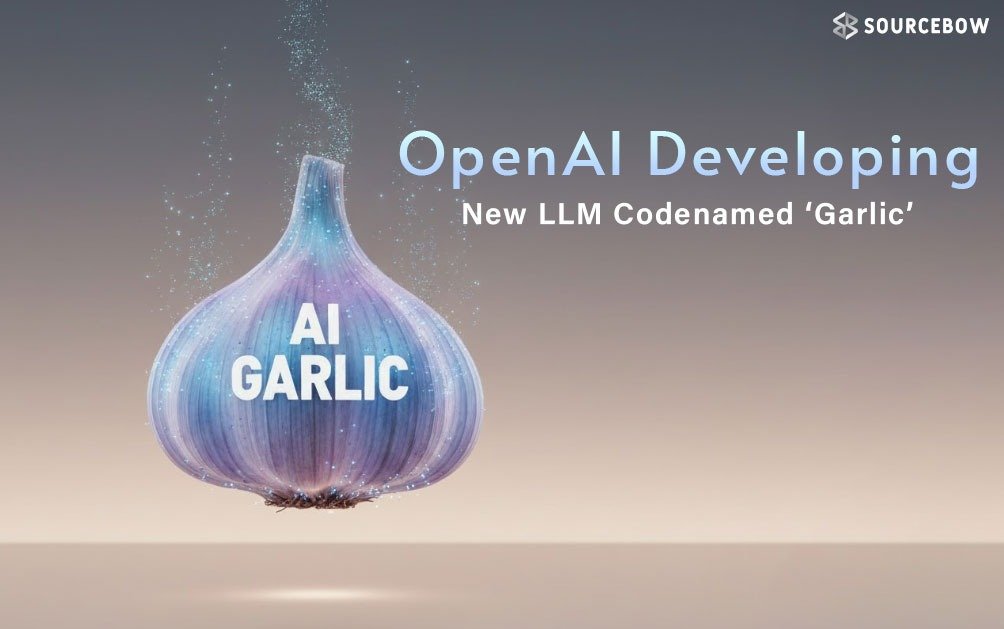
Inside this busy moment, the secret model Garlic started gaining attention. OpenAI’s chief research officer Mark Chen reportedly claimed that Garlic outperformed both Gemini 3 and Claude Opus 4.5 in internal tests. The interesting part is not only the performance bump but where it is said to perform better.
- Coding
- Reasoning
- Tasks that demand clarity and structured thinking
If these claims hold up, Garlic could give OpenAI the window it needs to pull ahead again. Industry watchers expect this model to be released publicly as GPT 5.2 or GPT 5.5 sometime around early 2026. The name will likely change, but the intention behind it seems strong.
The pressure from Google is getting louder
There is no denying Google’s growing momentum. The Gemini app hit about 650 million monthly active users in October, jumping from 450 million in July. Numbers like that usually cause some sleepless nights in competing boardrooms. For years, Google seemed slow in the AI race, but now it is moving with the confidence of a company with massive infrastructure and endless reach.
When such a giant pushes forward, every shift is felt across the industry. And with many users already familiar with Google’s ecosystem, the jump to Gemini often feels natural for them. OpenAI does not have that advantage.
The research team behind the curtain
Another piece of the puzzle is the team that builds these models. In the last few months, some senior researchers reportedly left OpenAI for rival companies. In high stakes tech, movement like this always brings concern. Talent is the engine in AI research, and losing experienced minds can slow down progress if the timing is unlucky.
This makes the internal push around Garlic even more interesting. OpenAI seems determined to finish strong, even with the pressure rising from outside and inside.
A shifting path toward specialized intelligence
One of the most interesting parts of this entire situation is the strategic shift. Garlic appears to be designed for industries where precision matters more than charm. Healthcare, biology, and scientific work need models that behave less like a friendly assistant and more like a reliable specialist.
This shift makes sense. Generalist AI is everywhere now. Every big tech player has a version of it. Standing out in such a space is becoming harder each year.
The tension between growth and survival
Behind the big announcements and bold claims, there is a real question about business survival. OpenAI relies heavily on consumer revenue. Millions of users subscribing to ChatGPT Plus or enterprise plans make the bulk of its income. But consumer loyalty is fragile. A better app, a better model, or even a trend shift can pull users away. And without a stable foundation in specialized industries, the risk becomes larger over time.
If Garlic truly delivers reliable performance in high value sectors, OpenAI may find a stronger base that is not shaken easily by a flashy new competitor.
What this battle means for everyday users
The most interesting question is not who wins the AI crown. It is who benefits the most from this crazy race. And honestly, everyday users stand to gain a lot. Competition forces companies to improve quickly. It pushes out better tools, faster responses, smoother features and sometimes even better prices.
Companies themselves also gain, of course. But history shows that heavy competition creates innovation that eventually trickles down to the public.
Final Description
OpenAI’s latest moves have sparked fresh debate in the AI world. With competition rising from Google’s Gemini 3 and Anthropic’s Claude Opus 4.5, the company is reportedly pushing hard on a secret model called Garlic. This new system is designed to handle high value fields like healthcare and bio medicine and is said to outperform rivals in coding and reasoning. At the same time, OpenAI is racing to improve ChatGPT after a noticeable dip in daily users. The pressure is real, especially as Google’s user base keeps growing at a fast pace.