Anthropic’s latest move is one of those AI launches that sounds simple at first, then gets a little more interesting the longer you sit with it. **Claude Opus 4.7 brings a smarter AI upgrade**, and on paper it’s now the most powerful Claude model available to general users. But there’s a twist. Just a few days earlier, Anthropic introduced Claude Mythos for only a small set of companies, which instantly made Opus 4.7 feel less like the final boss and more like the very capable version most people are actually allowed to use.
That matters more than it might seem. In the AI world, the best model isn’t always the one everyone can touch. Sometimes the real story is about access, safeguards, and who gets to use what. And that’s exactly where Claude Opus 4.7 starts to stand out.
Quick Highlights
- Opus 4.7 is Anthropic’s strongest general-use Claude model
- It improves coding, instruction following, and visual reasoning
- Mythos is still the more restricted, security-focused top model
- Opus 4.7 is available across Claude, Bedrock, Vertex AI, and Foundry
- Pricing stays the same as Opus 4.6
So, what exactly is Claude Opus 4.7?
Think of Claude Opus 4.7 as the upgraded everyday powerhouse in Anthropic’s lineup. It’s designed to do better at the kinds of tasks people actually care about: writing code, following detailed instructions, handling long projects, and making sense of complex information without drifting off track. That last part sounds small, but it’s a big deal. A lot of AI models can sound smart right up until they need to stay precise for more than a few steps.
According to Anthropic, Opus 4.7 is a major step up from Opus 4.6 in software engineering, real-world task completion, and instruction adherence. In plain English, that means it should be better at building things, sticking to the prompt you gave it, and finishing work with fewer weird detours. If you’ve ever asked an AI tool to do
something specific and watched it wander away halfway through, you already know why that matters.
It’s also being framed as less broadly capable than Claude Mythos Preview, which sounds like a contradiction until you realize what Anthropic is really saying. Opus 4.7 is powerful, but not so unrestricted that it gets the same treatment as the company’s most guarded model.
Why people care about this upgrade
A lot of AI launches are announced with shiny words like “next-generation” and “major leap,” but the real test is whether the model actually feels better in day-to-day use. That’s where Opus 4.7 gets interesting. Anthropic says it’s stronger at tasks that need persistence, accuracy, and better judgment. That includes coding, reading dense visuals, and dealing with work that isn’t neat or tidy.
One of the biggest draws here is Claude Code. It’s already a popular tool for developers, and Opus 4.7 could make it even more useful by handling larger chunks of work without so much hand-holding. That doesn’t mean it replaces developers. Not even close. But it can reduce the annoying back-and-forth that slows down simple and medium-complex coding tasks.
There’s also a practical angle for people outside programming. If a model is better at understanding instructions and staying consistent, it becomes easier to use for everyday work like summarizing documents, analyzing reports, or organizing information from different sources. In other words, it’s not just about “smarter AI.” It’s about AI that wastes less of your time.
Visual reasoning is quietly a big deal
One of the more useful upgrades in Opus 4.7 is its improved visual capability. Anthropic says it can process high-resolution images up to 2,576 pixels, which helps it understand dense screenshots, complicated diagrams, and detailed visuals much more clearly. That may sound niche, but in practice it opens up a lot of everyday use cases.
Imagine trying to pull useful data from a cluttered dashboard screenshot or making sense of a chart crammed with labels. Older models could miss context or blur the details together. Opus 4.7 is supposed to handle that better. So if you’re working with product analytics, finance screenshots, interface mockups, or technical diagrams, the
difference could be pretty noticeable.
This also explains why some people were paying attention to stock movement before the launch. Reports suggested shares of companies like Adobe and Figma dipped in anticipation, because the market was already speculating that a model this capable might handle more design-related work on its own. That’s the uncomfortable part of AI progress. Every new release isn’t just a product update. It’s also a reminder that software keeps eating tasks once reserved for people.
How Opus 4.7 differs from Mythos
Here’s where Anthropic’s strategy becomes clearer. Claude Opus 4.7 is not Mythos, and it’s not just a renamed version of it either. The company says Opus 4.7 succeeds Opus 4.6 and sits somewhere between its older models and Mythos. So it’s a bridge of sorts, not the final destination.
Mythos is Anthropic’s most powerful model for cybersecurity, and that power is exactly why access is limited. The company recently said Mythos would be available only to around 40 companies, including Microsoft, Google, and Amazon, under Project Glasswing. That kind of restriction usually means one thing: the model is strong enough to be useful, but also strong enough to cause serious damage if it falls into the wrong hands.
That’s the sharp edge of advanced AI right now. The same model that can help security teams find vulnerabilities can also be misused by bad actors. So Anthropic appears to have drawn a line. Mythos stays locked down. Opus 4.7 becomes the more accessible version, with safeguards built in.
And those safeguards are not just for show. Anthropic says Opus 4.7 can automatically block high-risk cybersecurity requests. That doesn’t make it weak. It makes it more suitable for general use, where the goal is usefulness without handing out a dangerous amount of freedom.
A small but important detail: tokens and rate limits
There’s another practical wrinkle here. Claude Opus 4.7 apparently uses more thinking tokens, which are basically the internal processing units AI models consume while reasoning through a task. More tokens usually mean more work being done behind the scenes, but they can also mean users hit limits sooner.
That’s why Boris Cherny, head of Claude Code, said on X that Anthropic increased rate limits for subscribers to balance things out. His message was pretty straightforward: Opus 4.7 uses more thinking tokens, so the company boosted the limits to help users keep going.
That’s a tiny detail that says a lot. The best AI model isn’t very helpful if you keep running into usage walls. So even if Opus 4.7 is more capable, Anthropic still has to make sure it’s practical enough for real work. Otherwise the upgrade becomes a frustration instead of a benefit.
Who can actually use it?
Opus 4.7 is now available across all Claude products, plus major cloud platforms like Amazon Bedrock, Google Cloud’s Vertex AI, and Microsoft Foundry. That’s a pretty wide rollout, which makes sense for a model meant for general users and enterprise teams alike.
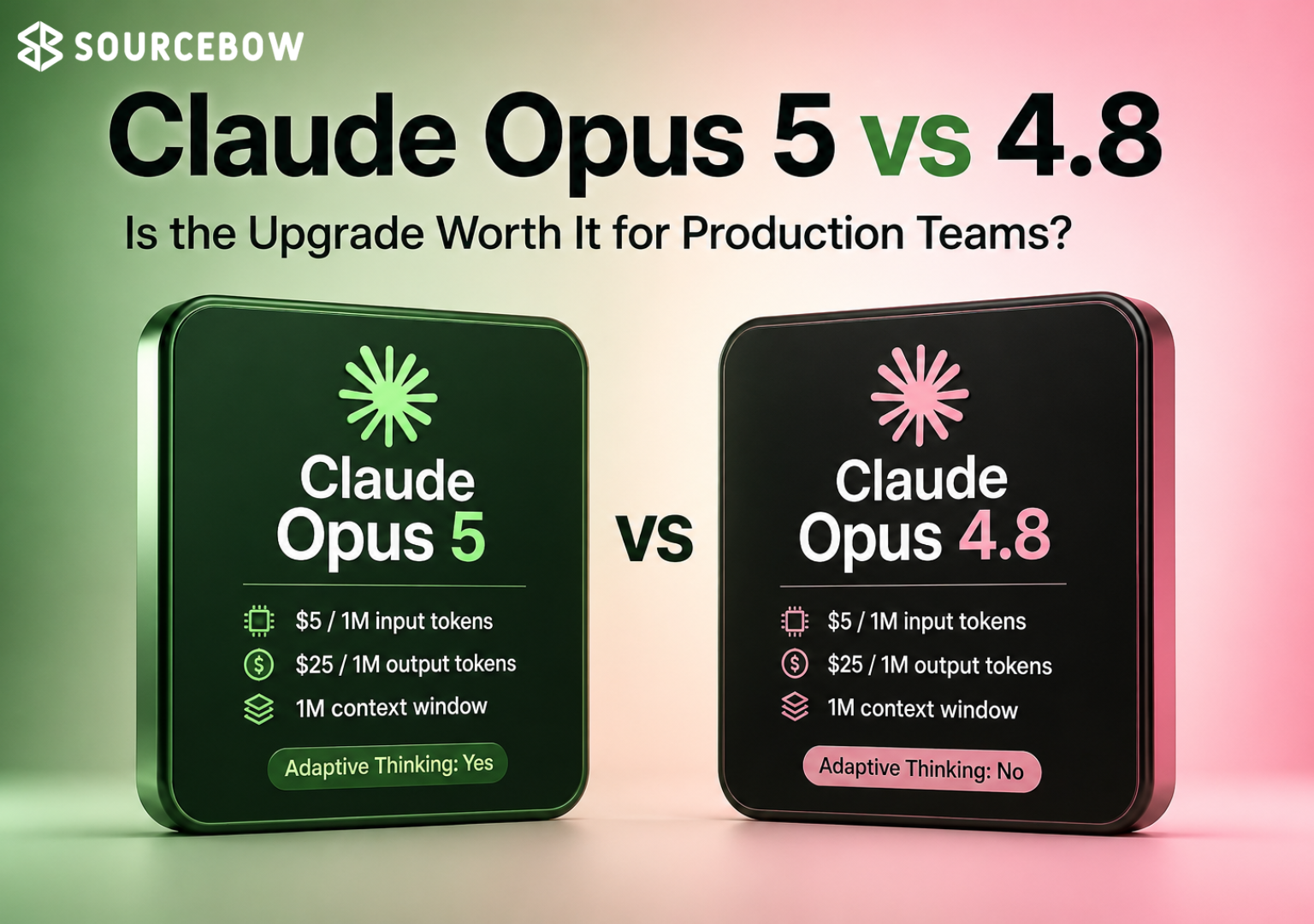
The pricing is unchanged from Opus 4.6, which is good news if you’re watching costs closely. Anthropic is charging $5 per million input tokens and $25 per million output tokens. For casual users, those numbers may not mean much at first glance, but for businesses and developers, stable pricing can make adoption a lot easier.
If you’re trying to compare it with other AI tools, this is the kind of release where availability matters as much as capability. A brilliant model locked away in a limited pilot is exciting, sure. But a strong model that’s actually easy to access is what most teams will care about.
What this really means for everyday users
For most people, Claude Opus 4.7 probably won’t feel like a dramatic sci-fi moment. It won’t suddenly redesign your life or replace all your tools. But it might feel smoother, smarter, and a little less annoying than the models you’ve used before. And honestly, that’s often the real win.
If it truly follows instructions better, handles images more accurately, and stays more consistent on long tasks, then it becomes one of those AI models that quietly earns trust. That matters in workflows where one wrong assumption can waste time, break a report, or send you down the wrong path.
For developers, the appeal is obvious. For analysts, designers, and knowledge workers, the pitch is similar: better accuracy, better context handling, and fewer moments where you have to correct the AI over and over again. That’s not flashy, but it’s useful. Maybe more useful than flashy.
And that’s probably the smartest thing Anthropic has done here. Instead of making Opus 4.7 sound like the most impossible thing ever built, the company is positioning it as a strong, practical upgrade with real safeguards. In a market full of overpromises, that restraint almost feels refreshing.
Still, the Mythos comparison will keep following it around. Once a company releases a more restricted, more powerful sibling model, every other launch in the family gets judged a little differently. That’s the story here. Opus 4.7 is impressive on its own, but the existence of Mythos makes it feel like the “safe” version of a much bigger idea.
So if you’re curious whether this model is worth paying attention to, the answer is yes. Not because it’s the loudest launch, but because it reflects where AI is headed right now: more capable, more specialized, and a lot more selective about who gets the sharpest tools.
And maybe that’s the part worth sitting with. When AI gets this powerful, the interesting question isn’t just what it can do. It’s who gets to use it, how much freedom it has, and where the guardrails begin. Would you rather have the most powerful model, or the one you can actually use without worrying about the edge cases? That’s the real tradeoff Anthropic is putting on the table.