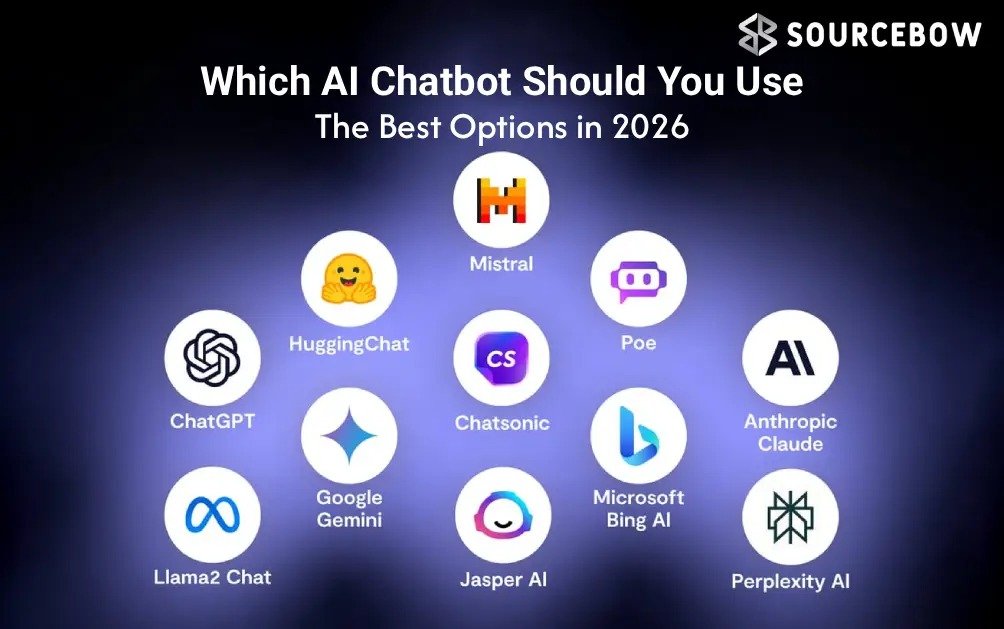
If you’re anything like me, navigating the Best AI Chatbots of 2026 can feel a bit like wandering a crowded marketplace. Every vendor promises faster replies, smarter code, and sharper images, yet finding one you can actually rely on is where the real challenge begins. The good news is that the field finally feels usable for everyday tasks—writing, coding, researching, even a little creative crunch time. The catch? Not all bots are created equal, and the best fit depends on what you actually do with them.
To keep this practical, we focus on what matters most today—consistency, real usefulness across tasks, clear privacy handling, and how the tools fit into real life.
Quick Highlights
Quick Highlights
- Top performers mix depth with speed and reliable context
- Value packs and ecosystem integrations boost overall usefulness
- Privacy and data handling are still worth checking
- Most features scale with affordable paid plans
- For research and deeper dives, source transparency matters
Why the AI chatbot crowd finally feels usable
The crowd has evolved from flashy demos to practical assistants. You won’t just get clever prompts; you’re getting models that understand context, remember preferences, and tie into your everyday apps. The tradeoff is privacy and pricing—companies collect data to improve their models, and some features sit behind paywalls. But the upside is a set of tools that can truly swap between tasks—coding a snippet, drafting an email, analyzing a document, or rendering an image—without turning your day into a chaotic trial run.
Here’s the thing: you might notice that the best chatbot for you isn’t the one with the snazziest UI. To provide effective services at an affordable price with a predictable outcome, one must operate in accordance with your standard operating practices and have an appropriate level of control over how things are actually done. By doing so, any service provider or product that can produce these types of outcomes will prove itself by fulfilling numerous responsibilities beyond producing an excellent single product.
1. Claude
How have you evaluated Claude as an option? Claude remains highly regarded for its abilities with respect to regularity and dependability. Its fast data answers and ability to provide consistent outputs from multiple functions increase Claude’s presence throughout the entire process. Essentially, it doesn’t matter if you are creating a business plan or writing code, you can rely on Claude as a dependable resource for completing either type of task. The tradeoff is that some of its strongest features live behind a paywall, which isn’t ideal if you’re just testing the waters. And while Claude does great coding assistance, it isn’t wired to generate images or videos like some other tools.
Claude’s strength also shows up in its “Connectors and Skills” ecosystem, which lets you extend what the model can do without a steep learning curve. It’s the kind of tool you can grow with, which matters when you’re trying to build a longer project rather than just finishing a quick prompt.
Cost-wise, expect around a $20/month tier for the best experiences. If you’re evaluating many options, that price can be worth it for the consistency and speed you get, especially when you’re writing docs, debugging, or iterating on a coding task. Claude isn’t perfect; it may stumble when you push it to fix complex code automatically, and the lack of built-in image generation means you’ll likely pair it with another tool if visuals are essential.
2. Google Gemini: The value engine with a twist
Gemini has come a long way since Bard’s early days. The court of comparisons now treats Gemini as a value engine that unlocks more than just better prompts. The Plus tier opens up substantial capabilities—stronger models, broader access, and more generous storage options. A standout feature is Gemini’s deep integration with Google’s ecosystem, including seamless use across Drive, Photos, and other apps. The Nano Banana Pro image generator gives Gemini an edge in visual tasks, a surprising leap that moved it from decent to truly capable in the image department.
Where Gemini shines is the total package: powerful AI models, useful cloud storage (which you can share with up to five people), and the natural advantage of being embedded across Google’s services. That integration is a big deal for people who already live in Google Workspace or Android. The downside is privacy considerations—when you’re using Gemini, you’re feeding data into Google’s AI systems, which is something to weigh if you’re handling sensitive content.
Even on the free plan, Gemini is functional, but the Plus plan expands features in a meaningful way, making it a no-brainer for heavy users who want more than a chat interface. The evolution here is clear: Gemini is less about pure novelty and more about a practical AI toolkit that plugs into your current digital life without forcing you to switch ecosystems.
3. ChatGPT: The versatile all rounder
ChatGPT remains the most recognizable name in consumer AI, and it’s not hard to see why. It offers solid answers with substantial context across a broad range of tasks—from drafting long emails to outlining a complex project plan and even helping with coding. Its strength lies in versatility: it’s a reliable drafting partner, a decent code helper, and a capable generalist who can navigate a variety of prompts with a calm, approachable tone.
Where it shows its age, slightly, is in not always having a standout killer feature. It also has ads on the free plan and a Go plan that keeps some features accessible at a lower price, which is practical for casual users but can feel limiting for power users. Still, for many, ChatGPT remains a dependable default because of its broad familiarity and the strength of its writing capabilities. And if you’re asking for tone control—whether formal, casual, or playful—ChatGPT tends to nail it with less tweaking than others.
One big caveat is that even with its popularity, the model is not immune to mistakes. While this tool does a good job of generating coherent, and helpful content, you must verify any important facts or legal language before using them. The important part is that you should think of ChatGPT as a draftsman or partner for creating your content, but not as the only source of accurate information, especially in situations where precision matters.
4. Perplexity
Perplexity provides deep research dives, comparisons, and to help you create future plans.
Perplexity fits into a small niche: it’s great for deep dives, comparisons, being able to show where each piece of information came from and compare multiple models. All of these options are available to you through dedicated tabs; you can see what types of sources have provided your content and how the information was obtained (i.e., images are all labeled ‘images’, etc.). There are several model versions you can choose from and use to customize the depth and style of the content created to suit your need.
What Perplexity does exceptionally well is showing sources alongside claims. This is incredibly useful if you’re researching products, comparing options, or planning a trip with a realistic budget. The ability to switch between models for different perspectives makes it a powerful tool, especially when you want a second, more critical take on a topic. The tradeoff is that you’ll often pay for the deeper capabilities, but the payoff is a more transparent, source-forward workflow.
How to Choose the Right Bot and Test It in Real Life
When you are selecting an AI chatbot in 2026, it will be about finding one that has the right skillset, not just choosing the newest, coolest thing. These are two practical ways to choose and test the right bot without being overwhelmed.
- Identify your core work tasks: Are you going to be writing, coding, researching or generating graphics? Rank them by their importance so you’ll determine how to prioritize strengths.
- Test the free tier first – do the models handle your normal prompts well? How fast do they give you an answer? Can you trust their answers?
- Find out how they handle privacy and data — You want to look at their Privacy Policy and see how they handle your prompts and whether/how they will use your data. If you have sensitive information, this is far more important than finding out the newest features.
- Explore the cost and ecosystem – Are you already using Google Workspace? Do you want to stay cross-platform? How does pricing add up over a month or a year given your usage?
- Try a few use-case prompts side by side: drafting a contract, writing a blog outline, or solving a tricky coding bug. Look for consistency and accuracy across tasks rather than performance in a single niche.
A practical comparison you can skim fast
| Model | Strength | Ideal Use | Approx Price |
|---|---|---|---|
| Claude | Detailed insights fast | Coding, planning, writing | $20/mo |
| Gemini | Strong overall value, image capable | Workspace integration, shopping, visual tasks | Plus tier $8+/mo |
| ChatGPT | Versatile and familiar | General drafting, ideas, quick coding | Free and Go options |
| Perplexity | Strong sources, deep dives | Research, product comparisons | Premium for models |
As you test these, keep a notebook of moments when a bot surprised you—in a good way or a bad one. The best AI chatbot for you might be the one that quietly avoids overstepping privacy boundaries while delivering reliable outputs when you need them most. The goal isn’t perfection; it’s consistency, ease of use, and a sense that you can rely on it for real work instead of treating it like a novelty toy.
Security matters, too. No policy can guarantee perfect safety or absolute privacy, so treat sensitive information as something you’d share with a trusted colleague rather than a public chatbot. The privacy note isn’t a doom signal; it’s a practical reminder to keep critical data out of prompts and use these tools as assistants rather than repositories for personal or sensitive material.
Bottom Line
So what’s the bottom line? The best AI chatbot of 2026 is less about brand loyalty and more about fit. If you want a calm, highly reliable assistant for coding and writing, Claude is tough to beat. If you’re chasing total value and seamless Google ecosystem integration, Gemini is excellent. If you want broad versatility with a familiar interface and strong writing capabilities, ChatGPT remains a solid default. If your work hinges on carefully sourced information and the ability to compare options side by side, Perplexity can be your go-to research partner.