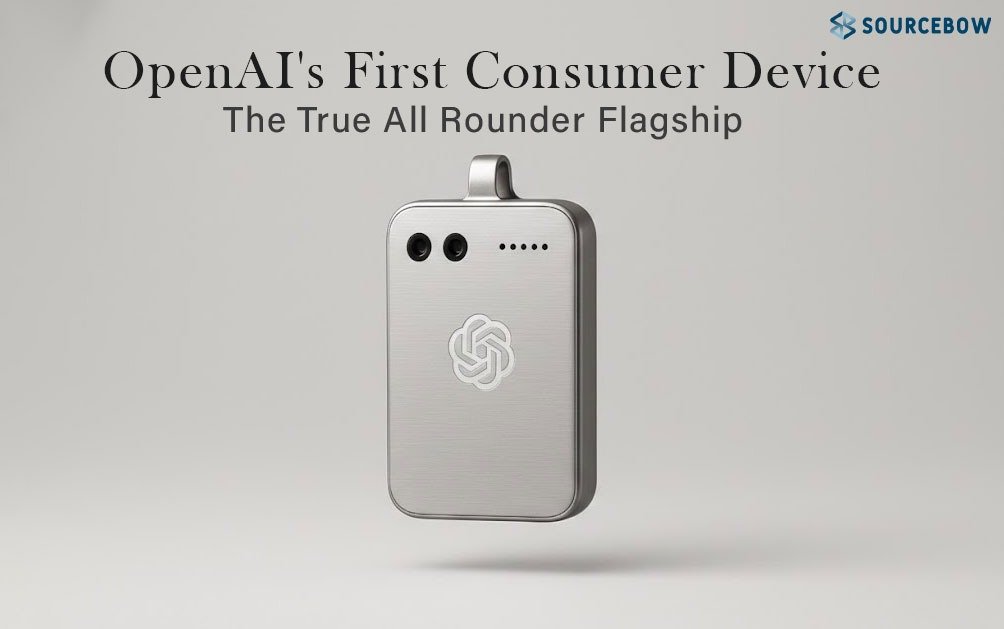
We’re used to talking to AI through screens—typing prompts, tapping dashboards, watching charts flicker across a display. But a new chapter could be starting: OpenAI’s reportedly gearing up to release its first consumer hardware in 2026. If the rumors are right, the device could be an AI-enabled pair of earbuds, codenamed “Sweetpea.” This would move AI from software that sits on a tab or a window to a product you wear, listen to, and interact with in a more natural, voice-first way. It’s the kind of shift that makes you rethink how often you reach for a screen and how often you rely on a smart assistant in the background of daily life.
Why does hardware matter here? Up to now, OpenAI’s models mostly lived in the cloud, accessed via apps and websites. Hardware changes the equation by changing the way people engage with AI. It’s not just about bigger features; it’s about a different rhythm—less staring at text, more listening, speaking, and having AI blend into routines without demanding constant attention. If this succeeds, AI could become a quiet, reliable partner that’s with you while you cook, commute, or workout, rather than a thing you open only when you sit at a desk.
From screen-to-ear: what the device could look like
While details are still under wraps, the core idea is clear: create a wearable that centers audio and voice as the primary interfaces. Earbuds have already become boundary-crossers—phone calls, music, translation, and quick tasks—all in one small form factor. Open AI is working to provide a “hardware” initial design; this hardware would embed “intelligence” into the most trusted and well-known forms we all use every day, making listening a part of an ongoing, conversational relationship with Artificial Intelligence. The following examples provide insight into how this might be accomplished:
1. The availability of “context-based” support: Receiving a brief summary, updated calendar information, or new information through an audible notification when requested.
2. Any type of hands-free navigation: Providing the user with easy-to-follow, detailed step-by-step directions for daily wreckage (aka: trips, outings, or any other thing), without ever having to look at a screen.
3. The creation of on-the-go content creation: Voice-drafting messages, notes, or ideas to provide input to an AI system, with real-time suggestions from an AI.
4. Learning personalisation: An Artificial Intelligence system that learns and is therefore able to change/adapt to your language, pace and preferences.
In a sense, this would be a shift from AI as a destination you visit to AI as a presence that trips along with daily life. The idea isn’t to replace screens but to reduce friction—make it easier to get AI’s help when hands are busy, eyes are on the move, or attention is needed elsewhere.
Why this matters for daily life and a fast-changing market
Hardware-enabled AI marks a move toward ambient computing—technology that works in the background, ready to assist when summoned, but not demanding constant attention. It’s about a shift in how people discover, adopt, and rely on AI. Instead of opening a chat window to ask for help, a user might simply speak a request and receive a thoughtful response, with the device using natural conversation to guide the interaction. This could lower the barrier for first-time AI users and make AI more useful in real-world settings—at home, in the car, or outdoors—where screens aren’t always practical or desirable.
There’s also a broader industry signal here. Hardware lets developers shape not just what AI can do, but how people engage with it. It’s a move toward devices that integrate intelligence into daily routines—quietly, when needed, and without shouting for attention. That’s a different kind of computing than the splashy features and flashy dashboards that often dominate conversations about AI today.
India and other markets: why a voice-first AI makes sense
For Indian users, the shift toward voice-first AI aligns with several trends already in action. Voice-based digital services have accelerated due to widespread smartphone use, linguistic diversity, and growing comfort with speech interfaces. From voice assistants to audio-first content, the ecosystem has shown that hands-free interaction can scale quickly when it fits real-life needs. A device designed around listening and speaking—rather than typing and reading—could slot neatly into this environment, offering access to AI in a way that matches daily life, multilingual markets, and on-the-go usage.
At the same time, hardware ambitions intensify competition in the AI space. Major players are racing to own not just the models but the devices through which those models are accessed. A hardware strategy provides deeper, more seamless integration into everyday routines and yields new data about how AI is used outside traditional software settings. That doesn’t just advance commercial goals; it also informs how AI can be designed to respect user privacy, reduce friction, and become a consistent helper for a broad audience.
Opportunities and challenges of moving AI into hardware
Turning a software platform into a consumer device comes with its own mix of promise and peril. Here’s what to weigh as the hardware path unfolds:
- Oppurtunity for Better/Casual Interaction – With voice-first AI the cognitive load from technology will be lessened, allowing for a smoother experience for novices using AI technology.
- Opportunity for New Revenue/Collaboration Models – New hardware allows for new opportunities to provide bundled services, offline usage of AI technology and a multitude of different ways to operate across different devices.
- Challenge Around Supply Chains and Manufacturing – To scale hardware you need to be able to define processes, develop, and build the actual hardware.
- Challenge of Long-term SupportAbility of Hardware/AI Solutions – The commitment to providing a viable, functional piece of land is a long commitment, while providing ongoing software updates and effective support services to ensure that customers are easily able to use the product.
- Challenge of Security & Control of the User Interaction – The processing and management of a user’s information gathering through a device needs to guarantee users feel as secure with their information, in that it will not leave the device, as well as ensuring they have clear, defined control.
A quick look at how it could compare with software-only AI
Below is a simple side-by-side to illustrate potential differences in daily use. It’s a snapshot of what matters to most everyday users—convenience, privacy, and reliability.
| Aspect | Software-only AI | Hardware-integrated AI |
|---|---|---|
| Interaction | Text prompts, screens | Voice-first, ambient |
| Context | Limited by screen time | Always listening, with privacy controls |
| Latency | Depends on network | Low-latency, often on-device processing |
| Privacy | Data may travel to servers | On-device processing with transparent controls |
Conclusion: a soft revolution in how OpenAI’s fits into daily life
The core idea behind OpenAI’s hardware ambitions is not merely to pack more clever features into a gadget. It’s about rethinking how AI can be encountered in everyday life—closer to listening than staring, more conversational than command-based. If a wearable AI become a dependable, privacy-conscious fixture, it could redefine what it means to have AI as a daily collaborator. The real question isn’t just what the device can do, but how naturally it can blend into a routine—without demanding attention or becoming a distraction. So, what everyday task would you want AI to handle for you while you go about your day?