There was a time when making music meant cables everywhere, complicated software, studio bookings, and at least one moment of frustration staring at a blank timeline. Even basic background music for a YouTube video could turn into a weekend project. But things are changing fast. And if you’ve been paying attention to AI tools lately, you’ve probably noticed they’re no longer just writing blog posts or generating images.
Now, with Lyria 3 in Gemini, you can generate AI music in seconds just by describing what you want. No studio. No digital audio workstation. No music theory degree required.
The Highlights
- Generate AI music using simple text prompts
- Understands genre, mood, tempo, and production style
- Can match music to photos and videos
- Creates original clips without needing studio software
- Part of Google’s larger multimodal AI ecosystem
So what exactly is happening here? And is it actually useful, or just another flashy AI demo?
What Is Lyria 3 and Why Is Everyone Talking About It?
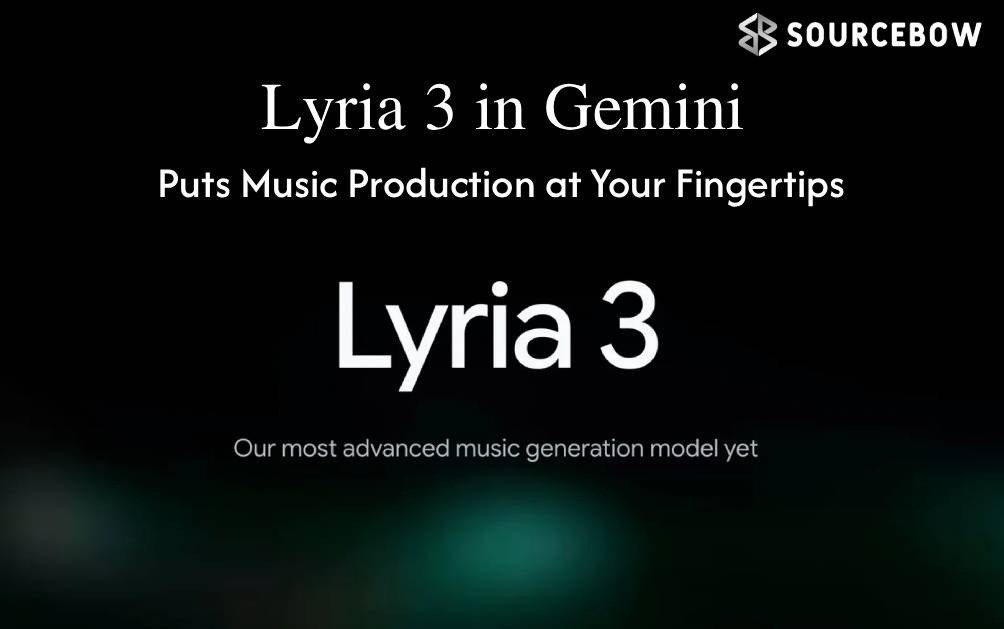
Lyria 3 is Google DeepMind’s AI music generation model, now integrated directly into the Gemini app. At its core, it’s designed to turn natural language descriptions into original music. You type something like, “upbeat indie pop track with soft guitar, warm bass, and summer road trip vibes,” and it generates an audio clip that matches that description.
That might sound simple. But here’s where it gets interesting.
Earlier AI music tools often struggled with structure. The rhythm would drift. The melody felt random. Instruments
didn’t quite blend naturally. Lyria 3 aims to fix that by generating more coherent compositions with recognizable rhythm, melody, and instrumentation. In other words, it feels more like actual music and less like a loop stitched together by a confused robot.
It analyzes your text prompt for things like:
- Genre – pop, electronic, cinematic, lo-fi, classical
- Mood – calm, dramatic, uplifting, dark
- Tempo – slow ambient or high-energy dance
- Production style – retro, modern, acoustic, synth-heavy
Then it translates those cues into a generated track. Not a remix. Not a copy. A new piece of music built from your instructions.
How Lyria 3 in Gemini Actually Works
You don’t need plugins. You don’t need mixing skills. You don’t even need to understand music production terms deeply. The system is built to interpret natural language, not technical commands.
Here’s the general flow:
You describe the kind of music you want → Gemini processes the prompt → Lyria 3 generates the audio clip.
It’s that straightforward on the surface.
Underneath, though, it’s part of Google’s broader push into multimodal AI. That means text, image, audio, and video tools are designed to work together instead of living in separate apps. Lyria 3 isn’t just a standalone experiment. It’s integrated into an ecosystem where your prompts, visuals, and generated assets can connect.
For example, you can generate music that matches a photo or short video. Say you upload a sunset beach clip. You can ask for “soft ambient guitar with relaxing ocean vibes,” and the tool tries to match the emotional tone of that visual. That’s where things start to feel genuinely creative rather than gimmicky.
Who Is This Actually For?
It’s easy to assume AI music tools are only for hobbyists. But the practical use cases are wider than that.
Content creators are probably the most obvious audience. If you run a YouTube channel, podcast, Instagram reel page, or short-form video account, background music is constant friction. Royalty-free libraries are helpful, but they’re crowded. And finding the perfect track can take longer than editing the video itself.
With Lyria 3 in Gemini, you can generate custom background music that matches your content exactly. Need “minimal cinematic build-up with soft piano and subtle tension”? You can just ask for it.
Indie developers working on games or apps could also benefit. Early prototypes often skip custom audio because it’s expensive and time-consuming. AI-generated music makes it easier to experiment with mood and atmosphere before committing to a final soundtrack.
And then there are creative explorers. People who aren’t musicians but have ideas. That’s a big shift. For years, music creation had a technical barrier. Now, the entry point is simply imagination plus words.
Of course, this doesn’t replace professional composers. And it shouldn’t. But it lowers the barrier to experimentation in a way that feels significant.
The Multimodal Angle Is the Bigger Story
Here’s something that often gets overlooked. Lyria 3 isn’t just about generating a cool track in isolation. It’s part of a broader strategy where AI handles text visuals, and audio inside one platform. You can generate a concept, create an image for it, produce matching music, and even design cover art — all powered by AI.
That matters because creative workflows are rarely one-dimensional. A song isn’t just sound anymore. It’s a thumbnail. A reel. A brand vibe. A visual identity.
The fact that Lyria 3 can also generate AI-based cover art alongside music might seem like a small feature. But for independent creators distributing tracks online, that removes yet another friction point. You’re not juggling five different tools. It’s streamlined. And honestly, that integration is what makes it more than just another AI experiment.
Is It Perfect? Not Quite.
Let’s be realistic for a moment. AI-generated music still has limitations. You might not get intricate, emotionally layered compositions that evolve over five minutes like a handcrafted orchestral piece. The clips are typically shorter and more suited for background or supplemental use rather than full albums.
There’s also the creative question. If everyone can generate music instantly, does that dilute originality? Or does it simply expand who gets to participate? That debate isn’t going away anytime soon.
But from a practical standpoint, the ability to generate AI music in seconds is undeniably useful. Especially in fast-moving digital environments where content cycles are short and budgets are tight.
Why This Shift Feels Bigger Than It Looks
Look at the pattern.
AI started with text. Then images. Then video. Now music creation is becoming accessible in the same way. Each step lowers technical barriers while raising creative speed.
With Lyria 3 in Gemini, music production is no longer locked behind expensive software or specialized hardware. You don’t need a MIDI keyboard. You don’t need mixing plugins. You just need clarity about what you want to hear. And that changes behavior.
When tools become frictionless, people experiment more. They iterate faster. They try ideas they wouldn’t have invested time in before. That’s where innovation often happens — not necessarily in perfect execution, but in lowered hesitation.
Will professional studios disappear? No. But the gap between idea and audio is shrinking dramatically.
If you’ve ever had a melody in your head but didn’t know how to build it, or needed quick background music without diving into production software, this kind of tool makes that process almost conversational. Type. Generate. Adjust. Repeat. It’s not magic. It’s just the next logical step in AI-assisted creativity.
And maybe the real question isn’t whether AI music tools like Lyria 3 are impressive. It’s how you’ll use them. Will it be for quick background tracks? Experimental ideas? Or something entirely unexpected?
Because for the first time, making music might feel less like a technical challenge — and more like a conversation.