Why JavaScript Basics Matter More Than Any Framework Ever Will
For a long time, getting a developer job felt like a framework contest. People argued endlessly about Angular versus React versus Vue. Online forums were full of debates, strong opinions, and even fights. The belief was simple. Pick the right framework and a job will follow.
That idea sounds logical at first. But in real life, it rarely works that way.
What actually makes a difference is not the framework choice. It is how well the foundations are understood. Once the JavaScript basics are solid, frameworks stop feeling scary and start feeling like tools. Useful tools, yes. But still just tools.
The framework debate misses the real point
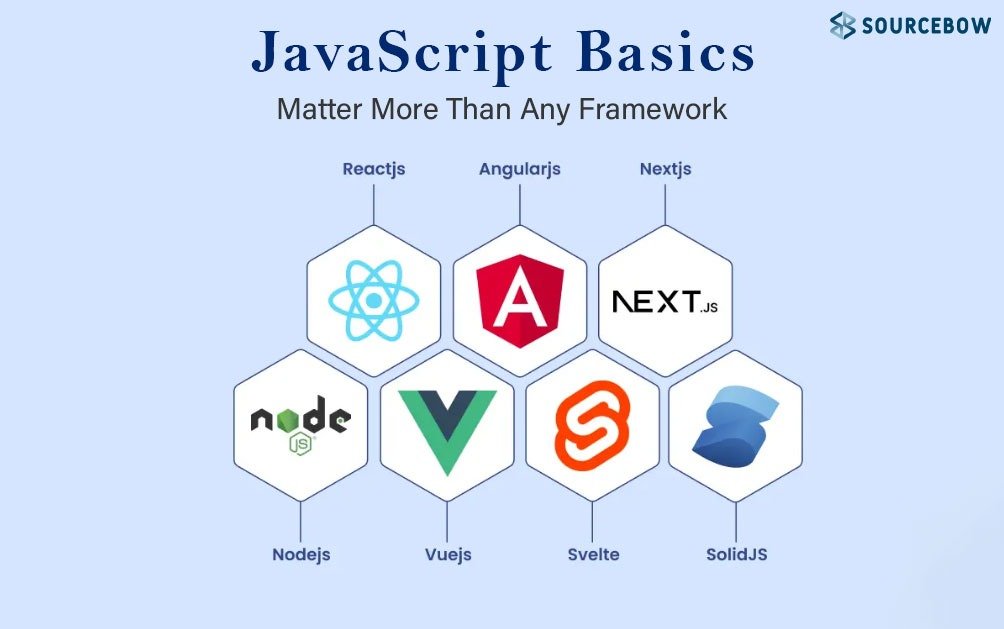
React, Vue, Angular. All of them work. All of them are used in production. All of them can help build serious applications. So arguing about which one is better is mostly a waste of energy.
The real skill is knowing when to use which one.
Sometimes Angular fits better for a structured enterprise app. Sometimes Vue feels lighter and easier for smaller projects. Sometimes React makes sense because of the ecosystem or team familiarity. These choices come naturally when the JavaScript fundamentals are strong.
Without fundamentals, every framework feels confusing. With fundamentals, switching between them feels manageable.
JavaScript foundations change everything
JavaScript basics are not exciting. No flashy demos. No cool animations on day one. But this is where real growth happens.
Understanding variables, functions, scope, closures, async behavior, promises, and how the language actually thinks under the hood. That knowledge sticks. Framework APIs may change. JavaScript foundations do not disappear.
Once these pieces click, frameworks become much easier to read and use. Instead of memorizing patterns, things start making sense. Code feels less magical and more logical.
That is the difference between struggling through tutorials and actually being employable.
Knowing the web stack without overdoing it
Being a JavaScript developer is not just about JavaScript. The web stack matters too.
This does not mean mastering everything. Just understanding how the pieces connect.
Basic HTML and CSS. How browsers render pages. What the DOM is and how it changes. How client side code talks to servers. What the request response cycle looks like. What runs on the server and what runs in the browser.
When these ideas are clear, many bugs become easier to diagnose. Things stop feeling random. Even async behavior starts to feel more predictable.
This is the kind of understanding that quietly separates beginners from professionals.
Framework noise creates analysis paralysis
One of the biggest reasons people struggle to get jobs is not lack of intelligence. It is distraction.
Someone starts learning JavaScript. Then hears React is mandatory. So they jump into React early. Then someone else says Vue is the future. Panic. Time to switch. Another voice says Angular pays more. Switch again.
This constant jumping creates analysis paralysis. Learning never goes deep enough. Confidence never builds. Everything feels half learned.
Tutorial creators add to this noise. Everyone claims their framework is the key. Everyone has a course. Everyone says this is the must learn skill.
The result is confusion and burnout.
Skipping basics slows progress more than people realize
Many learners rush past the fundamentals. Straight into React courses. Straight into Vue components. Straight into Angular architecture.
It feels productive. Until it is not.
Without understanding the DOM, async behavior, or basic JavaScript flow, frameworks feel heavy and confusing. Errors feel cryptic. Debugging becomes painful.
This is often where people get stuck. They know just enough to follow tutorials but not enough to build confidently. Employers sense that gap quickly.
Foundations first may feel slower, but it saves a lot of frustration later.
Simple projects teach more than endless tutorials
Reading and watching only goes so far. At some point, code has to be written.
Simple projects help more than people expect. Small apps. Basic DOM manipulation. Simple async calls. Nothing fancy.
These projects force mistakes. And mistakes teach faster than perfect examples. Struggling with a small problem and solving it sticks longer than finishing another polished course.
Once that confidence builds, learning a framework becomes faster than expected. React or Vue stops being intimidating. It becomes just another layer on top of what is already known.
The job market should guide framework choice
After the basics are in place, then frameworks matter. But not in a theoretical way.
Local demand matters. Some regions lean heavily toward React. Others use Vue more. Some still rely on WordPress and PHP with JavaScript sprinkled in.
Looking at local job listings gives real answers. Not opinions. Not trends. Real demand.
Learning one framework that matches the local market is usually enough. The rest can be picked up later if needed.
Why fundamentals age better than tools
Framework popularity comes and goes. APIs change. Syntax evolves. But core concepts remain useful year after year.
Developers with strong fundamentals adapt faster. New tools feel familiar sooner. New stacks become less intimidating.
This is why experienced developers often care less about hype. They know tools change. Skills stay.
Final thoughts
There is nothing wrong with frameworks. They solve real problems and save time. But they are not the entry ticket to a career.
The real key is understanding JavaScript itself. Knowing how the web works. Being comfortable with async code and the DOM. Building small things and learning from them.
Once those pieces are in place, frameworks stop being the focus. They become choices, not obstacles.
That shift alone can make the whole learning journey feel lighter and more achievable.