Google AI glasses 2026: what to expect
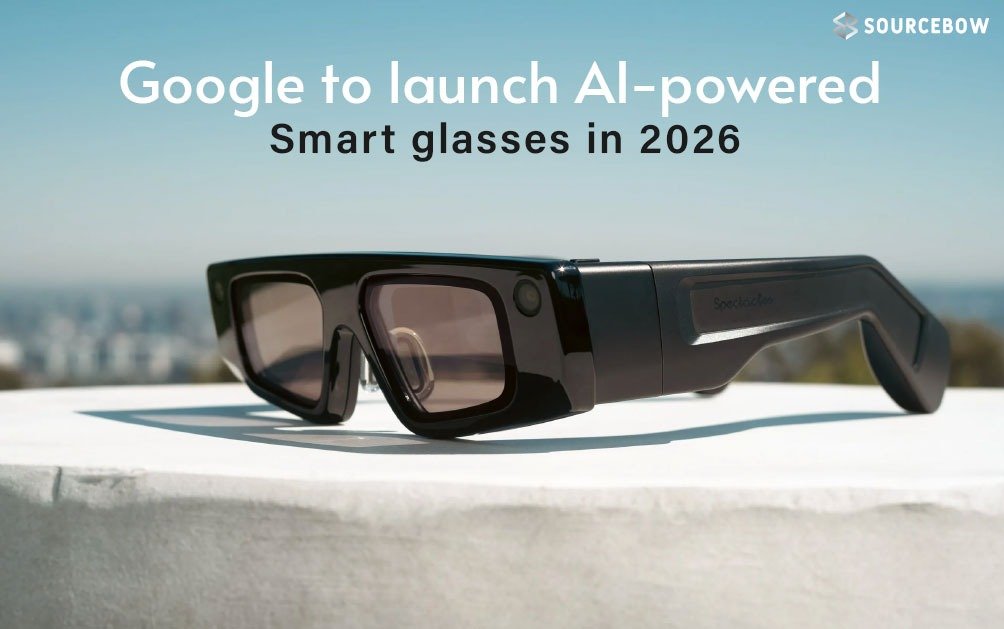
Remember the original Google Glass? That idea is finally getting a real second act. After demos in late 2024, Google’s next-generation Google AI glasses 2026 are set to arrive for regular people in 2026 — and the early previews make them feel like a proper reboot, not just a prototype.
These new glasses put a world-facing Gemini-powered experience right in your field of view. Think of it like having your phone’s smartest features projected where you’re already looking, without a bulky headset getting in the way.
What the first models actually do with Google AI glasses
The first wave launches as mononocular glasses — that means a single display is built into the right side of the frame, even though both lenses look normal. Expect a touch panel on the stem and some gesture tie-ins with wearable devices like a Pixel Watch. The idea is to rely on subtle, intuitive inputs instead of dramatic hand gestures or pinch-zooms.
From the previews, the on-lens display looks crisp and readable at the distances you’d use for AR elements. The display feels almost phone-like in clarity for UI bits, which is a big deal — legibility is one of the things that can make or break day-to-day use.
There’s also a small camera on the stem for photos and video calls, and you’ll be able to switch the display off entirely if you want. Battery life details aren’t public yet, but expect power-saving behaviors baked into Android XR.
Where Google AI glasses shine: navigation and Gemini help
One of the clearest wins is maps and navigation. Imagine walking and not fishing your phone out of your pocket: a small “pill” of directions appears in your view when you tilt your head down, and it follows your motion smoothly. It’s like a heads-up corner guide in a video game — low distraction, still useful.
Gemini is central here. You can point at things and ask follow-up questions, translate on the fly, or get contextual help — all while your phone handles the heavy lifting. The glasses act as a lightweight, glanceable layer on top of your phone’s apps.
What’s next: binocular displays and bigger use cases for Google AI glasses
Google also demoed binocular prototypes, with a display for each eye. That opens things like native 3D video and richer AR interactions. Those features are probably further out, but they hint at a path where glasses evolve from a helpful companion to a true phone replacement for many tasks — assuming people are comfortable wearing them all day.
Third-party developers are already getting dev kits, and Android Studio will include an emulator so apps can be built and tested early. That should speed up useful app support once the hardware ships.
Why this could matter to everyday users
There’s a strong case that Google AI glasses will lower the friction of using mobile apps while keeping attention on the world around you. Live translations in your view, easier mapping, quick contextual searches — these are the sorts of features that actually change behavior, not just add gimmicks.
It’s also worth noting the social side: the glasses are less obtrusive than pulling out a phone, and that could change how people interact in public.
Quick comparison: mononocular vs binocular Google AI glasses
| Feature | Mononocular (2026) | Binocular (later) |
|---|---|---|
| Display | Single on right stem | Waveguide displays in both lenses |
| Best for | Navigation, quick info, calls | 3D video, advanced AR, richer app UX |
| Power | Lower draw (likely) | Higher power needs |
| App complexity | Simple glanceable UI | Full AR experiences |
Final thoughts
This feels like the moment that decades of AR talk get practical. Google’s approach — pairing a powerful phone with a lightweight glasses display and leaning on Gemini for smarts — looks like a smart way to introduce the tech without forcing a heavy headset on everyone.
Curious what you’d use them for first: maps, translation, or something more niche? It’s fun to imagine the first real-world uses.
Conclusion: Google’s next-gen glasses aren’t just a revived concept. They look like a deliberate, usable step toward everyday AR. If the hardware matches the demos and the app ecosystem grows fast, 2026 could be a big year for augmented reality.