What distillation means for AI—and why it matters to you
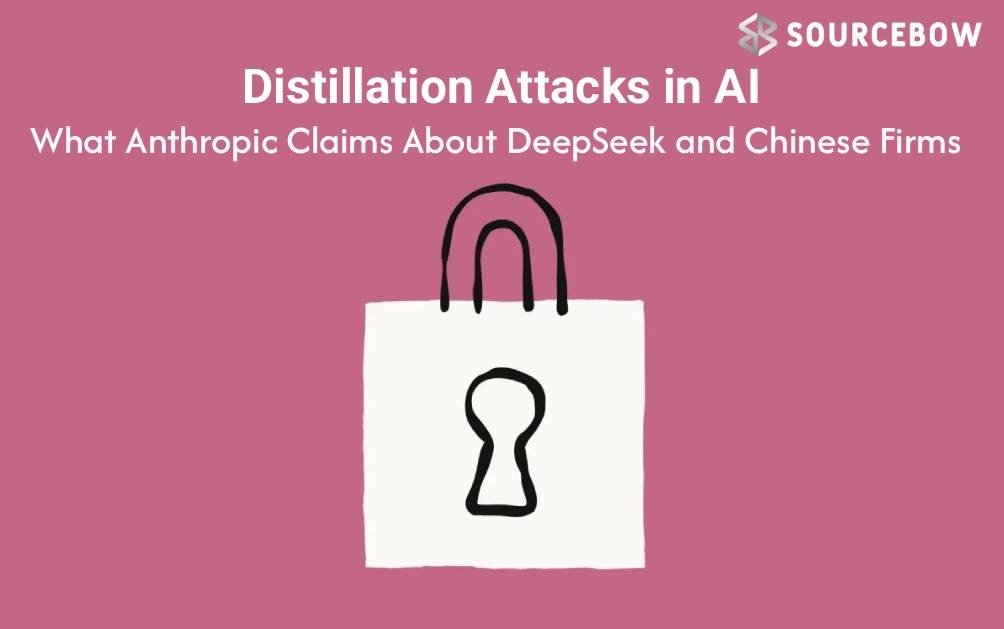
When people talk about AI, the headlines often focus on breakthroughs and shiny new features. But behind the scenes, there’s a quieter, more contested process at work: distillation. In simple terms, distillation is a way to train a smaller, faster model by copying the behavior of a larger, more capable one. It sounds handy, right? The trouble is that, if done without permission or safeguards, it can become a form of intellectual property (IP) extraction. That’s the core issue in the latest allegations from Anthropic, who say certain China-based labs were attempting large-scale distillation of Claude, their flagship model, to train competing systems. Distillation attacks aren’t about a single test run; they’re about repeated, large-scale probing that could strip away years of research and development in a blink.
So what exactly happened, and what does it mean for AI safety, innovation, and policy? Let’s unpack the claims, the mechanics, and the big questions at stake.
What distillation is—and why it’s a legal and technical gray area
Distillation in machine learning is a practical technique: a large teacher model trains a smaller student model to imitate its outputs. That smaller model can run on less powerful hardware and respond more quickly. It’s a common, legitimate approach used to deploy helpful AI in devices with limited compute. But the same process can be misused when the training data and model behaviors are proprietary or restricted.
Here’s the tension in a nutshell:
- On the plus side: distillation can make AI accessibility cheaper and faster, helping developers bring useful features to more people.
- On the minus side: if the student model learns directly from outputs without authorization, it can end up reproducing or weaponizing guarded capabilities—reducing the barrier to replicate frontier models.
That’s why industry watchers separate permitted distillation (with proper licensing and safeguards) from illicit distillation (where the goal is to copy capabilities without paying for the underlying research).
The core allegations: who’s accused and what was claimed
Anthropic describes industrial-scale campaigns targeting Claude, accusing three labs—DeepSeek, Moonshot AI, and MiniMax—of attempting to steal sophisticated capabilities by distillation. Evidence supports a staggering scale, according to DeepSeek’s purported 150,000 exchanges targeting Claude’s reasoning alone, approaching a censorship-safe clone of his model.
Additionally, Moonshot AI has also executed approximately 3.4 million exchanges aimed at agentic reasoning, coding, tool use, and other relevant activities while obscuring by utilizing 100s of fraudulent accounts.
The claim is that these aren’t genuine experiments or testing; they’re coordinated attempts to harvest capabilities from Claude.
To add context, some high-profile voices in tech have weighed in on the broader debate around these moves. Elon Musk has criticized the timing of these accusations against specific enterprises, claiming copyright/intellectual property and data usage creates an incredibly messy environment around AI innovation and development. This is not about one company or laboratory and should drive an ongoing/public debate on how to protect AI intellectual property while continuing to promote healthy competition/learning across all stakeholders involved.
How Distillation Works – Plain English
To be more concrete, we can use an example and apply it to a very concrete example for clarity: There is a teacher model which is highly skilled at performing tasks that involve the ability to solve complex coding problems.
A student model is trained to imitate the teacher by being fed inputs and the teacher’s outputs. Over time, the student gets good enough to approximate the teacher’s ability, but with far less compute and memory needs.
That sounds great—unless the process bypasses rights and controls. In distillation attacks, the attacker repeatedly queries a proprietary model, collects a massive dataset of its responses, and then uses that data to train a rival model that mirrors the original model’s behavior. Copying answers isn’t just copying content. It’s also about copying the underlying reasoning that makes a model reliable, including process of making decisions, defenses against not being safe or reliable, as well as providing appropriate safety measures to depend on.
Some key takeaways:
- Using outputs as a signal for training: Teacher responses shape how students behave.
- Guardrails that prevent harm may not be implemented: If given a bad or inappropriate distillation of the original source material does not include either safety or alignment considerations, you may have a dangerous and/or unreliable version of the model.
- Costs & incentives: A competitor can benefit from another’s discoveries, which could potentially inhibit appropriate investment in both responsible development and research to make models more reliable overall.
In effect, there is both a positive and negative aspect to distillation as it applies to the deployment of new models. Legitimately distilling a model will typically expedite deployment and increase equitable access, while illegitimate distillation presents a threat to intellectual property (IP) protection and safety standards. This creates an important tension relative to the work done by those at Anthropic.
Why this is important: IP, safety and how these issues lead to better policy solutions
The issues presented by Anthropic are not simply out of curiosity; they go to the heart of four major areas that will be of direct relevance for engineers, policymakers and users overall.
The most significant of these areas is the protection of intellectual property and some measure of competitive advantage. If there is no cost associated with leveraging teacher expertise gained from using similar technology, it may reduce the usefulness of real innovation and may therefore slow progress in terms of developing innovative ideas through research and responsible development to increase overall reliability across models.
- New methods to help identify if anyone is attempting to create an illicit distillation model using an Anthropic model.
- New education campaigns to inform users about the potential risks associated with creating updated models from illicit distillations and how to recognize when a model may be based on an illicit variation of a previous model.
- Working with law enforcement agencies and government institutions to develop common guidelines, standards, and definitions for what constitutes an illicit distillation.
- Establishing robust feedback loops so that users can report instances of illicit distillation or other suspicious activity.
- Increasing their collaboration with other organizations in the AI space to provide information and resources designed to build a safe and secure ecosystem for AI development.
- Detection and fingerprinting: Building classifiers and behavioral fingerprints to flag suspicious API traffic that resembles distillation patterns.
- Access controls: Tightening controls around education accounts, security research programs, and startup pathways to cut down on fraudulent access.
- Collaboration: Sharing indicators with other AI labs, cloud providers, and authorities to build a broader defense.
There’s a practical angle for readers too. For developers and companies building or integrating AI tools, the case underscores the importance of:
- safety safeguards are non-negotiable.
Numbers, signals, and what to watch for as the story unfolds
Anthropic’s breakdown includes explicit numbers, which are meant to illustrate scale and intent rather than to provide a complete audit. The emphasis is on coordinated behavior, repeated access, and indicators traceable to specific researchers or infrastructure footprints. While the claims are specific, the broader takeaway is a push for more transparency and better tooling across the AI ecosystem—so peers can audit, detect, and deter similar activity in the future.
As the industry watches, the key questions for readers and practitioners become:
- How can defenses keep pace with increasingly sophisticated distillation tactics?
- What kinds of data-sharing and policy frameworks best protect IP without stifling collaboration?
- How can buyers and users distinguish between legitimate research use and harmful extraction when evaluating AI
tools?
A major aspect of this can be summed up in one of your key themes: we want to see more of an effort to create a safer, more accountable ecosystem for innovation and responsible development.
Conclusions: Take the time to pause, reflect and engage.
Distillation attacks highlight a very real conflict in modern A.I. – the desire to develop new capabilities rapidly and the need for safeguards based on the hard-earned lessons and safety layers that have been developed over time with substantial investments. The Anthropic allegations against DeepSeek, Moonshot AI, and MiniMax highlight the fragility of frontier-model safeguards when faced with high-volume, automated probing. They also spotlight a path forward—one that combines better detection, stronger access controls, and a culture of collaboration that seeks to raise the floor for everyone in the ecosystem.
So, here’s a question to ponder: in a world where AI capabilities can be copied and repurposed, what combination of policy, technology, and community action will most effectively protect both innovation and safety without turning AI into a locked vault? Share thoughts or experiences with distillation, IP, or AI safety in the comments below.
Using clearly licensed data and following explicit terms for training.
Implementing robust access controls and monitoring for unusual activity patterns.
Numbers, signals, and what to watch for as the story unfolds
Anthropic’s breakdown includes explicit numbers, which are meant to illustrate scale and intent rather than to provide a complete audit. The emphasis is on coordinated behavior, repeated access, and indicators traceable to specific researchers or infrastructure footprints. While the claims are specific, the broader takeaway is a push for more transparency and better tooling across the AI ecosystem—so peers can audit, detect, and deter similar activity in the future.
As the industry watches, the key questions for readers and practitioners become:
- How can defenses keep pace with increasingly sophisticated distillation tactics?
- What kinds of data-sharing and policy frameworks best protect IP without stifling collaboration?
- How can buyers and users distinguish between legitimate research use and harmful extraction when evaluating AI tools?
For an audience reliant on technology, rather than designating any one organization as a ‘bad guy’ it’s all about developing solutions that enable an enhanced level of security and accountability for the ecosystem in which the technology lives.
Closing Thoughts: Time for Reflection and Engagement
The challenge of distillation attacks highlights a conflict inherent in AI today, i.e. the desire to rapidly advance the capabilities of AI while preserving the wisdom gained through previous investment into safety and the money spent on safety additions to those capabilities in order to create safe and valuable use cases for consumers. The Anthropic allegations against DeepSeek, Moonshot AI, and MiniMax highlight the fragility of frontier-model
safeguards when faced with high-volume, automated probing. They also spotlight a path forward—one that combines better detection, stronger access controls, and a culture of collaboration that seeks to raise the floor for everyone in the ecosystem.
So, here’s a question to ponder: in a world where AI capabilities can be copied and repurposed, what combination of policy, technology, and community action will most effectively protect both innovation and safety without turning AI into a locked vault? Share thoughts or experiences with distillation, IP, or AI safety in the comments below.