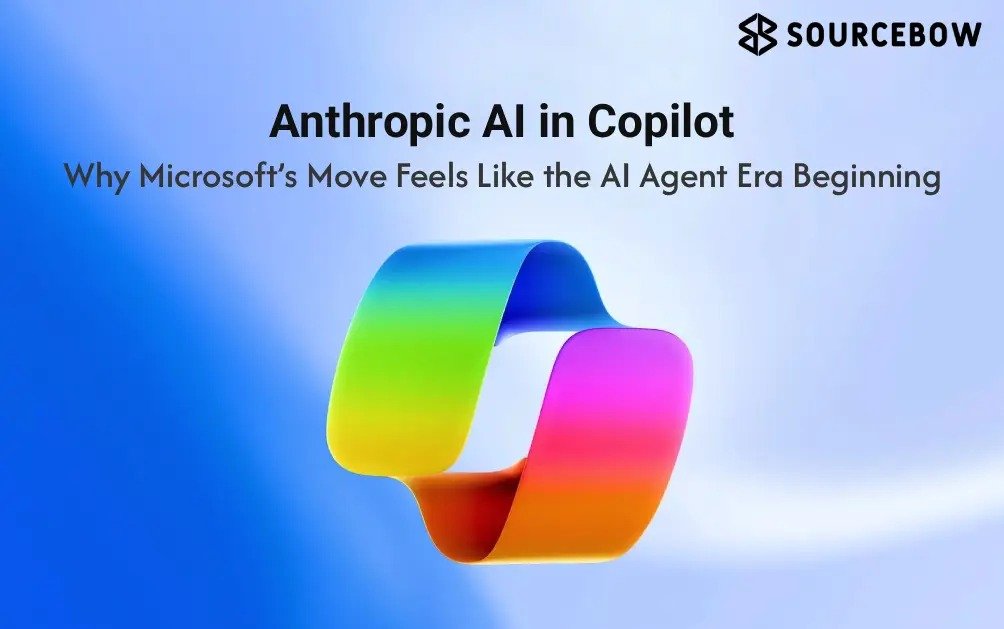
Like many of us juggling apps, meetings, and a never-ending to-do list, you might have wondered when AI would stop feeling like a gimmick and start actually helping you get things done. This week, Microsoft nudges that line forward by weaving Anthropic AI into Copilot, bringing Claude-powered intelligence directly into the Copilot experience. It’s not a gimmick anymore; it’s a real push toward autonomous agents that can handle complex tasks with limited human oversight. And yes, that sounds bold, and a little scary, in a practical, almost inevitable kind of way. 🤖
Microsoft is adding Anthropic AI in Copilot to tap growing demand for autonomous agents, with Copilot Cowork based on Anthropic’s Claude Cowork helping it tackle things like app creation, spreadsheet magic, and big-data organization, all while trying to keep you in the loop rather than buried under automation. The move isn’t just about clever code or slick dashboards. It’s about trust, control, and a very concrete promise: you’ll know what the AI has access to, and you’ll decide how far it goes. That’s the core hinge here, and it’s where the excitement meets caution in the same breath.
Quick Highlights
- Copilot Cowork: cloud-based agent tool built on Anthropic Claude Cowork for user-centric tasks with safeguards.
- Claude Cowork vs device: Claude Cowork runs in the cloud, while Anthropic emphasizes local-device privacy in some setups.
- Claude Sonnet: the latest Claude models being rolled into M365 Copilot for enterprise workflows.
- Security first: Microsoft emphasizes governance and data controls as a cornerstone of adoption.
- Market signals: the shift toward AI agents is sparking investor chatter and rethinking software strategy.
Shifting Ground: Why AI Agents Are Moving from Buzz to Business
Here’s the thing: for years we’ve had AI that could draft a memo or summarize a spreadsheet. It felt impressive, but often fragile. It made mistakes, needed constant checks, and wore the badge of a clever tool rather than a trusted teammate. The new wave—what we’re seeing with Copilot Cowork and Claude Cowork—aims for something different: agents that can autonomously execute a sequence of tasks, coordinate data from multiple sources, and surface human-ready outputs, all while staying within guardrails you set. Think of an assistant that can, with your permission, assemble a mini-app, pull together a data report, or draft a workflow, then pause to confirm before taking the next step. It’s not about replacing you; it’s about letting you delegate steps you’d otherwise juggle across a dozen tabs and teams.
Microsoft isn’t pretending the road is perfectly smooth. The company’s leadership has been explicit about cloud-only operation, user-at-the-center design, and explicit data-access boundaries. That matters because enterprise buyers need to know where data lives, who can access it, and how much control they retain over the AI’s actions. In a market where AI agents can feel both liberating and risky, the cloud-first, user-owned-data stance is a meaningful stance. It’s also a signal that the AI-agent era isn’t just a buzzword; it’s a blueprint for how software vendors will have to
build products in a guarded, scalable way.
The Anthropic Twist: Claude Cowork, Local Privacy, and the Open Question of Safeguards
Anthropic’s Claude Cowork is designed to handle the heavy lifting—creating apps, structuring data, and orchestrating tasks with a light touch from the human user. A notable contrast to some other agents is the emphasis on how information is accessed. The Claude Cowork offering has drawn attention for its capability to operate with limited oversight, which in turn raises questions about privacy and control. Microsoft’s take—framed by Jared Spataro’s emphasis on cloud operation and explicit access boundaries—stresses a different stance: you know exactly what information Copilot Cowork has access to, and the system is designed to operate behind enterprise-grade safeguards. In practice, that means more transparent data flows, auditability, and the ability to weave the AI into existing governance and compliance frameworks without turning the AI into a black box.
But there’s a flip side some readers might notice: Claude Cowork’s local-device model is appealing from a privacy perspective, yet it’s less common in enterprise-scale deployments because it complicates collaboration and data sharing across teams. Microsoft’s cloud-centric approach, with strong governance, helps solve that by default, even as it raises questions about vendor dependence and cloud latency. It’s a nuanced trade-off, not a simple right-or-wrong choice, and it’s exactly where many organizations end up spending more time examining policy, not just performance metrics.
Microsoft’s Playbook: Security, Data Controls, and the Enterprise Angle
Security and governance aren’t afterthoughts here; they’re the foundation. Microsoft has spent years building enterprise-grade controls into its product stack—identity management, data residency options, endpoint security, and rigorous auditing capabilities. Layering Anthropic’s agents on top of Copilot means those controls migrate from “nice-to-have” to “non-negotiable.” If you’ve lived through the shift from on-prem to cloud with compliance demands, you’ll recognize the arc: the technology grows smarter, but the fences around it grow taller and smarter too. In practical terms, that translates to clearer data access rights, better logging of agent actions, and easier rollback if an agent goes off-script. It also means developers and IT teams can implement policies that align with internal risk appetites without turning the AI into a liability rather than a productivity tool.
From a customer perspective, the big question becomes: how easy is it to start using these features while maintaining the exact level of oversight your industry requires? Microsoft’s messaging suggests you don’t have to turn off AI innovation to stay compliant—you need a thoughtful implementation plan, starting with governance, followed by controlled pilots, and then scaled rollout with real-time telemetry and guardrails. That approach is exactly what many enterprise buyers are asking for right now, a balance between power and prudence.
Real-World Scenarios: What This Means for Your Day-to-Day
Let’s ground this in something practical. Imagine your team needs to assemble a data-driven client report, then spin up a small internal app to automate a common workflow. Traditionally, you’d hand off a spec to a developer, wait for QA, then patch, then re-run. With Copilot Cowork and Claude Sonnet-infused workflows, you could set boundaries—data sources, approval steps, and permitted actions—and let the AI draft the app, pull in the data, and lay out the report. You’d review, approve, and push. The turnaround goes from hours to minutes, and the human-in-the-loop guardrails stay front and center. That’s the promise Microsoft is betting on: you get speed without surrendering control.
Now, you might also notice the inevitable trade-offs. More automation means more reliance on the AI’s decision boundaries, which means your governance has to be sharper. It’s not about eliminating oversight; it’s about making oversight integral, friction-light, and transparent. The market response to Anthropic’s Claude Cowork signals investors are watching closely how well these guardrails hold up under real workloads. The stock-market chatter from February wasn’t about whether AI agents exist; it was about how well traditional software vendors can adapt to this
new agent-driven landscape without leaving customers exposed to unexpected behavior.
A Quick Comparison: Copilot Clouds, Claude Sonnet, and the Old GPT Route
| Platform | Model/Approach | Where It Runs | Strengths | Notable Use |
|---|---|---|---|---|
| Copilot Cowork | Anthropic Claude Cowork | Cloud (Microsoft-managed) | Strong task orchestration, enterprise safeguards | Apps, data workflows, multi-source coordination |
| Claude Cowork | Claude Cowork | Device (local) | Privacy-centric, offline capability | Sensitive data scenarios, isolated environments |
| Copilot (OpenAI GPT route) | GPT family | Cloud | Broad general reasoning, mature ecosystem | Docs, drafting, standard automation |
| Claude Sonnet in M365 | Claude Sonnet | Cloud | High performance for enterprise tasks | Large-scale document and data workflows |
The Road Ahead: What This Means for Vendors, IT Teams, and End Users
For vendors, the lesson is clear: autonomous agents aren’t a side feature anymore; they’re a strategic pillar. The question becomes how to balance power with responsibility, how to offer the deepest binding safeguards without stifling speed and creativity, and how to demonstrate that your product will behave well under pressure—both technically and ethically. For IT teams, the emphasis shifts to governance, telemetry, and policy, with a strong focus on data flows, access controls, and audit trails. For end users, the payoff is real: faster workflows, fewer context-switch costs, and a more fluid collaboration with software that remembers what matters to you—but with predictable safeguards and clear accountability.
And for those of us who cover tech and lifestyle, there’s a broader takeaway: the AI agent era isn’t a distant novelty; it’s entering the mainstream as a set of carefully engineered capabilities that feel almost like a natural extension of our daily tools. It’s not that you won’t make mistakes while testing new workflows; it’s that you’ll have better guardrails and a clearer sense of responsibility when things go off the rails.
Practical Tips to Navigate This Transition
Here are a few grounded steps you can take if you’re navigating this shift at your company or in your personal projects:
- Start with governance, not gadgets. Define what data can be accessed, who approves outputs, and how audits will be performed.
- Run controlled pilots. Pick a repeatable, low-risk process to test agent workflows before scaling.
- Map data flows. Understand where data lives, how it’s shared, and what safeguards exist in each step of an automated task chain.
- Design for visibility. Ensure the AI’s decisions and actions are traceable with easy-to-read logs and summaries.
- Prefer cloud-enabled controls for enterprise, but keep an eye on privacy requirements that may favor local processing in certain contexts.
- Foster collaboration between IT and product teams. The best outcomes come from shared decision-making on guardrails and user experience.
These aren’t one-time setup steps; they’re ongoing disciplines as capabilities evolve. The AI agent era isn’t a destination; it’s a practice of continuously balancing speed, safety, and usefulness in real work.
Wrapping It Up: A Curious, Cautious Welcome to the New Normal
So where does that leave us? If you’ve experienced AI as a helpful assistant but felt the fear of it running off-script, Copilot Cowork and Claude Sonnet’s integration into M365 Copilot are designed to ease that tension. You get more capable automation with a framework that respects enterprise-grade safeguards, not a reckless ride on a novelty wave. That’s the core truth behind Microsoft’s move: you don’t have to surrender control to gain efficiency. You can pursue ambitious automation within a structure that keeps you in the loop, clarifies data access, and aligns
with what your organization needs to protect.
What do you think your organization would do first with an AI agent that can manage cross-platform tasks? Are you ready to pilot a guarded, cloud-backed agent workflow, or would you prefer stronger local privacy in certain contexts? The coming months will likely reveal a practical blueprint for blending autonomy with accountability, and that blueprint will matter far beyond the headlines. If you’re curious to see how these tools perform in your own workflow, start with a small, controlled experiment and stay mindful of governance as you scale. The AI agent era is arriving, and it’s not about replacing people; it’s about amplifying what people already do best with smarter, safer tools.