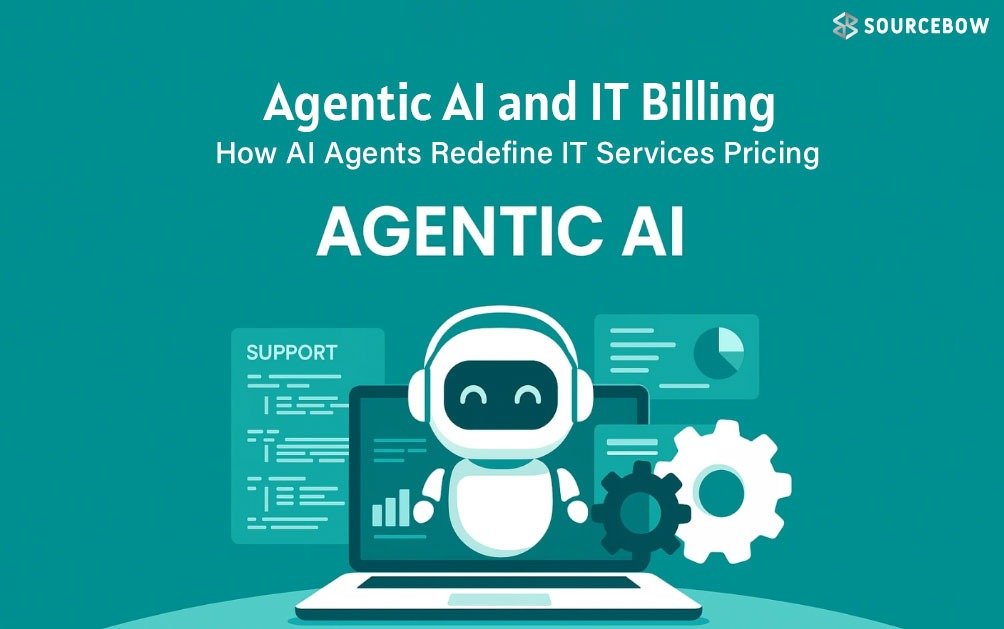
Fact: the money side of IT services is changing fast. Agentic AI—AI that can act on your behalf to accomplish tasks—has landed in the wild, and it’s not just about smarter software. It’s about cheaper, more efficient services that still promise results. As big players roll out tools like Claude Cowork and OpenAI’s Agent platform, experts say this could tilt the economics of software services contracts. In short: seat-based billing may shrink as AI handles more work with fewer hours.
What does that mean for teams buying and selling IT services? It means the baseline math is shifting from how many people you can “seat” to how much value you can unlock with AI-enabled processes. For anyone who’s ever watched a bill creep up with every add-on, this is not just interesting tech chatter—it’s potentially big changes to budgets, planning, and vendor relationships. Here’s a practical, down-to-earth guide to what’s happening, why it matters, and how to navigate the new landscape.
What is Agentic AI and why it matters?
Agentic AI is the idea of AI that can take initiative to complete tasks, coordinate actions, and make decisions within defined boundaries—almost like an assistant that can act with a bit of initiative. In IT services, this translates to faster delivery, fewer manual steps, and more autonomous execution of project work. It’s not just modeling or coding; it’s orchestration. Couple this with platforms designed to let AI agents run multi-step workflows (think “agents” that can search, decide, and act across apps), and the potential for productivity gains
goes up quickly.
Two areas that come up a lot in conversations with practitioners are:
- Automation of routine tasks: issue triage, deployment rehearsals, test runs, and status reporting can be automated, freeing up engineers for higher-value work.
- Composite workflows: AI agents can chain together tools and services to deliver end-to-end outcomes, rather than just deliver a single deliverable.
On the pricing side, this shift nudges models away from “how many people does it take?” toward “what outcomes are we delivering, and how efficiently are we delivering them?” That’s a fundamental change in contract design, incentives, and risk sharing between buyers and providers.
Shifting pricing: how rates are changing in IT services
Across the globe, blended billing rates for IT services have been trending downward. Roles like web and mobile developers, full-stack engineers, cyber defense specialists, and remote desktop support are feeling price pressure as AI-enabled delivery improves productivity. Here are a few concrete snapshots that illustrate the trend:
- US web/mobile developers (4–6 years experience): rates dip to roughly $75–$91 per hour in H2 2025 from $77–$94 in H2 2024.
- India web/mobile developers: rates slide to about $21–$29 per hour from $22–$29 in the same periods.
- Premium technology consulting: US billing ranges ease to $138–$181 per hour from $141–$182.
| Region / Role | 2024 H2 | 2025 H2 |
|---|---|---|
| US Web/Mobile Developer | 77–94 | 75–91 |
| India Web/Mobile Developer | 22–29 | 21–29 |
| US Premium IT Consulting | 141–182 | 138–181 |
In other words, the rate card is not the whole story anymore. Clients expect bigger productivity-linked discounts, and those discounts have to be reinvested to grow scope or to fund new AI-driven use cases. The result is a contraction in total contract value (TCV) for typical five-year deals—historically 20–35% lower in 2025 and forecast to fall even further, roughly 32–44% in the next year.
What this translates to: even as headline hourly rates hold up a bit, the overall value of a contract can shrink because AI reduces the amount of human effort needed per unit of work.
Industry trackers emphasize that the old RFP-based bidding model is losing relevance. Vendors find it hard to compete on price alone when AI-enabled delivery can drastically cut effort. The move is toward delivery models designed around ongoing AI-enabled capabilities rather than one-off, people-heavy projects.
Moving from hours to outcomes: what buyers and vendors should expect
What’s changing here is less about a single tool and more about a new way of thinking: value, outcome, and ongoing capability rather than upfront scope and hourly toil. Here’s what experts point to as the big shifts:
- From time and materials to outcome-linked or productized services: contracts that tie payment to measurable results and repeatable AI-enabled capabilities.
- From fixed price to usage-based or subscription models: pricing that aligns with actual AI usage, data value, and the ability to scale up or down quickly.
- From one-off deliverables to continuous modernization: the service becomes an ongoing capability rather than a single project deliverable.
- From labor cost control to value creation: the emphasis shifts to how AI-created outcomes impact the business, not just how many people were involved.
This means buyers will need to rethink what a contract means to them. It just isn’t enough to ask for a lower rate per hour and hope everything works out as planned. Now it is about defining what success looks like, creating governance around the use of AI, and coming to an agreement on a pricing model where the buyer and supplier share in the risk and reward of AI-based outcomes. Vendors are going to have to change how they deliver their services, invest in platforms enabled by AI, and create service offerings that will be sold as a continual capability versus a one-time project.
Note: The real game-changer isn’t price alone. It’s how value is delivered—and how that value is priced in a world where AI makes delivery faster with less effort per unit of outcome.
Five simple methods for coping with the transition to AI-generated pricing
By either keeping costs low while being a customer or maintaining profits as a vendor, you can achieve solid, well defined outcomes.
- Define success by describing exactly what the AI enabled service will produce. Examples include faster time to market, fewer defects, and improved uptime through usage statistics.
- Use a flexible pricing structure that encourages continued use of AI by allowing for pricing that is based on usage, or subscription prices instead of just hours charged.
- Establish good governance and security by creating clear and consistent policies for data management and compliance. From the beginning of your relationship with your partner(s), create accountability
and transparency in reporting. - When you see a productivity gain from AI use, also plan to use that money to build further capabilities for AI use (add more users or multi-year extension) rather than giving it back to your partner(s).
- Prototype everything if possible. Validate each new/updated outcome through a small pilot project prior to expanding the scope.
From a buyer’s perspective, this is about getting more value for each dollar and linking payments to tangible results. From a vendor’s perspective, it’s about building sustainable, scalable AI-enabled services that customers can rely on year after year rather than chasing quarterly price pressure.
Practical implications and analogies in the real world
Imagine switching from a pay-per-hour car rental service to a subscription-based mobility system that provides maintenance, insurance, and periodic upgrades on your vehicle. While it may seem like the cost per hour of each service is approximately similar, you are now receiving significantly more value and sharing significantly less risk with the provider than before you made this change. AI-enabled delivery acts like an autopilot for projects: it reduces the number of hands required while increasing reliability and speed of delivery. The result? Contracts are designed around outcomes, governance, and ongoing capability rather than a long list of billable hours.
When AI is added to an organization’s everyday operations, this should enable teams to scale their AI utilization in accordance with current demands. Adjusting to changing needs through the use of AI resources will also improve how teams measure and report on the impact of AI on business profitability; therefore, this will allow for improved measurement of the continued value of using AI in business operations. This does, however, require procurement and IT departments to develop some new skills (i.e., negotiating to produce acceptable project results, understanding AI
governance and its implications for future projects, and the methods used to measure how much value is produced by AI projects).
Total Contract Value Decline Overview (note: illustrative only):
2025 = 20-35% | 2025 = 32-44%
Ultimately, when it comes to using AI for services or products in business, designing, delivering and monetizing those services or products is more important than doing one-time, labour intensive projects. Those who reimagine pricing and service delivery to emphasize outcomes, usage, and productized AI features will likely see healthier margins and more resilient growth.
Conclusion: a question to ponder
As AI agents become more capable, the question isn’t merely what you pay per hour—it’s what you pay for the ongoing capability that keeps delivering value. Are you chasing cheaper hours, or investing in AI-enabled outcomes that scale with your business?
Take a moment to reflect on your next IT services decision: would you prefer a partner who can promise measurable outcomes and flexible AI-enabled capabilities, or one who trails behind on price alone? The trend is clear, and the best time to adapt is now.