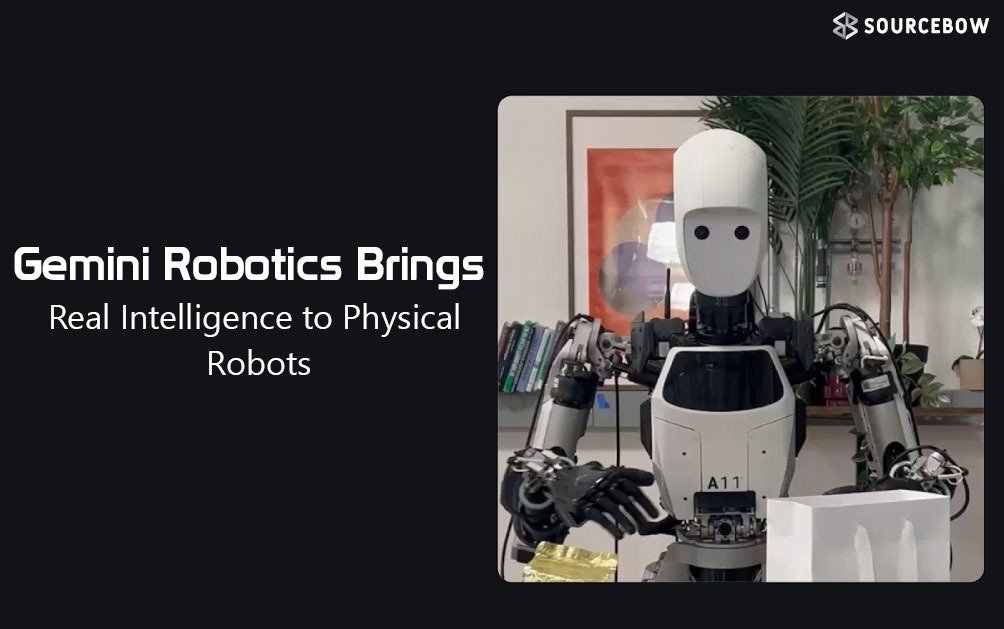
Gemini Robotics Is Google’s Big Step Toward Useful Real-World Robots
Robots have always looked impressive in demos, but they usually fall apart the moment something unexpected happens. A hand moves an object. A command changes mid-task. The environment shifts. Most robots just freeze or fail. Founded by two YC partners, Gemini Robotics believes that its technology can put an end to these scripted robot interactions. This new system, which is named Gemini 2.0, seeks to introduce intelligence in robotics, which goes beyond scripted robotics.
How it works is simple yet lofty: your robots should be able to respond immediately to your instructions, sense their surroundings, and respond appropriately even in areas or conditions that they did not train for before. Gone are the days when there was hope that robots would be perfected and function in pristine conditions; now, Gemini Robotics dreams of developing robots that actually cooperate with human workers.
Designed for Real Interaction
Real life doesn’t pause for machines. People move things around. Instructions change halfway through a task. Hands get in the way. Gemini Robotics is built to react instantly to all of this.
If a robot is asked to place bananas into a container and the setup changes, it doesn’t stop. It notices the change, updates its plan, and continues. If the instruction switches to grapes instead, it adapts in real time.
This happens because the system runs with extremely low latency. Instead of following a rigid script, the robot reacts live, making it feel more like a collaborator than a tool.
Gemini Robotics Is Built to Be Interactive
Here’s the thing. Real life doesn’t wait for robots to catch up. People move objects. Instructions change. Hands get in the way. Gemini Robotics is designed to respond instantly to all of that. If someone asks a robot to put bananas into a clear container, and then moves things around, the robot doesn’t panic. It sees the change, adjusts its plan, and keeps going. If the instruction changes to grapes instead, it re-plans on the fly. This works because the system runs with very low latency. That means the robot isn’t just following a fixed sequence. It’s reacting live, almost like working alongside another person rather than controlling a machine.
Handling Dexterous Tasks with Ease
Fine motor skills are one of the toughest challenges in robotics. Tasks like folding paper or aligning small objects usually require heavy tuning and strict conditions.
Gemini Robotics approaches this differently by giving robots a deep understanding of space and objects. A robot can fold a piece of paper into an origami fox, explain what origami is, and even point out where the eyes belong.
This is not just movement. The robot understands shape, position, and how small adjustments affect the final outcome. It’s closer to touch with understanding, not just motion.
Thinking Like a Generalist
Most robots are trained for one job and struggle with anything new. Gemini Robotics takes a generalist approach, using Gemini 2.0’s broader world knowledge to reason through unfamiliar tasks.
If a robot is told to flip a red die to match the number on a green one, it figures out what it sees and how to act. The motion is not pre programmed. The reasoning happens in the moment.
This even applies to abstract requests. Ask a robot to pick up a basketball and perform a slam dunk, and it can figure out what that means even without prior exposure. It understands the concept, then works out the action.
That’s a major shift from memorizing steps to understanding ideas.
Why This Actually Matters
What sets Gemini Robotics apart is how interaction, dexterity, and general intelligence come together across different robot forms.
This technology could eventually power robots that assist in homes, hospitals, warehouses, and shared workplaces. Not robots meant to replace people, but ones that understand instructions the way people naturally give them.
Google DeepMind has opened its Trusted Testers Program to more partners, signaling that this is moving beyond research and closer to real-world deployment.
If robots could truly understand intent, not just commands, everyday life would look very different.
Gemini Robotics doesn’t solve everything yet. But it clearly marks a turning point. Robots are finally moving from scripted machines to adaptable partners, and that’s where things start to get interesting.